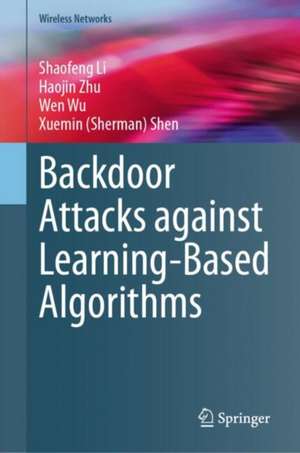
Backdoor Attacks against Learning-Based Algorithms: Wireless Networks
Autor Shaofeng Li, Haojin Zhu, Wen Wu, Xuemin (Sherman) Shenen Limba Engleză Hardback – 30 mai 2024
Structura progresivă: de la concept la implementare, volumul Backdoor Attacks against Learning-Based Algorithms oferă o analiză tehnică riguroasă asupra securității lanțului de aprovizionare pentru modelele DNN. Recomandăm această lucrare profesioniștilor din securitate cibernetică și cercetătorilor în AI, deoarece abordează vulnerabilitățile ce apar atunci când procesul de antrenare nu este controlat integral — fie prin utilizarea seturilor de date de la terți, fie prin platforme de antrenare externe.
Apreciem modul în care autorii, Shaofeng Li, Haojin Zhu și colaboratorii lor, trec dincolo de simpla teorie a „otrăvirii datelor”. Aceștia demonstrează cum steganografia și regularizarea pot fi utilizate pentru a crea trigger-e invizibile în clasificarea imaginilor, oferind chiar și metrici de măsurare a acestei invizibilități. În domeniul NLP, unde coruperea datelor textuale este ușor de detectat de către om, cartea propune atacuri ascunse care mențin lizibilitatea și contextul, vizând sarcini critice precum detectarea comentariilor toxice sau traducerea automată.
Abordarea diferă de Adversarial Learning and Secure AI de David J Miller prin faptul că este mai puțin abstractă și mult mai aplicabilă pe scenarii specifice de rețele wireless și sisteme distribuite. În timp ce Adversarial Machine Learning de Aneesh Sreevallabh Chivukula oferă o privire de ansamblu asupra perturbărilor, volumul de față se concentrează strict pe mecanismele de tip backdoor și, crucial, pe apărarea în sistemele e-Health federate. Structura cărții, reflectată în cuprins, ghidează cititorul de la o revizuire a literaturii de specialitate către studii de caz practice în servicii de rețea, culminând cu direcții viitoare de cercetare în securitatea algoritmilor de învățare.
Din seria Wireless Networks
- 18%
 Preț: 1123.62 lei
 - 20%
 Preț: 1183.56 lei
 - 20%
 Preț: 1050.48 lei
 - 20%
 Preț: 1010.16 lei
 - 15%
 Preț: 620.47 lei
 - 20%
 Preț: 669.98 lei
 - 15%
 Preț: 660.27 lei
 - 18%
 Preț: 1120.37 lei
 - 20%
 Preț: 1284.86 lei
 - 18%
 Preț: 1273.49 lei
 -
 Preț: 398.83 lei
 -
 Preț: 402.32 lei
 - 18%
 Preț: 753.28 lei
 - 15%
 Preț: 661.27 lei
 - 18%
 Preț: 1040.48 lei
 - 20%
 Preț: 323.04 lei
 - 18%
 Preț: 1041.80 lei
 - 20%
 Preț: 344.73 lei
 - 20%
 Preț: 669.40 lei
 - 15%
 Preț: 653.25 lei
 - 20%
 Preț: 784.37 lei
 - 18%
 Preț: 917.75 lei
 - 24%
 Preț: 904.32 lei
 - 20%
 Preț: 731.05 lei
 - 18%
 Preț: 752.59 lei
 - 18%
 Preț: 752.16 lei
 - 20%
 Preț: 668.29 lei
 - 18%
 Preț: 923.95 lei
 - 18%
 Preț: 749.43 lei
 - 20%
 Preț: 625.10 lei
 - 18%
 Preț: 926.49 lei
 - 20%
 Preț: 619.74 lei
 - 20%
 Preț: 1252.34 lei
 -
 Preț: 506.83 lei
 - 24%
 Preț: 773.57 lei
 - 18%
 Preț: 756.18 lei
 - 18%
 Preț: 751.29 lei
 - 20%
 Preț: 845.18 lei
 - 18%
 Preț: 753.21 lei
 - 20%
 Preț: 669.84 lei
 - 15%
 Preț: 663.03 lei
 - 20%
 Preț: 664.97 lei
 - 18%
 Preț: 809.70 lei
Preț: 951.87 lei
Preț vechi: 1189.83 lei
-20%
Carte disponibilă
Livrare economică 05-19 noiembrie
Specificații
ISBN-10: 3031573889
Pagini: 168
Ilustrații: XI, 153 p. 58 illus., 56 illus. in color.
Dimensiuni: 160 x 241 x 15 mm
Greutate: 0.42 kg
Ediția:2024
Editura: Springer
Colecția Wireless Networks
Seria Wireless Networks
Locul publicării:Cham, Switzerland
V-ar putea interesa
-
 Machine Learning in Cyber TrustJeffrey J P Tsai-20%Preț: 1033.17 lei1291.45 lei
 -
 -39%Preț: 394.79 lei646.62 lei
 -
 -20%Preț: 369.74 lei462.17 lei
 -
 Security EngineeringRoss Anderson-20%Preț: 392.75 lei490.94 lei
 -
 Hacking Multifactor AuthenticationRoger A. Grimes-20%Preț: 203.15 lei253.95 lei
 -
 -20%Preț: 133.74 lei167.18 lei
 -
 The Language of DeceptionJustin Hutchens-20%Preț: 176.16 lei220.20 lei
 -
 Preț: 123.51 lei
 -
 Agentic AI For DummiesPam Baker-20%Preț: 145.95 lei182.44 lei
 -
 Strengthening Deep Neural NetworksKaty Warr-20%Preț: 323.08 lei403.84 lei
 -
 The Dark Forest Theory of the InternetBogna KoniorPreț: 86.72 lei
 -
 -36%Preț: 283.89 lei440.71 lei
 -
 Deep Learning Crash CourseGiovanni Volpe-35%Preț: 290.84 lei445.88 lei
 -
 Practical Deep Learning, 2nd Edition: A Python-Based IntroductionRonald T. Kneusel-35%Preț: 333.73 lei515.68 lei
 -
 -35%Preț: 274.33 lei425.17 lei
 -
 Advances in AI for Cloud, Edge, and Mobile Computing ApplicationsShrikaant Kulkarni-20%Preț: 1296.62 lei1620.78 lei
 -
 -20%Preț: 317.08 lei396.35 lei
 -
 Federated LearningMei Kobayashi-20%Preț: 932.57 lei1165.71 lei
 -
 Deploying Secure Data Science Applications in the CloudLucas H. Benevides e Braga-20%Preț: 225.24 lei281.55 lei
 -
 Denial-of-Service AttacksConnor StrattonPreț: 176.85 lei
De ce să citești această carte
Recomandăm această carte inginerilor de sistem și specialiștilor în securitate care lucrează cu modele de deep learning. Cititorul câștigă o înțelegere profundă a modului în care trigger-ele invizibile pot compromite integritatea AI și primește soluții concrete de detecție și apărare, esențiale pentru protejarea infrastructurilor critice, precum sistemele medicale digitale sau platformele de procesare a limbajului natural.
Despre autor
Autorii, în frunte cu Shaofeng Li și Haojin Zhu, sunt experți recunoscuți în securitatea rețelelor și algoritmi de învățare automată, contribuind activ în cadrul seriei Wireless Networks de la Springer. Deși unii dintre colaboratori, precum Xuemin (Sherman) Shen, au expertiză vastă în rețele wireless, este important de notat că echipa de autori îmbină cercetarea fundamentală cu aplicațiile practice în securitatea AI. Lucrarea de față reprezintă o evoluție a cercetărilor lor către protecția sistemelor distribuite și a arhitecturilor complexe de tip Federated Learning, adaptând rigoarea academică la nevoile actuale ale industriei de securitate cibernetică.