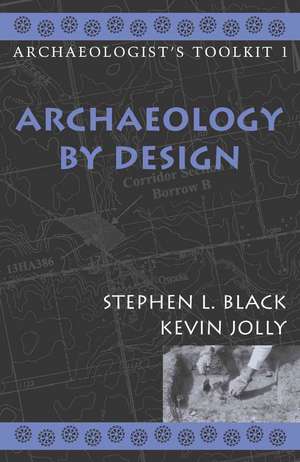
Archaeology by Design: Archaeologist's Toolkit
Autor Stephen L. Black, Kevin Jollyen Limba Engleză Paperback – 12 mar 2003
![Archaeologist's Toolkit: [7 volumes]](https://i2.books-express.ro/bs/9780759100176/archaeologist-s-toolkit.jpg)

Preț: 251.88 lei
Preț vechi: 333.93 lei
-25%
Puncte Express: 378
Carte tipărită la comandă
Livrare economică 30 noiembrie-14 decembrie
Livrare prin curier în România Termenul estimat este afișat lângă disponibilitate.
Transport gratuit de la 400.00 lei Plată online sau ramburs, în funcție de opțiunile comenzii.
Retur gratuit în 14 zile Comandă securizată și suport în română.
Specificații
ISBN-13: 9780759100206
ISBN-10: 0759100209
Pagini: 168
Dimensiuni: 154 x 232 x 9 mm
Greutate: 0.24 kg
Editura: Bloomsbury Publishing
Colecția AltaMira Press
Seria Archaeologist's Toolkit
Locul publicării:New York, United States
ISBN-10: 0759100209
Pagini: 168
Dimensiuni: 154 x 232 x 9 mm
Greutate: 0.24 kg
Editura: Bloomsbury Publishing
Colecția AltaMira Press
Seria Archaeologist's Toolkit
Locul publicării:New York, United States
V-ar putea interesa
-
 -32%Preț: 1124.60 lei1657.71 lei
 -
 Preț: 479.22 lei
 -
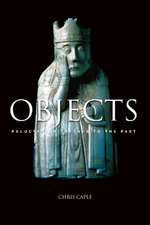 Objects: Reluctant Witnesses to the PastChris CaplePreț: 382.81 lei
 -
 Preț: 440.06 lei
 -
 Archaeological InvestigationMartin CarverPreț: 376.00 lei
 -
 Analytical Chemistry in ArchaeologyA M Pollard-11%Preț: 458.02 lei514.63 lei
 -
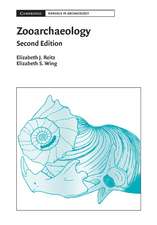 Reitz, E: ZooarchaeologyElizabeth J. Reitz-19%Preț: 498.36 lei615.25 lei
 -
 PalaeopathologyTony Waldron-9%Preț: 197.22 lei217.03 lei
 -
 Quantitative PaleozoologyR. Lee LymanPreț: 361.36 lei
 -
 BirdsDale SerjeantsonPreț: 349.37 lei
 -
 Geographical Information Systems in ArchaeologyJames Conolly-11%Preț: 500.47 lei562.31 lei
 -
 Digging Up the PastJohn Collis-16%Preț: 116.36 lei138.14 lei
 -
 Pottery in ArchaeologyClive OrtonPreț: 298.97 lei
 -
 A Consumer's Guide to Archaeological ScienceMary E Malainey-15%Preț: 733.68 lei863.15 lei
 -
 ArchaeologyJoe FlatmanPreț: 71.03 lei
 -
 Archaeological ParenchymaJon G. Hather-18%Preț: 713.80 lei870.48 lei
Cuprins
Part 1 Series Editors' Foreword
Part 2 1 Designing Archaeological Research with an Attitude
Chapter 3 The Process of Designing Archaeological Research / Professional Archaeological Research / Why Design Archaeological Research? / The Cost of Archaeology / Your Obligation to the Public / Archaeology by Default / Designing Research is Archaeology
Part 4 2 Building Your Professional Toolkit
Chapter 5 Anthropological Archaeology / Current Archaeological Method and Theory / Multidisciplinary Studies / Keeping Current / Developing Regional Expertise / Navigating the Political Playing Field / Why the Professional Archaeologist's Toolkit is Heavy
Part 6 3 A Quick Look at the Research Process
Chapter 7 The "Pure" Research Process in Academic Archaeology / The "Directed" Research Process in CRM Archaeology / The Parts of CRM Research / Conclusion
Part 8 4 The Scope of Work
Chapter 9 The Project Area / The Work / Work Standards / Time / Money / Logistics / Conclusion
Part 10 5 Research Questions
Chapter 11 Typical Approaches to Archaeological Research / Creating Research Questions / Sources of Questions
Part 12 6 Developing Your Research Strategy
Chapter 13 Think First, Dig Later-Archaeological Strategy / Making Tough Choices-Operational Strategy / Conclusion
Part 14 7 The Written Research Design
Chapter 15 Whom Are You Writing For? / Projects Big and Small / Critical Components of Your Written Research Design / Additional Considerations / Conclusion
Part 16 8 Putting Your Research Design to Work
Chapter 17 Implementing Your Research Design / In from the Cold / Evaluating Your Research Design / Now It's Up to You
Part 18 Appendix A. Groups You Should Join
Part 19 Appendix B. Journals You Should Read
Part 20 Appendix C. The ABCs of CRM
Part 21 Appendix D. The Logistics Checklist
Part 22 References
Part 23 Index
Part 24 About the Authors and Series Editors
Part 2 1 Designing Archaeological Research with an Attitude
Chapter 3 The Process of Designing Archaeological Research / Professional Archaeological Research / Why Design Archaeological Research? / The Cost of Archaeology / Your Obligation to the Public / Archaeology by Default / Designing Research is Archaeology
Part 4 2 Building Your Professional Toolkit
Chapter 5 Anthropological Archaeology / Current Archaeological Method and Theory / Multidisciplinary Studies / Keeping Current / Developing Regional Expertise / Navigating the Political Playing Field / Why the Professional Archaeologist's Toolkit is Heavy
Part 6 3 A Quick Look at the Research Process
Chapter 7 The "Pure" Research Process in Academic Archaeology / The "Directed" Research Process in CRM Archaeology / The Parts of CRM Research / Conclusion
Part 8 4 The Scope of Work
Chapter 9 The Project Area / The Work / Work Standards / Time / Money / Logistics / Conclusion
Part 10 5 Research Questions
Chapter 11 Typical Approaches to Archaeological Research / Creating Research Questions / Sources of Questions
Part 12 6 Developing Your Research Strategy
Chapter 13 Think First, Dig Later-Archaeological Strategy / Making Tough Choices-Operational Strategy / Conclusion
Part 14 7 The Written Research Design
Chapter 15 Whom Are You Writing For? / Projects Big and Small / Critical Components of Your Written Research Design / Additional Considerations / Conclusion
Part 16 8 Putting Your Research Design to Work
Chapter 17 Implementing Your Research Design / In from the Cold / Evaluating Your Research Design / Now It's Up to You
Part 18 Appendix A. Groups You Should Join
Part 19 Appendix B. Journals You Should Read
Part 20 Appendix C. The ABCs of CRM
Part 21 Appendix D. The Logistics Checklist
Part 22 References
Part 23 Index
Part 24 About the Authors and Series Editors
Recenzii
With helpful tips, clear explanations, checklists and guides to further reading, this has much to offer a North American and non-North American readership.
Archaeology by Design is a unique and valuable resource for professionals and students alike. It is extremely readable and presents a cogent framework for conducting archeological research. Amateurs with an interest in the profession as well as the subject matter of archeology will also find the book of value. . . . Readers will find the prose to be conversational in style, attribution of other scholars' ideas relaxed, and citations minimal. Throughout the book, the authors strive to distill involved and complex ideas to essential concepts. This is a very difficult task which the volume, on balance, is successful in accomplishing.
Archaeology by Design is a unique and valuable resource for professionals and students alike. It is extremely readable and presents a cogent framework for conducting archeological research. Amateurs with an interest in the profession as well as the subject matter of archeology will also find the book of value. . . . Readers will find the prose to be conversational in style, attribution of other scholars' ideas relaxed, and citations minimal. Throughout the book, the authors strive to distill involved and complex ideas to essential concepts. This is a very difficult task which the volume, on balance, is successful in accomplishing.