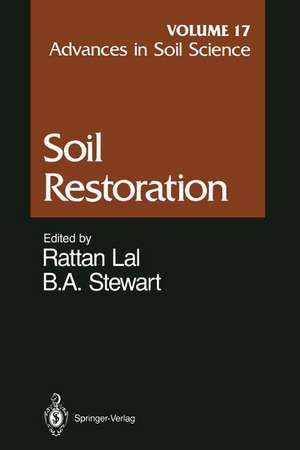
Advances in Soil Science: Advances in Soil Science, cartea 17
en Limba Engleză Paperback – 28 sep 2011
Din seria Advances in Soil Science
-
 Preț: 484.25 lei
 -
 Preț: 503.67 lei
 - 18%
 Preț: 1440.97 lei
 - 18%
 Preț: 1562.44 lei
 - 18%
 Preț: 2096.92 lei
 - 15%
 Preț: 447.51 lei
 - 15%
 Preț: 533.53 lei
 - 18%
 Preț: 2083.68 lei
 - 15%
 Preț: 630.86 lei
 - 15%
 Preț: 433.46 lei
 - 18%
 Preț: 1429.40 lei
 - 15%
 Preț: 533.53 lei
 - 18%
 Preț: 1430.15 lei
 - 15%
 Preț: 546.43 lei
 -
 Preț: 485.55 lei
 -
 Preț: 397.67 lei
 - 18%
 Preț: 1303.58 lei
 - 18%
 Preț: 1485.14 lei
 - 18%
 Preț: 1439.56 lei
 - 18%
 Preț: 1431.01 lei
 - 18%
 Preț: 1374.36 lei
 - 15%
 Preț: 616.64 lei
 - 15%
 Preț: 639.94 lei
 - 15%
 Preț: 674.47 lei
 - 15%
 Preț: 641.24 lei
 -
 Preț: 370.84 lei
 - 25%
 Preț: 1856.11 lei
 - 25%
 Preț: 1851.47 lei
 - 25%
 Preț: 1345.41 lei
 - 24%
 Preț: 1346.61 lei
Preț: 653.48 lei
Preț vechi: 768.80 lei
-15%
Puncte Express: 980
Carte tipărită la comandă
Livrare economică 18 noiembrie-02 decembrie
Livrare prin curier în România Termenul estimat este afișat lângă disponibilitate.
Transport gratuit pentru acest produs Plată online sau ramburs, în funcție de opțiunile comenzii.
Retur gratuit în 14 zile Comandă securizată și suport în română.
Specificații
ISBN-13: 9781461276845
ISBN-10: 1461276845
Pagini: 472
Ilustrații: XII, 456 p.
Dimensiuni: 155 x 235 x 26 mm
Greutate: 0.71 kg
Ediția:Softcover reprint of the original 1st ed. 1992
Editura: Springer
Colecția Advances in Soil Science
Seria Advances in Soil Science
Locul publicării:New York, NY, United States
ISBN-10: 1461276845
Pagini: 472
Ilustrații: XII, 456 p.
Dimensiuni: 155 x 235 x 26 mm
Greutate: 0.71 kg
Ediția:Softcover reprint of the original 1st ed. 1992
Editura: Springer
Colecția Advances in Soil Science
Seria Advances in Soil Science
Locul publicării:New York, NY, United States
V-ar putea interesa
-
 Earth Matters: How soil underlies civilizationRichard Bardgett-20%Preț: 134.41 lei168.66 lei
 -
 -31%Preț: 65.41 lei94.58 lei
 -
 Essential Soil ScienceGeeta PuriPreț: 413.45 lei
 -
 Principles and Practice of Soil ScienceRobert E. White-19%Preț: 435.99 lei538.25 lei
 -
 The Art of the RestaurateurNicholas Lander-21%Preț: 194.06 lei246.58 lei
 -
 Soil Chemistry, 2eConklin-9%Preț: 776.31 lei853.09 lei
 -
 Chicken Health for DummiesJulie GauthierPreț: 109.09 lei
 -
 Sedimentary GeologyDonald Prothero-40%Preț: 538.77 lei895.61 lei
 -
 Top-Bar BeekeepingLes Crowder-25%Preț: 140.17 lei187.01 lei
 -
 The Soil Will Save UsKristin Ohlson-19%Preț: 120.14 lei149.05 lei
 -
 Soil Management: Technological Systems, Practices & Ecological ImplicationsManuel Esteban Lucas Borja-27%Preț: 1520.21 lei2073.86 lei
 -
 Gossans and Leached CappingsRoger Taylor-24%Preț: 806.46 lei1061.13 lei
 -
 Greenhouse ManagementJ. J. Hanan-15%Preț: 631.23 lei742.62 lei
 -
 Water and Sustainable AgricultureIván Francisco García-TejeroPreț: 309.04 lei
 -
 The Soils of ChileManuel Casanova-20%Preț: 651.02 lei813.77 lei
Public țintă
ResearchCuprins
Need for Land Restoration.- I. Introduction.- II. Basic Concepts of Land Restoration.- III. Global Extent of Soil Degradation.- IV. Land Hunger.- V. Need for Soil Restoration.- VI.Conclusion.- References.- Reclamation of Chemically Degraded Soils.- I. Introduction.- II. Principles of Soil Reclamation.- III. Conclusions.- References.- Soil Fertility Restoration and Management for Sustainable Agriculture in South Asia.- I. Introduction.- II. Soils, Climate, and Crops of South Asia.- III. Soils Under Shifting Cultivation.- IV. Soils Under Intensive Cultivation.- V. Soils Under Salinity or Sodicity.- VI. Summary and Conclusions.- References.- Reclamation of Acid Sulphate Soils.- I. Introduction.- II. Previous Reviews and Major Sources.- III. Formation and Characteristics of Acid Sulphate Soils.- IV. Alternative Strategies for Reclamation.- V. Minimum-Disturbance Strategies.- VI. Reclamation by Leaching and Liming.- VII. Summary and Conclusions.- References.- Restoring Land Degraded by Gully Erosion in the Tropics.- I. Introduction.- II. Mechanisms of Gully Formation and Advance.- III. Factors Affecting Gully Erosion.- IV. Anthropogenic Causes Responsible for Gully Erosion.- V. Watershed Factors in Gully Erosion.- VI. Measurement and Evaluation of Gully Erosion.- VII. Gully Erosion Control.- VIII. Conclusions.- References.- Reclamation of Indurated, Volcanic-Ash Materials in Latin America.- I. Introduction.- II. Nomenclature.- III. Genesis of Indurated, Volcanic-Ash Materials.- IV. Classification of Indurated Materials.- V. Properties of Indurated Materials.- VI. Distribution and Extent of Indurated Materials.- VII. Soil Erosion on Indurated Materials.- VIII. Reclamation of Exposed Indurated Materials.- IX. Summary.- References.- Soil Faunal Degradation and Restoration.- I.Introduction.- II. The Composition of the Fauna.- III. Influence of Fauna on Soil Fertility.- IV. Land Disturbance and Faunal Degradation.- V. Restoring Soil Fauna.- VI. Faunal Indicators and Biological Monitoring of Soil Quality.- VII. Conclusion.- References.- Creation and Restoration of Wetlands: Some Design Considerations for Ecological Engineering.- I. Introduction.- II. Wetland Design.- III. Summary.- References.- Bioremediation of Soils Contaminated with Selenium.- I. Introduction.- II. Geochemistry.- III. Deficiencies and Toxicity of Selenium.- IV. Vegetation Uptake.- V. Microbial Transformations.- VI. Bioremediation of Selenium Contaminated Soils: San Joaquin Valley, California—A Case History.- VII. Remediation of Seleniferous Sediments and Water.- VIII. Conclusions.- References.- Reclamation of Mine Tailings.- I. Introduction.- II. Distribution of Tailings.- III. Environmental Consequences.- IV. Limitations to Tailings Reclamation.- V. Mine Tailings Reclamation.- VI. Summary.- References.- Reclamation of Mine Land Using Municipal Sludge.- I. Introduction.- II. Review of Land Reclamation Projects Using Municipal Sludge.- III. Summary.- References.- Researcher and Development Priorities for Soil Restoration.- I. Introduction.- II. Approaches to Soil Restoration.- III. Strategies and Policies.- IV. Conclusions.- References.