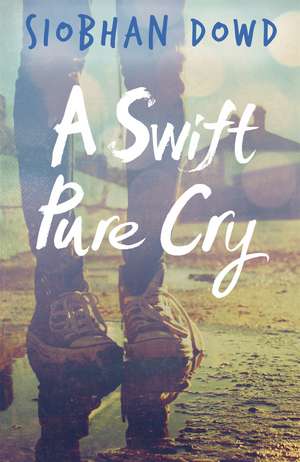
A Swift Pure Cry
Autor Siobhan Dowden Limba Engleză Paperback – 30 iul 2015
Prin lectura romanului A Swift Pure Cry, copiii mai mari și adolescenții vor experimenta o călătorie emoțională intensă, marcată de pierderea inocenței și de descoperirea rezilienței interioare. Notăm cu interes felul în care Siobhan Dowd reușește să picteze tabloul rural al Irlandei din 1984, un spațiu unde tradiția religioasă și suferința personală se ciocnesc brutal. Protagonista, Shell, este pusă în fața unei maturizări forțate: după moartea mamei, ea trebuie să navigheze între neglijența unui tată alcoolic și complexitatea primei iubiri, totul sub privirea critică a unei comunități mici. Subliniem că, deși contextul pare sumbru, proza lui Dowd păstrează o puritate aparte, transformând lupta tinerei Shell într-o odă adusă supraviețuirii. Părinții care au citit cu plăcere Fourth Child de Jessica Winter vor aprecia și această carte pentru onestitatea cu care explorează colțurile întunecate ale vieții de familie și căutarea harului în momente de criză. Față de alte lucrări ale autoarei, precum The London Eye Mystery, unde accentul cade pe rezolvarea unui puzzle logic, aici accentul este pus pe profunzimea psihologică și pe impactul social al alegerilor individuale. Credem că forța acestui text rezidă în echilibrul dintre durere și speranță. Este o lectură care nu menajează cititorul, dar îi oferă instrumentele necesare pentru a înțelege complexitatea naturii umane. Deși este un roman despre pierdere, este, în egală măsură, o poveste despre puterea de a merge mai departe atunci când întreaga lume pare să se prăbușească.
Preț: 47.15 lei
Preț vechi: 91.67 lei
-49%
Carte disponibilă
Livrare economică 25 septembrie-06 octombrie
Livrare express 08-12 septembrie pentru 65.07 lei
Specificații
ISBN-10: 1909531189
Pagini: 320
Ilustrații: No
Dimensiuni: 131 x 198 x 25 mm
Greutate: 0.23 kg
Editura: Penguin Classics
De ce să citești această carte
Recomandăm această carte adolescenților și părinților care caută o narațiune profundă despre maturizare și responsabilitate. Cititorul câștigă o perspectivă empatică asupra provocărilor sociale și religioase, învățând despre curajul de a înfrunta stigmatul. Este un instrument excelent pentru a discuta despre consecințele acțiunilor noastre și despre puterea iertării, fiind ideală pentru tinerii de peste 14 ani care apreciază literatura realistă.
Despre autor
Siobhan Dowd (1960–2007) a fost o distinsă scriitoare și activistă britanică, cunoscută pentru vocea sa literară unică și angajamentul față de drepturile omului. De-a lungul carierei sale scurte, dar prolifice, a explorat teme dificile cu o sensibilitate remarcabilă. Romanul său Bog Child a câștigat postum prestigioasa Carnegie Medal în 2009. Siobhan Dowd a lăsat în urmă o moștenire literară puternică, inclusiv ideea originală pentru Sieben Minuten nach Mitternacht (A Monster Calls), demonstrând o abilitate extraordinară de a comunica cu publicul tânăr despre pierdere și curaj.
Descriere
Extras
The place brought to mind a sinking ship. Wood creaked on the floor, across the pews, up in the gallery. Around the walls, a fierce March wind chased itself.
The congregation launched into the Our Father as if every last soul was going down. Heaven. Bread. Trespass. Temptation. The words whisked passed Shell’s ears like rabbits vanishing into their holes. She tried wriggling her nose to make it slimmer. Evil. Mrs McGrath’s hat lurched in front of her, its feather looking drunk: three-to-one odds it would fall off. Declan Ronan, today’s altar boy, was examining the tabernacle, licking his lips with half-shut eyes. Whatever he was thinking, it wasn’t holy.
Trix and Jimmy sat on either side of her, swinging their legs in their falling-down socks. They were in a competition to see who could go higher and faster.
‘Whisht,’ Shell hissed, poking Jimmy in the ribs.
‘Whisht yourself,’ said Jimmy aloud.
Thankfully, Dad didn’t hear. By now he was up at the microphone, reading the lesson like a demented prophet. His sideburns gleamed grey. The lines on his massive forehead rose and fell. This past year, he’d gone religion-mad. He’d become worshipper extraordinaire, handing out the hymn books, going round with the collection boxes every offertory. Most days he went into nearby Castlerock and walked the streets, collecting for the Church’s causes. On Sunday mornings, she’d often glimpse him practising the reading in his bedroom. He’d sit upright in front of the three panelled mirrors of Mam’s old dressing table, spitting out the words like bad grapes.
Shell, on the other hand, had no time for church: not since Mam’s death, over a year back. She remembered how, when she was small, Mam had made her, Jimmy and Trix dress up clean and bright and coaxed them through Mass with colouring pencils and paper. ‘Draw me an angel, Shell, playing hurling in the rain’; ‘Do me a cat, Jimmy, parachuting off a plane.’ Mam had liked the priests, the candles and the rosaries. Most of all, she’d loved the Virgin Mary. She’d said ‘Sweet Mary this and that’ all day long. Sweet Mary if the potatoes boiled over, if the dog caught a crow. Sweet Mary if the scones came out good and soft.
Then she died.
Shell remembered standing by Mam’s bed as she floated off. Dr Fallon, Mrs Duggan and Mrs McGrath had been there, with Father Carroll leading a round of the rosary. Her dad had stood off to the side, like a minor character in a film, mouthing the words rather than saying them. Now and at the hour of our . . . On the word ‘death’ Shell had frozen. Death. The word was a bad breath. The closer you got the more you wanted it to go away. She’d realized then she didn’t believe in heaven any more. Mam wasn’t going anywhere. She was going to nowhere, to nothing. Her face had fallen in, puckered and ash-white. Her thin fingers kneaded the sheets, working over them methodically. In Shell’s mind, Jesus got off the cross and walked off to the nearest bar. Mam’s face scrunched up, like a baby’s that’s about to cry. Then she died. Jesus drained off his glass of beer and went clean out of Shell’s life. Mrs McGrath put the mirror Mam had used for plucking her eyebrows up to her mouth and said, ‘She’s gone.’ It was quiet. Dad didn’t move. He just kept on mouthing the prayers, a fish out of water.
They’d waked her in the house over three days. Mam’s face turned waxen. Her fingers went blue and stiff, then yellow and loose again. They threaded them with her milk-white rosary beads. Then they buried her. It was a drama, the whole village bowing, the men doffing their hats. There were processions and candles, solemn stares, prayers, and callers night and day. I’m sorry for your trouble, they’d say. A feed of drink was drunk. Shell didn’t cry. Not at first. Not until a whole year passed. Then she’d cried long and hard as she planted the grave up with daffodils on a November day, the first anniversary.
The less religious Shell got, the more Dad became. Before Mam died, he’d only ever gone through the motions, standing in the church’s back porch, muttering with the other men about the latest cattlemart or hurling match. Mam hadn’t minded. She’d joked that men fell into two categories: they were either ardent about God and indifferent to women, or ardent about women and indifferent to God. If she’d been alive now, she wouldn’t have known him. He was piety personified. He’d sold the television, saying it was a vehicle of the devil. He’d taken over Mam’s old role and led Shell, Jimmy and Trix in a decade of the rosary every night, except Wednesdays and Saturdays, when he went straight down to Stack’s pub after his day of collecting. He’d given up his job on Duggans’ farm. He said he was devoting his life to the Lord.
Today, he was almost yelling. Avenging angels, crashing temples and false gods resounded in the small church, hurting the ear. Mrs McGrath’s hat slid off when the shock of the word thunder set the microphone off in a high-pitched whine. Dad’s eyes flickered. He was momentarily distracted. He looked up at the congregation, staring into the middle distance, seeing nobody. He clenched the lectern’s sides. Shell held her breath. Had he lost his place? No. He continued, but the steam had gone out of it. Jimmy punched the bench, making it boom, just as Dad faltered to the end.
‘This – is – the – word – of – the – Lord,’ he trailed.
‘Thanks be to God,’ the congregation chorused. Shell for one meant it. He’d done. Jimmy smirked. He made the hymn sheet into a spyglass and twisted to inspect the people in the gallery. Trix curled up on the floor, with her head on the kneeler. Dad came down from the altar. Everybody stood up. Shell averted her eyes from Dad as he shuffled up beside her. Bridie Quinn, her friend from school, caught her eye. She had two fingers up to her temple and was twizzling them round as if to say, Your dad is mad. Shell shrugged as if to reply, It’s nothing to do with me. Everybody was waiting for Father Carroll to do the Gospel. He was stooped and old, with a soft, sing-song voice. You could go off into a sweet, peaceful dream as he pattered out the words.
There was a long pause.
The wind outside died down. Crows cawed.
It wasn’t Father Carroll who approached the microphone but the new curate, Father Rose. He was fresh from the seminary, people said, up in the Midlands. He’d never spoken in public before. Shell had only seen him perform the rites in silence, at Father Carroll’s side. There was a quickening interest all around.
He stood at the lectern, eyes down, and turned the pages of the book with a slight frown of concentration. He was young, with a full head of hair that sprang upwards like bracken. He held his head to one side, as if considering a finer point of theology. When he found the place, he straightened up and smiled. It was the kind of smile that radiated out to everyone, everywhere at once. Shell felt he’d smiled at her alone. She heard him draw his breath.
‘“The next day, as they were leaving Bethany . . .”’ he began.
His voice was even, expressive. The words had a new tune in them, an accent from another place, a richer county. He read the words as if he’d written them himself, telling the story about Jesus throwing over the tables of the moneylenders outside the temple. Jesus raged with righteous anger and Father Rose’s mouth moved in solemn tandem. The air around him vibrated with shining picture bubbles. Shell could hear the caged birds under the arches, the clink of Roman coins. She could see the gorgeous colours of the Israelites’ robes, the light shafting through the temple columns. The images and sounds cascaded out from the pulpit, hanging in the air, turning over like angels in the spring light.
‘Please be seated,’ Father Rose said at the end of the reading. The congregation sat. Only Shell remained standing, her mouth open. The tables of the moneymen turned into hissing snakes. The multitudes fell silent. Jesus became a man, sad and real, smiling upon Shell as she stood in a daze.
‘Be seated,’ Father Rose repeated gently.
There was a rustle around her and Shell remembered where she was. God. Everyone’s staring. She plumped down. Trix tittered. Jimmy dug his spyglass in her side.
Father Rose came down the altar steps and stood before the congregation, arms folded, grinning, as if welcoming guests over for dinner. There was a mutter at this departure from practice. Father Carroll always went to the pulpit for his sermon. Father Rose began to speak.
From the Hardcover edition.
Recenzii
loss of innocence, and her resilient recovery.”—Publishers Weekly, Starred
“Dowd’s elegant, unsentimental prose and her instinctive grasp of the struggles of the human heart [lead] toward a hopeful ending. Don’t let your kids keep this book to themselves.”—People Magazine
“Told through flowing eloquent prose, with strong Joycean influences, this engrossing and haunting tale will not let the reader go.”—Kirkus Reviews