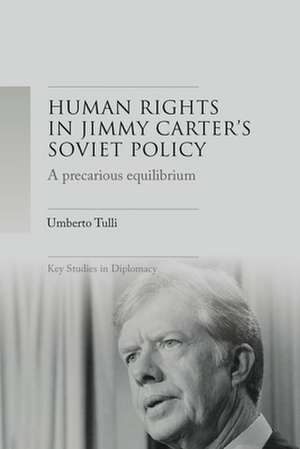
A precarious equilibrium: Key Studies in Diplomacy
Autor Umberto Tullien Limba Engleză Paperback – 7 sep 2021
Din seria Key Studies in Diplomacy
- 16%
 Preț: 211.37 lei
- 15%
 Preț: 280.26 lei
- 16%
 Preț: 276.58 lei
- 16%
 Preț: 276.38 lei
- 23%
 Preț: 751.07 lei
- 23%
 Preț: 744.64 lei
- 23%
 Preț: 748.66 lei
-
 Preț: 223.65 lei
-
 Preț: 176.59 lei
-
 Preț: 480.59 lei
- 23%
 Preț: 743.47 lei
-
 Preț: 508.52 lei
- 23%
 Preț: 804.44 lei
- 23%
 Preț: 750.86 lei
- 23%
 Preț: 610.20 lei
- 23%
 Preț: 833.64 lei
- nou
 Preț: 334.65 lei
- nou
 Preț: 254.01 lei
Preț: 142.47 lei
Puncte Express: 214
Carte disponibilă
Livrare economică 30 noiembrie-14 decembrie
Livrare express 13-19 noiembrie pentru 27.36 lei
Livrare prin curier în România Termenul estimat este afișat lângă disponibilitate.
Transport gratuit de la 400.00 lei Plată online sau ramburs, în funcție de opțiunile comenzii.
Retur gratuit în 14 zile Comandă securizată și suport în română.
Specificații
ISBN-13: 9781526160775
ISBN-10: 1526160773
Pagini: 224
Dimensiuni: 156 x 234 x 12 mm
Greutate: 0.35 kg
Editura: MANCHESTER UNIVERSITY PRESS
Colecția Key Studies in Diplomacy
Seria Key Studies in Diplomacy
ISBN-10: 1526160773
Pagini: 224
Dimensiuni: 156 x 234 x 12 mm
Greutate: 0.35 kg
Editura: MANCHESTER UNIVERSITY PRESS
Colecția Key Studies in Diplomacy
Seria Key Studies in Diplomacy
Notă biografică
Umberto Tulli is a Lecturer in the Department of Humanities and the School of International Studies at the University of Trento
Descriere
Human rights and detente inextricably intertwined during Carter's years. By promoting human rights in the USSR, Carter sought to build a domestic consensus for detente; through bipolar dialogue, he tried to advance human rights in the USSR. But, human rights contributed to the erosion of detente without achieving a lasting domestic consensus. -- .
Cuprins
Introduction 1 Setting the Stage for a Human Rights Policy 2 Human Rights and the 1976 Presidential Election 3 Firmness Abroad; Consensus at Home, 1977-1978. 4 Coping with Critics: the Choice in Favour of Quiet Diplomacy, 1978. 5 Critics' Triumph: Quiet Diplomacy, SALT II and the Invasion of Afghanistan, 1979-1980. Conclusions