
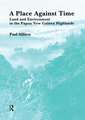
A Place Against Time: Land and Environment in the Papua New Guinea Highlands: Studies in Environmental Anthropology
Autor Paul Sillitoeen Limba Engleză Hardback – 15 ian 1997
| Toate formatele și edițiile | Preț | Express |
|---|---|---|
| Paperback (1) | 196.47 lei 6-8 săpt. | |
| Taylor & Francis – 17 mai 2016 | 196.47 lei 6-8 săpt. | |
| Hardback (1) | 543.01 lei 6-8 săpt. | |
| Taylor & Francis – 15 ian 1997 | 543.01 lei 6-8 săpt. |






Preț: 543.01 lei
Preț vechi: 1079.93 lei
-50% Nou
Puncte Express: 815
Preț estimativ în valută:
96.09€ • 112.67$ • 84.39£
96.09€ • 112.67$ • 84.39£
Carte tipărită la comandă
Livrare economică 16 februarie-02 martie
Preluare comenzi: 021 569.72.76
Specificații
ISBN-13: 9783718659258
ISBN-10: 3718659255
Pagini: 464
Dimensiuni: 174 x 246 x 29 mm
Greutate: 1.22 kg
Ediția:1
Editura: Taylor & Francis
Colecția Routledge
Seria Studies in Environmental Anthropology
Locul publicării:Oxford, United Kingdom
ISBN-10: 3718659255
Pagini: 464
Dimensiuni: 174 x 246 x 29 mm
Greutate: 1.22 kg
Ediția:1
Editura: Taylor & Francis
Colecția Routledge
Seria Studies in Environmental Anthropology
Locul publicării:Oxford, United Kingdom
V-ar putea interesa
-
 The Evolving Sphere of Food SecurityRosamond L. Naylor-18%Preț: 383.62 lei468.29 lei
 -
 Energy Poverty: Global Challenges and Local SolutionsAntoine Halff-14%Preț: 848.06 lei986.12 lei
 -
 -8%Preț: 229.28 lei249.41 lei
 -
 Practical Authority: Agency and Institutional Change in Brazilian Water PoliticsRebecca Neaera Abers-8%Preț: 304.15 lei332.08 lei
 -
 Preț: 405.66 lei
 -
 -18%Preț: 1019.82 lei1243.69 lei
 -
 Preț: 453.30 lei
 -
 The Rise and Fall of Countryside Management: A Historical AccountIan D. Rotherham-18%Preț: 1128.99 lei1376.82 lei
 -
 Watershed Management 2eIsobel W Heathcote-9%Preț: 934.65 lei1027.09 lei
 -
 Preț: 373.35 lei
 -
 Social Change in Melanesia: Development and HistoryPaul SillitoePreț: 295.57 lei
 -
 Global Energy DilemmasM BradshawPreț: 168.58 lei
 -
 Sustainable Surface Water Management – a Handbook For SUDSS Charlesworth-23%Preț: 700.19 lei909.33 lei
 -
 Our Energy FutureChristian Ngo-9%Preț: 824.84 lei906.41 lei
 -
 The Jevons Paradox and the Myth of Resource Efficiency ImprovementsJohn M. PolimeniPreț: 444.79 lei
 -
 Energy Security in Japan: Challenges After FukushimaVlado Vivoda-18%Preț: 1068.50 lei1303.04 lei
 -
 For the Love of LandJim HowellPreț: 168.14 lei
 -
 -31%Preț: 1442.47 lei2078.43 lei
 -
 -23%Preț: 720.72 lei936.01 lei
 -
 Sustainable DevelopmentPaul SillitoePreț: 246.03 lei
Recenzii
'Probably the most comprehensive, ethnographically rich environmental anthropology book ever written. It has the scope of classic works by Malinowski, with a much greater knowledge of ecology. I do not recall being as impressed by the ethnographic depth and the sophistication of environmental expertise in decades.' - Emilio Moran, Indiana University in American Anthropologist
Cuprins
I: Introduction; 1: Environmental Ethnoscience: Land Use, Soils and Society; 2: Rotating Land not Crops: Shifting Cultivation and Sweet Potato; II: The Climate Factor; 3: Ethnometeorology: The Climate; 4: Coping with Climatic Variations: The Spectre of Famine; III: The Land Resources Factor; 5: Ethnogeoscience: Topography and Geology; 6: Living with Land Loss: The Costs of Erosion; IV: The Biotic Factors; 7: Ethnobotany: Plants and Vegetation Communities; 8: Contending with Forest and Fallow: Demons to Regrowth; 9: Into the Soil: Nutrient Cycling and Decomposition; V: The Soil; 10: Ethnopedology: The Soils; 11: Keeping Up with Soil Status: The Implications of Variability; 12: Out of the Soil: Fertility Under Cultivation; VI: Conclusion; 13: Mounds of Soil: Grounds for Sound Land Resource Management; 14: Racing with Time: Degradation or Conservation?