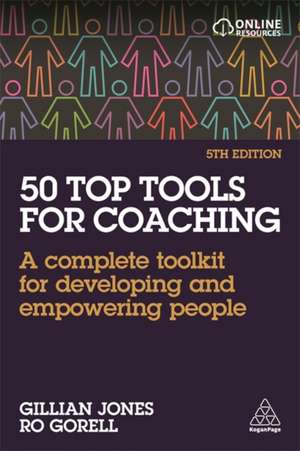
50 Top Tools for Coaching
Autor Gillian Jones, Ro Gorellen Limba Engleză Hardback – 27 apr 2021
Preț: 736.91 lei
Preț vechi: 827.98 lei
-11%
Puncte Express: 1105
Carte tipărită la comandă
Livrare economică 07-21 decembrie
Livrare prin curier în România Termenul estimat este afișat lângă disponibilitate.
Transport gratuit pentru acest produs Plată online sau ramburs, în funcție de opțiunile comenzii.
Retur gratuit în 14 zile Comandă securizată și suport în română.
Specificații
ISBN-13: 9781789666571
ISBN-10: 1789666570
Pagini: 352
Dimensiuni: 161 x 240 x 27 mm
Greutate: 0.95 kg
Ediția:5th edition
Editura: Kogan Page
ISBN-10: 1789666570
Pagini: 352
Dimensiuni: 161 x 240 x 27 mm
Greutate: 0.95 kg
Ediția:5th edition
Editura: Kogan Page
Cuprins
Chapter - 00: Introduction; Section - ONE: Setting up the coaching relationship; Chapter - 01: The coaching process Chapter - 02: Coaching assessment form; Chapter - 03: Coaching brief and contracting form; Chapter - 04: Coaching self-assessment questionnaire; Chapter - 05: Checklist for establishing contract rules; Chapter - 06: Action plan; Chapter - 07: Coaching evaluation; Section - TWO: Foundation tools; Chapter - 08: Listening model; Chapter - 09: Questioning skills and techniques; Chapter - 10: Feedback techniques and examples; Chapter - 11: The ORACLE model; Chapter - 12: Coffee-break coaching; Chapter - 13: Self-coaching; Section - THREE: Goal setting; Chapter - 14: Creating powerful intentions; Chapter - 15: Goal setting; Chapter - 16: Breaking down previous goals; Chapter - 17: Spatial action planning; Chapter - 18: Goal visualization; Chapter - 19: Goal visualization script; Section - FOUR: Problem resolution; Chapter - 20: Logical levels; Chapter - 21: Positive problem solving (reframing); Chapter - 22: Problem mapping; Section - FIVE: Values and beliefs; Chapter - 23: Internal conflict negotiation; Chapter - 24: Helping individuals reduce stress; Chapter - 25: Changing negative thought patterns; Chapter - 26: Determining values; Chapter - 27: Prioritizing values; Chapter - 28: Belief assessment; Section - SIX: Confidence strategies; Chapter - 29: Reprogramming negative language; Chapter - 30: Personal centre of excellence; Section - SEVEN: Working effectively with others; Chapter - 31: Behavioural conflict resolution; Chapter - 32: Analysing and resolving conflict; Chapter - 33: 360-degree perspective; Section - EIGHT: Personal impact and influence; Chapter - 34: Communication skills audit and skills inventory; Chapter - 35: 360-degree feedback; Section - NINE: Enhancing leadership style; Chapter - 36: Team climate inventory; Chapter - 37: Improving the delegation process Chapter - 38: Planning to delegate; Chapter - 39: Prioritizing: paired comparison; Chapter - 40: Prioritizing: importance-urgency grid; Section - TEN: Planning for the future; Chapter - 41: Life events; Chapter - 42: The discovery model; Chapter - 43: Ideal work designer; Chapter - 44: Managing my career; Section - ELEVEN: Developing women; Chapter - 45: Identifying super powers through strengths-based portraits; Chapter - 46: Reflected strengths portrait exercise; Chapter - 47: Improving confidence by changing beliefs; Chapter - 48: Questions to change limiting beliefs (part 1); Chapter - 49: Questions to change limiting beliefs (part 2); Chapter - 50: Confidence building; Chapter - 51: Emotional intelligence through modelling; Chapter - 52: Managing upwards; Section - TWELVE: Coaching during change; Chapter - 53: Creating a group coaching environment; Chapter - 54: Creating tools for group coaching; Chapter - 55: Lean change canvas; Chapter - 56: Mapping different perspectives; Chapter - 57: Hot seat coaching; Section - THIRTEEN: Ten extra tools from our coaches; Chapter - 58: Goal setting - ensuring goals are aligned; Chapter - 59: Targeting what's important; Chapter - 60: Guiding others through the change journey; Chapter - 61: SLOBA model for building credibility; Chapter - 62: The alignment process; Chapter - 63: Accountability review; Chapter - 64: Breaking the gridlock; Chapter - 65: Building resilience; Chapter - 66: Building and using a supportive network; Chapter - 67: Establishing a real purpose, meaning and value for client progress; Section - FOURTEEN: A manager's guide to coaching; Chapter - 68: Coaching to improve performance; Chapter - 69: Coaching to retain talent; Chapter - 70: Coaching people who are in conflict; Chapter - 71: Coaching upwards; Chapter - 72: Coaching for resistance to change: Dealing with negativity; Section - FIFTEEN: Building a coaching practice; Chapter - 73: Your value proposition; Chapter - 74: Creating coaching packages; Chapter - 75: Pricing your coaching services; Chapter - 76: Managing your business process; Chapter - 77: Systems for delivering your coaching services; Chapter - 78: Coach yourself first: A coach's guide to self-reflection (by Mark Bisson); Chapter - 79: Tools for supervision (by Mark Bisson)
Notă biografică
Gillian Jones is Founder of Emerge, an international development consultancy specialising in leadership, organizational development and executive coaching. Based in Southampton, UK, Gillian has over 20 years of experience coaching global executive and senior leaders and organizations to embed coaching cultures and foster inclusive leadership.Ro Gorell is Director of Change Optimised, she supports organisations navigating change, through coaching, mentoring and change management solutions. She has extensive experience in both group and individual coaching. She is also an enthusiastic researcher on coaching, behavioural science and leveraging technology.