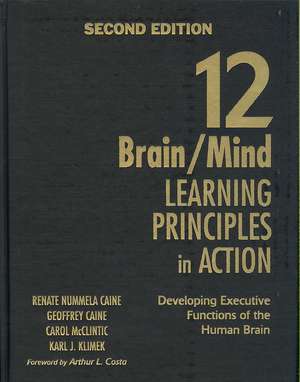
12 Brain/Mind Learning Principles in Action: Developing Executive Functions of the Human Brain
Editat de Renate Nummela Caine, Geoffrey Caine, Carol Lynn McClintic, Karl J. Klimeken Limba Engleză Hardback – 17 sep 2008
- Instructions for building foundational learning skills
| Toate formatele și edițiile | Preț | Express |
|---|---|---|
| Paperback (1) | 318.50 lei 3-5 săpt. | |
| SAGE Publications – 28 sep 2015 | 318.50 lei 3-5 săpt. | |
| Hardback (1) | 392.75 lei 38-50 zile | |
| SAGE Publications – 17 sep 2008 | 392.75 lei 38-50 zile |
Preț: 392.75 lei
Preț vechi: 503.53 lei
-22%
Puncte Express: 589
Preț estimativ în valută:
69.44€ • 80.26$ • 59.100£
69.44€ • 80.26$ • 59.100£
Carte tipărită la comandă
Livrare economică 01-13 mai
Specificații
ISBN-13: 9781412961066
ISBN-10: 1412961068
Pagini: 304
Dimensiuni: 216 x 279 mm
Ediția:Second Edition
Editura: SAGE Publications
Colecția Corwin
Locul publicării:Thousand Oaks, United States
ISBN-10: 1412961068
Pagini: 304
Dimensiuni: 216 x 279 mm
Ediția:Second Edition
Editura: SAGE Publications
Colecția Corwin
Locul publicării:Thousand Oaks, United States
V-ar putea interesa
-
 Mastering Human Resource ManagementKelvin Cheatle-26%Preț: 232.77 lei313.35 lei
 -
 Understanding Learning And TeachingMichael Prosser-29%Preț: 236.99 lei335.45 lei
 -
 -27%Preț: 187.19 lei257.54 lei
 -
 Facilitating Reflective Learning in Higher EducationAnne Brockbank-28%Preț: 243.52 lei339.01 lei
 -
 -29%Preț: 221.53 lei311.84 lei
 -
 Linking Practice and Theory: The Pedagogy of Realistic Teacher EducationFred A.J. Korthagen-15%Preț: 455.31 lei535.66 lei
 -
 100 Ideas for Trainee TeachersAngella Cooze-42%Preț: 71.36 lei123.98 lei
 -
 Preț: 354.53 lei
 -
 TrainSmart: Effective Trainings Every TimeRich AllenPreț: 270.64 lei
 -
 Preț: 299.17 lei
 -
 Doing Your PGCE at M-level: A Guide for StudentsKeira SewellPreț: 329.38 lei
 -
 Learning and Teaching with Virtual Learning EnvironmentsHelena GillespiePreț: 318.05 lei
 -
 Pedagogy and Practice: Culture and IdentitiesPatricia F MurphyPreț: 417.76 lei
 -
 Preț: 374.29 lei
 -
 The Practice-Based EducatorVinette Cross-8%Preț: 437.00 lei474.99 lei
Recenzii
"Validates researchers’ and educators’ commitment to scholarly, research-driven practices that are proven in the field."
“An excellent resource for teachers striving to improve student achievement by focusing on how the brain learns. I will be able to reach more students and enable them to have deeper understandings than they would have had I not read this book. The information is timely and relevant, and the need for this information will not lessen as time goes by.”
"For those educators passionate about practicing their craft, this book provides a blueprint for deliberate, thoughtful, and engaging teaching strategies. It is a must for anyone concerned with the question of how to be more effective in the classroom."
"Brings back the importance of teachers and what they do every day. It was empowering to receive validation for the way I ran my classroom. This book is full of scenarios, significant points, questions to ask yourself, steps to take, and bridges to the practical."
“An excellent resource for teachers striving to improve student achievement by focusing on how the brain learns. I will be able to reach more students and enable them to have deeper understandings than they would have had I not read this book. The information is timely and relevant, and the need for this information will not lessen as time goes by.”
"For those educators passionate about practicing their craft, this book provides a blueprint for deliberate, thoughtful, and engaging teaching strategies. It is a must for anyone concerned with the question of how to be more effective in the classroom."
"Brings back the importance of teachers and what they do every day. It was empowering to receive validation for the way I ran my classroom. This book is full of scenarios, significant points, questions to ask yourself, steps to take, and bridges to the practical."
Cuprins
Foreword to the First Edition by Arthur L. Costa
Preface to the Second Edition
Acknowledgments
About the Authors
1. Getting Started
We Have to Begin With Learning
Natural Learning Capacities
Three Critical Elements Teachers Must Master
What Are We After? Developing Higher-Order Learning Functions
Scaffolding the Journey: Shifting Your Instructional Approach
The Process That Makes It Real: How to Use This Book
Mastering the Vocabulary: Getting Started
Part I. Relaxed Alertness
2. Why Relaxed Alertness Provides the Optimum Emotional Climate for Learning
Relaxed Alertness Is a Psychophysiological State
Foundations of Relaxed Alertness
Executive Functions
What Can Educators Do?
For the Empowering Leader
Mastering the Vocabulary: Introduction to Relaxed Alertness
3. Complex Learning Is Enhanced by Challenge and Inhibited by Threat, Helplessness, and Fatigue
How Do We Know This? The Research That Supports This Principle
Processing This Principle
Taking It Into the Classroom
The First Foundational Skill for Relaxed Alertness: Ordered Sharing
For the Empowering Leader
Mastering the Vocabulary: The Development of Competence and Confidence Accompanied by Meaning or Purpose
4. The Brain/Mind Is Social
How Do We Know This? The Research That Supports This Principle
Processing This Principle
Taking It Into the Classroom
The Second Foundational Skill for Relaxed Alertness: Effective Listening and “I” Messages
For the Empowering Leader
Mastering the Vocabulary: How the Social Environment Contributes to Relaxed Alertness
5. The Search for Meaning Is Innate
How Do We Know This? The Research That Supports This Principle
Processing This Principle
Taking It Into the Classroom
The Third Foundational Skill for Relaxed Alertness: Process Meetings
For the Empowering Leader
Mastering the Vocabulary: How Meaning Contributes to a State of Relaxed Alertness
6. Emotions Are Critical to Patterning
How Do We Know This? The Research That Supports This Principle
Processing This Principle
Taking It Into the Classroom
The Fourth Foundational Skill for Relaxed Alertness: Resolving Conflict
For the Empowering Leader
Mastering the Vocabulary: Emotions and Patterning
Part II. Orchestrated Immersion
7. Creating the Richest Learning Environments Using Immersion in Complex Experience
How Do We Know This? The Research That Supports This Principle
Processing These Ideas
Taking It Into the Classroom
For the Empowering Leader
Mastering the Vocabulary: Creating the Richest Learning Environments Using Immersion in Complex Experience
8. The Brain/Mind Processes Parts and Wholes Simultaneously
How Do We Know This? The Research That Supports This Principle
Processing This Principle
Taking It Into the Classroom
The First Foundational Skill for Orchestrated Immersion: Designing Teacher-Orchestrated, Global Experiences
For the Empowering Leader
Mastering the Vocabulary: The Brain/Mind Processes Parts and Wholes Simultaneously
9. All Learning Engages the Physiology
How Do We Know This? The Research That Supports This Principle
Processing This Principle
Taking It Into the Classroom
The Second Foundational Skill for Orchestrated Immersion: Guiding Actor-Centered Learning
For the Empowering Leader
Mastering the Vocabulary: All Learning Engages the Physiology
10. The Search for Meaning Occurs Through Patterning
How Do We Know This? The Research That Supports This Principle
Processing This Principle
Taking It Into the Classroom
The Third Foundational Skill for Orchestrated Immersion: Seeing and Teaching Patterns
For the Empowering Leader
Mastering the Vocabulary: The Search for Meaning Occurs Through Patterning
11. Learning Is Developmental
How Do We Know This? The Research That Supports This Principle
Processing This Principle
Taking It Into the Classroom
The Fourth Foundational Skill for Orchestrated Immersion: Effective Assessment
For the Empowering Leader
Mastering the Vocabulary: Learning Is Developmental
Part III. Active Processing
12. How to Help Learners Digest and Consolidate Learning
How Do We Know This? The Research That Supports This Principle
Active Processing and the Instructional Approaches
For the Empowering Leader
Mastering the Vocabulary: How to Help Learners Digest and Consolidate Learning
13. There Are at Least Two Approaches to Memory. One Is to Store or Archive and the Other Is to Engage Multiple Memory Systems in Order to Make Sense of Experience
How Do We Know This? The Research That Supports This Principle
Memory and Decision Making
Processing This Principle
Taking It Into the Classroom
The First Foundational Skill for Active Processing: The Effective Use of Questions
For the Empowering Leader
Mastering the Vocabulary: There Are at Least Two Approaches to Memory. One Is to Store or Archive and the Other Is to Engage Multiple Memory Systems in Order to Make Sense of Experience
14. Learning Engages Both Focused Attention and Peripheral Perception
How Do We Know This? The Research That Supports This Principle
Processing This Principle
Taking It Into the Classroom
The Second Foundational Skill for Active Processing: Capitalizing on Attention Through the Effective Use of Observation
For the Empowering Leader
Mastering the Vocabulary: Learning Engages Both Focused Attention and Peripheral Perception
15. Learning Is Both Conscious and Unconscious
How Do We Know This? The Research That Supports This Principle
Processing This Principle
Taking It Into the Classroom
The Third Foundational Skill for Active Processing: Self-Regulation
For the Empowering Leader
Mastering the Vocabulary: Learning Is Both Conscious and Unconscious
16. Each Brain Is Uniquely Organized
How Do We Know This? The Research That Supports This Principle
Processing This Principle
Taking It Into the Classroom
The Fourth Foundational Skill for Active Processing: Advanced Questioning
For the Empowering Leader
Mastering the Vocabulary: Each Brain in Uniquely Organized
Resource A: The Brain/Mind Principles Wheel
Resource B: The Brain/Mind Learning Capacities Wheel
Resource C: How to Develop Process Learning Circles
Resource D: Guided Experiences Presentation Cycle
Resource E: Guidelines for the Guided Experiences Model
Resource F: Global Experience Design Wheel
Resource G: Sensory Poem
References
Index
Preface to the Second Edition
Acknowledgments
About the Authors
1. Getting Started
We Have to Begin With Learning
Natural Learning Capacities
Three Critical Elements Teachers Must Master
What Are We After? Developing Higher-Order Learning Functions
Scaffolding the Journey: Shifting Your Instructional Approach
The Process That Makes It Real: How to Use This Book
Mastering the Vocabulary: Getting Started
Part I. Relaxed Alertness
2. Why Relaxed Alertness Provides the Optimum Emotional Climate for Learning
Relaxed Alertness Is a Psychophysiological State
Foundations of Relaxed Alertness
Executive Functions
What Can Educators Do?
For the Empowering Leader
Mastering the Vocabulary: Introduction to Relaxed Alertness
3. Complex Learning Is Enhanced by Challenge and Inhibited by Threat, Helplessness, and Fatigue
How Do We Know This? The Research That Supports This Principle
Processing This Principle
Taking It Into the Classroom
The First Foundational Skill for Relaxed Alertness: Ordered Sharing
For the Empowering Leader
Mastering the Vocabulary: The Development of Competence and Confidence Accompanied by Meaning or Purpose
4. The Brain/Mind Is Social
How Do We Know This? The Research That Supports This Principle
Processing This Principle
Taking It Into the Classroom
The Second Foundational Skill for Relaxed Alertness: Effective Listening and “I” Messages
For the Empowering Leader
Mastering the Vocabulary: How the Social Environment Contributes to Relaxed Alertness
5. The Search for Meaning Is Innate
How Do We Know This? The Research That Supports This Principle
Processing This Principle
Taking It Into the Classroom
The Third Foundational Skill for Relaxed Alertness: Process Meetings
For the Empowering Leader
Mastering the Vocabulary: How Meaning Contributes to a State of Relaxed Alertness
6. Emotions Are Critical to Patterning
How Do We Know This? The Research That Supports This Principle
Processing This Principle
Taking It Into the Classroom
The Fourth Foundational Skill for Relaxed Alertness: Resolving Conflict
For the Empowering Leader
Mastering the Vocabulary: Emotions and Patterning
Part II. Orchestrated Immersion
7. Creating the Richest Learning Environments Using Immersion in Complex Experience
How Do We Know This? The Research That Supports This Principle
Processing These Ideas
Taking It Into the Classroom
For the Empowering Leader
Mastering the Vocabulary: Creating the Richest Learning Environments Using Immersion in Complex Experience
8. The Brain/Mind Processes Parts and Wholes Simultaneously
How Do We Know This? The Research That Supports This Principle
Processing This Principle
Taking It Into the Classroom
The First Foundational Skill for Orchestrated Immersion: Designing Teacher-Orchestrated, Global Experiences
For the Empowering Leader
Mastering the Vocabulary: The Brain/Mind Processes Parts and Wholes Simultaneously
9. All Learning Engages the Physiology
How Do We Know This? The Research That Supports This Principle
Processing This Principle
Taking It Into the Classroom
The Second Foundational Skill for Orchestrated Immersion: Guiding Actor-Centered Learning
For the Empowering Leader
Mastering the Vocabulary: All Learning Engages the Physiology
10. The Search for Meaning Occurs Through Patterning
How Do We Know This? The Research That Supports This Principle
Processing This Principle
Taking It Into the Classroom
The Third Foundational Skill for Orchestrated Immersion: Seeing and Teaching Patterns
For the Empowering Leader
Mastering the Vocabulary: The Search for Meaning Occurs Through Patterning
11. Learning Is Developmental
How Do We Know This? The Research That Supports This Principle
Processing This Principle
Taking It Into the Classroom
The Fourth Foundational Skill for Orchestrated Immersion: Effective Assessment
For the Empowering Leader
Mastering the Vocabulary: Learning Is Developmental
Part III. Active Processing
12. How to Help Learners Digest and Consolidate Learning
How Do We Know This? The Research That Supports This Principle
Active Processing and the Instructional Approaches
For the Empowering Leader
Mastering the Vocabulary: How to Help Learners Digest and Consolidate Learning
13. There Are at Least Two Approaches to Memory. One Is to Store or Archive and the Other Is to Engage Multiple Memory Systems in Order to Make Sense of Experience
How Do We Know This? The Research That Supports This Principle
Memory and Decision Making
Processing This Principle
Taking It Into the Classroom
The First Foundational Skill for Active Processing: The Effective Use of Questions
For the Empowering Leader
Mastering the Vocabulary: There Are at Least Two Approaches to Memory. One Is to Store or Archive and the Other Is to Engage Multiple Memory Systems in Order to Make Sense of Experience
14. Learning Engages Both Focused Attention and Peripheral Perception
How Do We Know This? The Research That Supports This Principle
Processing This Principle
Taking It Into the Classroom
The Second Foundational Skill for Active Processing: Capitalizing on Attention Through the Effective Use of Observation
For the Empowering Leader
Mastering the Vocabulary: Learning Engages Both Focused Attention and Peripheral Perception
15. Learning Is Both Conscious and Unconscious
How Do We Know This? The Research That Supports This Principle
Processing This Principle
Taking It Into the Classroom
The Third Foundational Skill for Active Processing: Self-Regulation
For the Empowering Leader
Mastering the Vocabulary: Learning Is Both Conscious and Unconscious
16. Each Brain Is Uniquely Organized
How Do We Know This? The Research That Supports This Principle
Processing This Principle
Taking It Into the Classroom
The Fourth Foundational Skill for Active Processing: Advanced Questioning
For the Empowering Leader
Mastering the Vocabulary: Each Brain in Uniquely Organized
Resource A: The Brain/Mind Principles Wheel
Resource B: The Brain/Mind Learning Capacities Wheel
Resource C: How to Develop Process Learning Circles
Resource D: Guided Experiences Presentation Cycle
Resource E: Guidelines for the Guided Experiences Model
Resource F: Global Experience Design Wheel
Resource G: Sensory Poem
References
Index
Descriere
This practical book provides new ways for teachers to engage their students and to raise student and teacher performance and satisfaction.