The Expedition of Cyrus
Autor Xenophon et al.
27 aug 2009
Paperback
Preț: 58.60 lei 71.98 lei
20-31 zile | 7-13 zile
-19%
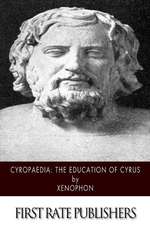
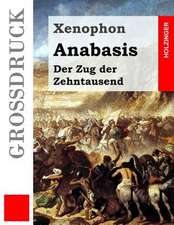
Xenophon of Athens (; Ancient Greek: Ξενοφῶν [ksenopʰɔ̂ːn]; c.430 – 355/354 BC) was an Athenian military leader, philosopher, and historian. At the age of 30, Xenophon was elected commander of one of the biggest Greek mercenary armies of the Achaemenid Empire, the Ten Thousand, that marched on and came close to capturing Babylon in 401 BC. As the military historian Theodore Ayrault Dodge wrote, "the centuries since have devised nothing to surpass the genius of this warrior". Xenophon established precedents for many logistical operations, and was among the first to describe flanking maneuvers and feints. Xenophon's Anabasis recounts his adventures with the Ten Thousand while in the service of Cyrus the Younger, Cyrus's failed campaign to claim the Persian throne from Artaxerxes II of Persia, and the return of Greek mercenaries after Cyrus's death in the Battle of Cunaxa. Anabasis is a unique first-hand, humble, and self-reflective account of military leader's experience in antiquity. On the topic of campaigns in Asia Minor and in Babylon, Xenophon wrote Cyropaedia outlining both military and political methods used by Cyrus the Great to conquer the Neo-Babylonian Empire in 539 BC. Anabasis and Cyropaedia inspired Alexander the Great and other Greeks to conquer Babylon and the Achaemenid Empire in 331 BC.
A student and a friend of Socrates, Xenophon recounted several Socratic dialogues – Symposium, Oeconomicus, Hiero, a tribute to Socrates – Memorabilia, and a chronicle of the philosopher's trial in 399 BC – Apology of Socrates to the Jury. Reading Xenophon's Memorabilia inspired Zeno of Citium to change his life and start the Stoic school of philosophy.
For at least two millennia, Xenophon's many talents fueled the debate of whether to place Xenophon with generals, historians or philosophers. For the majority of time in the past two millennia, Xenophon was recognized as a philosopher. Quintilian in The Orator's Education discusses the most prominent historians, orators and philosophers as examples of eloquence and recognizes Xenophon's historical work, but ultimately places Xenophon next to Plato as a philosopher. Today, Xenophon is best known for his historical works. The Hellenica continues directly from the final sentence of Thucydides' History of the Peloponnesian War covering the last seven years of the Peloponnesian War (431–404 BC) and the subsequent forty two years (404 BC–362 BC) ending with the Second Battle of Mantinea.
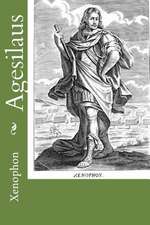
Despite being born an Athenian citizen, Xenophon came to be associated with Sparta, the traditional opponent of Athens. Experience as a mercenary and a military leader, service under Spartan commanders in Ionia, Asia Minor, Persia and elsewhere, exile from Athens, and friendship with King Agesilaus II endeared Xenophon to the Spartans. Much of what is known today about the Spartan society comes from Xenophon's works – the royal biography of the Spartan king Agesilaus and the Constitution of the Lacedaemonians.
Xenophon is recognized as one of the greatest writers of antiquity. Xenophon's works span multiple genres and are written in plain Attic Greek, which is why they have often been used in translation exercises for contemporary students of the Ancient Greek language. In the Lives and Opinions of Eminent Philosophers, Diogenes Laërtius observed that Xenophon was known as the "Attic Muse" because of the sweetness of his diction. Several centuries later, Roman philosopher and statesman Cicero described Xenophon's mastery of Greek composition in Orator with the following words: "the muses were said to speak with the voice of Xenophon". Roman orator, attorney and teacher of rhetoric Quintilian echoes Cicero in The Orator's Education saying "the Graces themselves seem to have molded his style and the goddess of persuasion sat upon his lips".