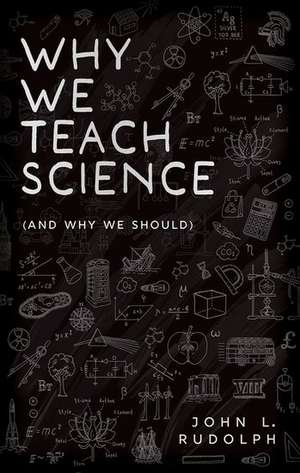
Why We Teach Science: (and Why We Should): Oxford University Press
Autor John L. Rudolphen Limba Engleză Hardback – 19 ian 2023
Din seria Oxford University Press
-
 Preț: 68.59 lei
 -
 Preț: 54.45 lei
 - 26%
 Preț: 224.28 lei
 - 18%
 Preț: 203.74 lei
 - 27%
 Preț: 255.84 lei
 - 18%
 Preț: 59.56 lei
 - 29%
 Preț: 83.29 lei
 - 16%
 Preț: 56.12 lei
 -
 Preț: 70.12 lei
 -
 Preț: 62.42 lei
 -
 Preț: 79.11 lei
 - 26%
 Preț: 283.04 lei
 - 19%
 Preț: 63.51 lei
 - 26%
 Preț: 257.20 lei
 - 5%
 Preț: 318.18 lei
 - 29%
 Preț: 83.78 lei
 - 18%
 Preț: 64.70 lei
 - 29%
 Preț: 83.86 lei
 - 21%
 Preț: 256.40 lei
 - 15%
 Preț: 70.07 lei
 - 26%
 Preț: 224.60 lei
 - 26%
 Preț: 224.42 lei
 - 19%
 Preț: 80.33 lei
 - 26%
 Preț: 283.31 lei
 - 19%
 Preț: 52.19 lei
 - 30%
 Preț: 209.91 lei
 -
 Preț: 64.48 lei
 -
 Preț: 75.79 lei
 - 19%
 Preț: 99.76 lei
 -
 Preț: 93.45 lei
 -
 Preț: 52.67 lei
 - 21%
 Preț: 163.27 lei
 - 25%
 Preț: 225.86 lei
 - 19%
 Preț: 104.37 lei
 - 5%
 Preț: 66.88 lei
 - 19%
 Preț: 57.28 lei
 - 26%
 Preț: 172.48 lei
 -
 Preț: 137.96 lei
 - 28%
 Preț: 85.93 lei
 - 19%
 Preț: 64.31 lei
 - 29%
 Preț: 85.24 lei
 -
 Preț: 59.15 lei
 - 26%
 Preț: 224.33 lei
 - 19%
 Preț: 64.02 lei
 - 28%
 Preț: 85.87 lei
 - 26%
 Preț: 292.05 lei
 - 23%
 Preț: 148.10 lei
 - 17%
 Preț: 84.69 lei
 - 20%
 Preț: 45.77 lei
 - 30%
 Preț: 213.28 lei
Preț: 181.15 lei
Preț vechi: 216.27 lei
-16%
Puncte Express: 272
Carte disponibilă
Livrare economică 05-11 noiembrie
Livrare express 20-24 octombrie pentru 63.68 lei
Livrare prin curier în România Termenul estimat este afișat lângă disponibilitate.
Transport gratuit de la 400.00 lei Plată online sau ramburs, în funcție de opțiunile comenzii.
Retur gratuit în 14 zile Comandă securizată și suport în română.
Specificații
ISBN-13: 9780192867193
ISBN-10: 0192867199
Pagini: 224
Dimensiuni: 145 x 223 x 17 mm
Greutate: 0.43 kg
Editura: OUP OXFORD
Colecția OUP Oxford
Seria Oxford University Press
Locul publicării:Oxford, United Kingdom
ISBN-10: 0192867199
Pagini: 224
Dimensiuni: 145 x 223 x 17 mm
Greutate: 0.43 kg
Editura: OUP OXFORD
Colecția OUP Oxford
Seria Oxford University Press
Locul publicării:Oxford, United Kingdom
Recenzii
Science education isn't just for producing future scientists. It's for producing science literate citizens. The benefits of science literacy, long accepted in US education, are now being questioned and even attacked. In Why We Teach Science, Rudolph examines how well science education has served this purpose and finds it lacking. He argues for a new approach to teaching science, one that meets the needs of a science literate society.
In Why We Teach Science and Why We Should, John Rudolph provocatively interrogates the discrepancy between the professed aims of American science education and the way in which it is actually conducted, ending with a compelling plea to reorient science education to serve science and society effectively.
This book is an essential read for anybody with any interest in what goes on in science education in our schools. Drawing from a lifetime of scholarship, he shows how we got to where we are today, and then, how that is failing the overwhelming majority of our children. He offers a new innovative vision of how to do justice to science and to young people.
Science has been seen as both the cause and the solution to every American dilemma for the past sixty years. In Why We Teach Science, John L. Rudolph pushes beyond the clichés of those debates to offer a unique, clear-eyed prescription for the kind of science education we really need.
In Why We Teach Science, John Rudolph reflects on Americans' distressing lack of understanding of how science creates reliable knowledge, so starkly revealed by the pandemic. Building on the wisdom of visionaries like Carl Sagan and James Rutherford, he argues convincingly for a new type of science education that focuses on having students learn "where science sits as a knowledge-producing institution in society and the value scientific expertise offers". Beautifully written, Rudolph correctly challenges our long-standing focus on teaching science facts. Badly needed are thousands of college professors to lead the way by addressing this urgent call.
What goals should science education aim for? And are today's schools achieving those goals? Why We Teach Science provides a lucid and comprehensive framework for thinking about these questions, outlining a practical philosophy for science education while also persuasively arguing that some goals are more worth achieving than others.
A timely book by one of the country's best and most interesting thinkers about the history and current practice of science.
There is a great deal to admire in this book and the desired audience is not restricted to academics or educators. There is potential for this work to stir conversation and perhaps shape policy. Rudolph gives voice to countless grumbling conversations science education professors have.
The topic is timely; the pandemic and climate change have increased attention to science education, and Rudolph writes thoughtfully.
In a thoroughly researched yet accessible style, Rudolph provides an overview of the evolution of the why and how of formal science education from the late 1800s to the present.
Why we Teach Science (and Why we Should)should be read by every science educator and teacher. The more we come to realize that change is needed, the more likely it is for this change to happen. John Rudolph is to be commended for writing a book that is a call for change.
In Why We Teach Science and Why We Should, John Rudolph provocatively interrogates the discrepancy between the professed aims of American science education and the way in which it is actually conducted, ending with a compelling plea to reorient science education to serve science and society effectively.
This book is an essential read for anybody with any interest in what goes on in science education in our schools. Drawing from a lifetime of scholarship, he shows how we got to where we are today, and then, how that is failing the overwhelming majority of our children. He offers a new innovative vision of how to do justice to science and to young people.
Science has been seen as both the cause and the solution to every American dilemma for the past sixty years. In Why We Teach Science, John L. Rudolph pushes beyond the clichés of those debates to offer a unique, clear-eyed prescription for the kind of science education we really need.
In Why We Teach Science, John Rudolph reflects on Americans' distressing lack of understanding of how science creates reliable knowledge, so starkly revealed by the pandemic. Building on the wisdom of visionaries like Carl Sagan and James Rutherford, he argues convincingly for a new type of science education that focuses on having students learn "where science sits as a knowledge-producing institution in society and the value scientific expertise offers". Beautifully written, Rudolph correctly challenges our long-standing focus on teaching science facts. Badly needed are thousands of college professors to lead the way by addressing this urgent call.
What goals should science education aim for? And are today's schools achieving those goals? Why We Teach Science provides a lucid and comprehensive framework for thinking about these questions, outlining a practical philosophy for science education while also persuasively arguing that some goals are more worth achieving than others.
A timely book by one of the country's best and most interesting thinkers about the history and current practice of science.
There is a great deal to admire in this book and the desired audience is not restricted to academics or educators. There is potential for this work to stir conversation and perhaps shape policy. Rudolph gives voice to countless grumbling conversations science education professors have.
The topic is timely; the pandemic and climate change have increased attention to science education, and Rudolph writes thoughtfully.
In a thoroughly researched yet accessible style, Rudolph provides an overview of the evolution of the why and how of formal science education from the late 1800s to the present.
Why we Teach Science (and Why we Should)should be read by every science educator and teacher. The more we come to realize that change is needed, the more likely it is for this change to happen. John Rudolph is to be commended for writing a book that is a call for change.
Notă biografică
John L. Rudolph is Vilas Distinguished Achievement professor in the Department of Curriculum and Instruction at the University of Wisconsin-Madison. He has affiliate appointments in the Department of Educational Policy Studies and the Robert and Jean Holtz Center for Science and Technology Studies and is the past editor-in-chief of the Wiley & Sons journal Science Education. Prior to his faculty appointment, he taught physics, chemistry, and biology in middle schools and high schools across Wisconsin.
Cuprins
- Introduction
- What We Say
- 1: The Reasons We Teach Science
- What We Do
- 2: The Science Education We Have
- 3: Should We Be Training More Scientists? The Numbers Say No
- 4: The Failure of Scientific Literacy
- 5: How Well Does the Science Education We Have Actually Work?
- 6: Science Education for Better Thinking and the Limits of "Doing" Science
- What We Need
- 7: Science Education for Building Public Trust
- 8: How to Get There