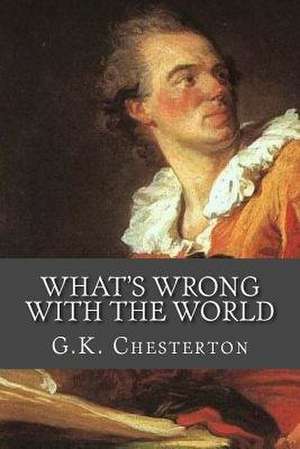
What's Wrong with the World
Autor G. K. Chesterton Design de Rolf McEwenen Limba Engleză Paperback
În Anglia de la începutul secolului XX, o perioadă dominată de certitudinea progresului și de efervescența idealismului politic, What's Wrong with the World apare ca o interogație profundă asupra direcției în care se îndreaptă umanitatea modernă. Considerăm că forța acestui volum rezidă în onestitatea brutală a premisei sale: întrebat de cotidianul The Times ce este în neregulă cu lumea, G. K. Chesterton a oferit cel mai scurt și mai onest răspuns posibil: „Eu sunt”. Această lucrare extinde acea intuiție, transformând un eseu social într-o pledoarie pasională pentru regăsirea umanului în fața sistemelor abstracte.
Remarcăm o structură care refuză rigoarea aridă a tratatelor politice, autorul preferând să exploreze eșecurile modernității prin prisma paradoxului și a „distributismului” — o a treia cale între capitalism și socialism. Stilul său contemplativ și evocativ transformă analiza socială într-o formă de artă. Cartea amintește de All Things Considered prin agilitatea cu care trece de la observații cotidiene la întrebări teologice, dar se diferențiază prin focalizarea sa acută pe structura familiei și pe necesitatea proprietății mici, atomizate, ca pavăză împotriva statului monolitic.
În contextul operei sale, volumul se plasează între fundamentele teologice din Orthodoxy și critica culturală din Heretics, servind drept punte între credința sa religioasă și viziunea sa politică aplicată. Chesterton nu scrie ca un ideolog, ci ca un „romantic” (așa cum indică subtitlul), deplângând faptul că liderii naționali au ajuns să se teamă de poporul pe care pretindeau că îl conduc. Este o lectură esențială pentru a înțelege de ce „prințul paradoxului” rămâne o voce relevantă în analiza crizelor de identitate ale Occidentului.
Preț: 78.80 lei
Carte indisponibilă temporar
Specificații
ISBN-10: 1536962848
Pagini: 174
Dimensiuni: 152 x 229 x 9 mm
Greutate: 0.24 kg
V-ar putea interesa
-
 The Man Who Was ThursdayG. K. Chesterton-28%Preț: 45.60 lei63.49 lei
 -
 The Structure of Liberty: Justice and the Rule of LawRandy E. Barnett-15%Preț: 170.26 lei200.98 lei
 -
 Culture and AnarchyMatthew Arnold-20%Preț: 56.73 lei70.49 lei
 -
 OrthodoxyG. K. Chesterton-18%Preț: 29.30 lei35.91 lei
 -
 North Korea UndercoverJohn Sweeney-20%Preț: 73.79 lei92.34 lei
 -
 Why I Am Not a ChristianBertrand RussellPreț: 106.13 lei
 -
 Preț: 146.38 lei
 -
 JapanizationWilliam PesekPreț: 204.44 lei
 -
 RWANDA, INC.Patricia CrisafulliPreț: 115.66 lei
 -
 The Political Thought of Frederick DouglassNicholas BuccolaPreț: 262.77 lei
 -
 Eugenics and Other EvilsG. K. ChestertonPreț: 40.67 lei
 -
 A Miscellany of MenG. K. ChestertonPreț: 40.46 lei
 -
 In Defense of SanityG. K. ChestertonPreț: 124.44 lei
 -
 Preț: 113.09 lei
 -
 Preț: 142.67 lei
 -
 HereticsG. K. ChestertonPreț: 46.29 lei
 -
 The Everyman ChestertonG. K. Chesterton-16%Preț: 123.15 lei147.20 lei
 -
 The Paradoxes of Mr. PondG. K. ChestertonPreț: 64.92 lei
 -
 The Man Who Was ThursdayG. K. ChestertonPreț: 38.95 lei
 -
 ManaliveG. K. ChestertonPreț: 38.39 lei
 -
 The New JerusalemG. K. ChestertonPreț: 44.37 lei
De ce să citești această carte
Recomandăm această carte cititorilor care apreciază filosofia socială scrisă cu spirit și profunzime poetică. Veți descoperi o critică vizionară a modernității care, deși publicată acum un secol, anticipează dilemele economice și morale actuale. Este un câștig intelectual major pentru oricine dorește să exploreze distributismul și să înțeleagă de ce sistemele politice mari eșuează adesea în a proteja demnitatea individului.
Despre autor
Gilbert Keith Chesterton (1874–1936) a fost un scriitor, filosof și teolog laic englez, supranumit „prințul paradoxului” datorită stilului său literar unic. Autor prodigios, el a alternat între ficțiunea detectivistică (seria Father Brown) și eseistica apologetică, convertindu-se ulterior la catolicism. Stilul său se remarcă prin răsturnarea proverbelor și a zicalelor populare pentru a revela adevăruri spirituale surprinzătoare. Chesterton este considerat un succesor al marilor gânditori victorieni, exercitând o influență vastă asupra teologiei contemporane și a criticii sociale prin opere fundamentale precum Orthodoxy și The Everlasting Man.