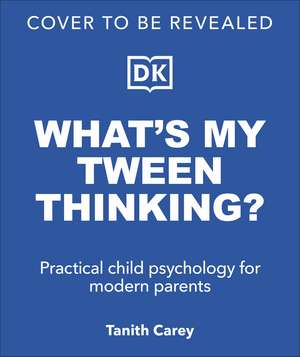
What's My Tween Thinking?
Autor Tanith Careyen Limba Engleză Paperback – 15 feb 2024
This practical parenting handbook grounded in evidence-based psychology explores the changes in development during the "in-between years". Discover what your tween is really thinking.
Taking 75 recognisable scenarios, parenting author Tanith Carey and Child Clinical Psychologist Dr Angharad Rudkin address real-world concerns that parents of tweens face, from hearing "I hate you" and "just one more game", to friendship clashes, school concerns, body worries, and online safety.
Discover how to stay connected with your tween and lay the groundwork for the teenage years ahead.
| Toate formatele și edițiile | Preț | Express |
|---|---|---|
| Paperback (2) | 98.65 lei 21-33 zile | +50.23 lei 6-12 zile |
| Dorling Kindersley - DK – 15 feb 2024 | 98.65 lei 21-33 zile | +50.23 lei 6-12 zile |
| Dorling Kindersley - DK – 13 feb 2024 | 117.04 lei 3-5 săpt. |
Preț: 98.65 lei
Preț vechi: 120.11 lei
-18%
Puncte Express: 148
Preț estimativ în valută:
17.45€ • 20.61$ • 15.03£
17.45€ • 20.61$ • 15.03£
Carte disponibilă
Livrare economică 27 februarie-11 martie
Livrare express 12-18 februarie pentru 60.22 lei
Specificații
ISBN-13: 9780241654163
ISBN-10: 0241654165
Pagini: 208
Dimensiuni: 201 x 240 x 20 mm
Greutate: 0.65 kg
Editura: Dorling Kindersley - DK
Locul publicării:London, United Kingdom
ISBN-10: 0241654165
Pagini: 208
Dimensiuni: 201 x 240 x 20 mm
Greutate: 0.65 kg
Editura: Dorling Kindersley - DK
Locul publicării:London, United Kingdom
V-ar putea interesa
-
 -13%Preț: 83.04 lei95.74 lei
 -
 Preț: 89.03 lei
 -
 -18%Preț: 116.13 lei141.36 lei
 -
 -18%Preț: 98.73 lei120.17 lei
 -
 -16%Preț: 92.02 lei109.00 lei
 -
 Toddlers Made Easy: Become the Parent Every Child NeedsDr Cathryn Tobin-19%Preț: 84.72 lei104.61 lei
 -
 Preț: 69.92 lei
 -
 What's My Baby Thinking?Tanith CareyPreț: 133.19 lei
 -
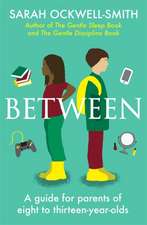 Between: A guide for parents of eight to thirteen-year-oldsSarah Ockwell-Smith-28%Preț: 84.39 lei116.67 lei
 -
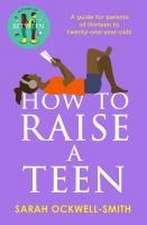 How to Raise a Teen: A guide for parents of thirteen to twenty-one-year-oldsSarah Ockwell-SmithPreț: 116.25 lei
 -
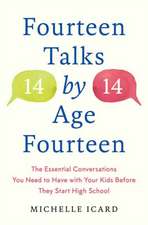 Fourteen (Talks) by (Age) FourteenMichelle IcardPreț: 150.36 lei
 -
 The Crucial Years: The essential guide to mental health and modern puberty in middle childhood (ages 6-12)Dr Sheryl Gonzalez Ziegler-27%Preț: 85.01 lei117.04 lei
 -
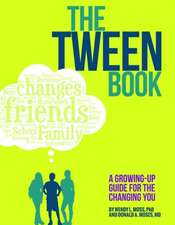 The Tween BookWendy L MossPreț: 59.50 lei
 -
 -29%Preț: 72.84 lei101.94 lei
 -
 -19%Preț: 62.08 lei76.66 lei
 -
 Preț: 55.00 lei
 -
 The Gift of Teenagers: Connect More, Worry LessRachel Kelly-26%Preț: 87.78 lei118.50 lei
 -
 What's Happening To Me? The Girl OneMicaela TapsellPreț: 59.36 lei
 -
 15-Minute Parenting: 8-12 YearsJoanna Fortune-28%Preț: 64.57 lei89.23 lei
 -
 The New Teen AgeGinni Mansberg-25%Preț: 68.20 lei91.43 lei
Recenzii
I really like this book series, having already read What's my Child Thinking? and What's My Teenager Thinking? Each spread in the latest title reflects on a statement a tween might come out with, such as "Nothing's the matter" or "I want a mobile phone". There are then different sections in response: what you might be thinking; what they might be thinking; and how you could respond. What I appreciate is the practical approach. It's not about panicking and dashing out to get help, but about listening to your tween, validating their feelings and helping them grow as a person to cope with all the issues that will come their way in life. It's also reassuring to read about what is 'normal' at this stage of development - things like young people needing to distance themselves from us as parents so that they can 'find' their own identity.
The book is divided into two age ranges, 8-10 and 10-12, and is extremely easy to use. You can either dip in and out of issues or read particular sections in more detail. Inset boxes and illustrations make the key information accessible. Carey and Rudkin are excellent at supporting with empowering, practical approaches for both parents and children, to help us all learn and grow together and cope with the complexities of modern life.
The book is divided into two age ranges, 8-10 and 10-12, and is extremely easy to use. You can either dip in and out of issues or read particular sections in more detail. Inset boxes and illustrations make the key information accessible. Carey and Rudkin are excellent at supporting with empowering, practical approaches for both parents and children, to help us all learn and grow together and cope with the complexities of modern life.