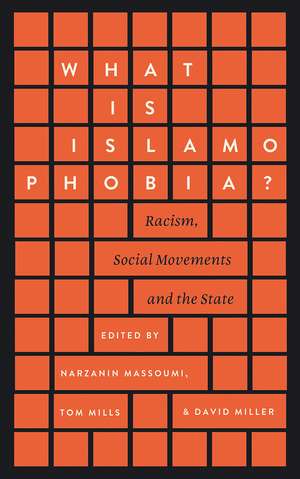
What Is Islamophobia?: Racism, Social Movements and the State
Editat de Narzanin Massoumi, Tom Mills, David Milleren Limba Engleză Hardback – 15 aug 2017
Observăm în ultimul deceniu o evoluție îngrijorătoare a discursului public, în care islamofobia a încetat să fie doar o serie de prejudecăți izolate, transformându-se într-un fenomen sistemic, adânc înrădăcinat în structurile occidentale. Volumul What Is Islamophobia?, coordonat de Narzanin Massoumi, Tom Mills și David Miller, marchează o schimbare de paradigmă în literatura de specialitate, refuzând să trateze acest fenomen doar ca pe o simplă fobie individuală sau o eroare ideologică. Autorii propun o analiză structurală riguroasă, definind ceea ce ei numesc cei „cinci piloni” care susțin acest mecanism: de la instituțiile statului și mișcările neoconservatoare, până la segmente ale liberalismului modern și stânga pro-război.
Descoperim aici o critică necruțătoare a modului în care rasismul anti-musulman este perpetuat prin politici publice și mișcări sociale transnaționale. Cititorii familiarizați cu Secularism, Race, and the Politics of Islamophobia de Sharmin Sadequee vor aprecia modul în care acest volum extinde cadrul teoretic, trecând de la relația dintre secularism și rasă către o analiză a infrastructurii politice și a rețelelor de influență care finanțează și promovează aceste discursuri. În timp ce alte lucrări se concentrează pe microagresiuni, această lucrare publicată de PLUTO PRESS investighează „mașinăria” statului.
Structura volumului reflectă o progresie logică, pornind de la impactul politicilor de securitate asupra comunităților și culminând cu strategii concrete de rezistență și advocacy. Această abordare completează preocupările anterioare ale editorului Narzanin Massoumi, vizibile în Muslim Women, Social Movements and the 'War on Terror', unde analiza se concentra pe mobilizarea socială în contextul conflictelor armate. Reținem faptul că această lucrare nu se limitează la diagnoză, ci oferă o perspectivă necesară pentru înțelegerea modului în care rasismul se adaptează în contextul geopolitic actual.
Preț: 650.20 lei
Preț vechi: 706.75 lei
-8%
Carte tipărită la comandă
Livrare economică 14-28 noiembrie
Specificații
ISBN-10: 0745399584
Pagini: 204
Dimensiuni: 127 x 216 x 28 mm
Greutate: 0.48 kg
Editura: PLUTO PRESS
Colecția Pluto Press
V-ar putea interesa
-
 Living with AIDS and HIVDavid MillerPreț: 142.39 lei
 -
 -18%Preț: 763.03 lei930.51 lei
 -
 -18%Preț: 764.42 lei932.22 lei
 -
 Al-Ghazali and the Qur'an: One Book, Many MeaningsMartin Whittingham-15%Preț: 458.10 lei538.94 lei
 -
 -18%Preț: 1128.43 lei1376.12 lei
 -
 -18%Preț: 1125.28 lei1372.29 lei
 -
 Understanding U.S.-Latin American Relations: Theory and HistoryMark Eric Williams-18%Preț: 1374.83 lei1676.63 lei
 -
 Out of Error: Further Essays on Critical RationalismDavid Miller-15%Preț: 444.50 lei522.94 lei
 -
 Barthélemy Saint-HilaireGeorges PicotPreț: 94.78 lei
 -
 L.-A. BlanquiHippolyte CastillePreț: 93.68 lei
 -
 La mêlée socialeGeorges ClémenceauPreț: 231.53 lei
 -
 Questions et figures politiquesRaymond PoincaréPreț: 231.20 lei
 -
 L'application du système collectivisteLucien DeslinièresPreț: 238.89 lei
 -
 Preț: 277.01 lei
 -
 L'Europe politique et socialeMaurice BlockPreț: 269.92 lei
 -
 Discours sur l'utilité et les avantages des voyages des princesCharles-François de Lubersac de LivronPreț: 116.13 lei
 -
 Où En Est La Politique Coloniale de la France: l'Âge de l'AgricultureJoseph Chailley-BertPreț: 87.38 lei
 -
 Les Rouges peints par eux-mêmesCharles De La VarennePreț: 177.51 lei
De ce să citești această carte
Această carte este esențială pentru cercetătorii și profesioniștii din științe sociale care doresc să înțeleagă mecanismele politice din spatele rasismului sistemic. Cititorul câștigă o perspectivă clară asupra modului în care instituțiile statului și mișcările sociale interacționează pentru a crea prejudecăți. Este un instrument critic pentru oricine vrea să depășească explicațiile simpliste despre ură și să analizeze infrastructura de putere care o susține.
Despre autor
Narzanin Massoumi este o cercetătoare și autoare recunoscută pentru studiile sale privind mișcările sociale, feminismul și politicile anti-terorism. Interesul său academic se concentrează pe modul în care comunitățile musulmane din Occident navighează peisajul politic post-2003, temă explorată pe larg în lucrarea sa anterioară despre rolul femeilor musulmane în mișcările anti-război din Marea Britanie. Alături de Tom Mills și David Miller, ea coordonează proiecte de cercetare care investighează rețelele de putere, propaganda și impactul politicilor de stat asupra drepturilor civile, fiind o voce critică importantă în sociologia politică contemporană.
Descriere scurtă
Together, the contributors demonstrate that this emergent racism is not simply a product of ideology, but is driven by a combination of social, political, and cultural factors. What Is Islamophobia? concludes with reflections on existing strategies for tackling this growing issue and considers different approaches to countering anti-Muslim prejudice.
Notă biografică
Recenzii
Cuprins
1. Wall and Route
2. ‘The Land Without the People’: The Impact of the Wall
3. Enveloping Jerusalem
4. The Wall and the International Community
5. Activism and Advocacy
Notes
Index
Descriere
What is the purpose of the West Bank Wall?