
Water Use and Poverty Reduction: New Frontiers in Regional Science: Asian Perspectives, cartea 8
Autor Md. Fakrul Islamen Limba Engleză Paperback – 7 iun 2018
Din seria New Frontiers in Regional Science: Asian Perspectives
- 15%
 Preț: 656.12 lei
 - 18%
 Preț: 734.36 lei
 - 15%
 Preț: 621.03 lei
 - 18%
 Preț: 772.53 lei
 - 18%
 Preț: 704.54 lei
 - 18%
 Preț: 727.36 lei
 - 18%
 Preț: 734.36 lei
 - 15%
 Preț: 673.89 lei
 - 15%
 Preț: 623.50 lei
 - 15%
 Preț: 688.47 lei
 - 15%
 Preț: 723.62 lei
 - 18%
 Preț: 759.72 lei
 - 15%
 Preț: 621.42 lei
 - 15%
 Preț: 671.24 lei
 - 15%
 Preț: 672.43 lei
 - 18%
 Preț: 890.95 lei
 - 15%
 Preț: 645.82 lei
 -
 Preț: 382.57 lei
 - 18%
 Preț: 861.63 lei
 -
 Preț: 382.37 lei
 - 24%
 Preț: 625.22 lei
 - 18%
 Preț: 904.01 lei
 - 15%
 Preț: 690.28 lei
 - 15%
 Preț: 674.79 lei
 - 24%
 Preț: 686.50 lei
 - 18%
 Preț: 1250.24 lei
 - 15%
 Preț: 647.30 lei
 - 18%
 Preț: 758.57 lei
 - 15%
 Preț: 642.01 lei
 -
 Preț: 347.34 lei
 - 18%
 Preț: 1073.84 lei
Preț: 602.80 lei
Preț vechi: 753.50 lei
-20%
Puncte Express: 904
Carte tipărită la comandă
Livrare economică 20-26 octombrie
Livrare prin curier în România Termenul estimat este afișat lângă disponibilitate.
Transport gratuit pentru acest produs Plată online sau ramburs, în funcție de opțiunile comenzii.
Retur gratuit în 14 zile Comandă securizată și suport în română.
Specificații
ISBN-13: 9784431566441
ISBN-10: 4431566449
Pagini: 204
Ilustrații: XXIX, 171 p. 71 illus., 64 illus. in color.
Dimensiuni: 155 x 235 x 11 mm
Greutate: 0.36 kg
Ediția:Softcover reprint of the original 1st edition 2016
Editura: Springer
Colecția New Frontiers in Regional Science: Asian Perspectives
Seria New Frontiers in Regional Science: Asian Perspectives
Locul publicării:Tokyo, Japan
ISBN-10: 4431566449
Pagini: 204
Ilustrații: XXIX, 171 p. 71 illus., 64 illus. in color.
Dimensiuni: 155 x 235 x 11 mm
Greutate: 0.36 kg
Ediția:Softcover reprint of the original 1st edition 2016
Editura: Springer
Colecția New Frontiers in Regional Science: Asian Perspectives
Seria New Frontiers in Regional Science: Asian Perspectives
Locul publicării:Tokyo, Japan
V-ar putea interesa
-
 -9%Preț: 706.04 lei775.87 lei
 -
 Enduring AcequiasJuan Estevan ArellanoPreț: 141.10 lei
 -
 The Water Sensitive CityGary Grant-8%Preț: 515.38 lei560.21 lei
 -
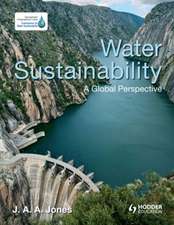 Water Sustainability: A Global PerspectiveJ.A.A. Jones-15%Preț: 649.86 lei764.55 lei
 -
 The Water BookAlok Jha-27%Preț: 67.43 lei91.91 lei
 -
 -23%Preț: 122.64 lei159.43 lei
 -
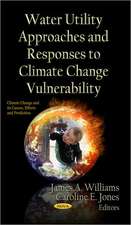 Water Utility Approaches & Responses to Climate Change VulnerabilityJames A. Williams-26%Preț: 888.16 lei1207.81 lei
 -
 -20%Preț: 169.01 lei211.62 lei
 -
 -21%Preț: 187.08 lei237.03 lei
Cuprins
Ch 1 Identification Of the Problem.- Ch 2 The Teesta River and Its Basin Area.- Ch 3 The Field Survey: A Comparative Socio-Economic Survey on the Dalia and Gazoldoba Areas.- Ch 4 Indicators and Principles of International Water Sharing.- Ch 5 Different Approaches to International Water Sharing Issue.- Ch 6 Bilateral Water Sharing Model.- Ch 7 Recommendations.
Textul de pe ultima copertă
This book is the outcome of empirical research on the sharing of water of the Teesta River, which flows through India and Bangladesh. The main purpose is to show how regional cooperation between India and Bangladesh regarding sharing of Teesta River water can ensure optimal benefits for people living in the area of the Teesta Basin located in the two countries. The author takes an interdisciplinary approach focusing on the relationship between availability of water and the reduction of poverty in the Teesta Basin as a whole. The book presents findings of a comparative socioeconomic survey on the Dalia and Gazoldoba irrigable areas, with background information on the Teesta River and its origin, spatio-physical nature, geomorphic and hydrological characteristics, irrigation and water delivery system through the Gazoldoba barrage in India and the Dalia barrage in Bangladesh. Citing the principles of transboundary freshwater sharing, this work focuses on different approaches to international water sharing and introduces an optimal approach to dry season water sharing and welfare maximization by developing a bilateral water sharing model. The model is tested through computer simulation, and an alternative water allocation policy is proposed. Water Use and Poverty Reduction is highly recommended to readers who seek an optimum solution to transboundary and bilateral water sharing and poverty reduction issues.
Caracteristici
Presents a valuable resource, with its interdisciplinary character, for courses in environmental science, social work, and policy studies Provides a base for relating poverty to international water sharing Serves as an example of appropriate application of modern methods and techniques of scientific social research Includes supplementary material: sn.pub/extras