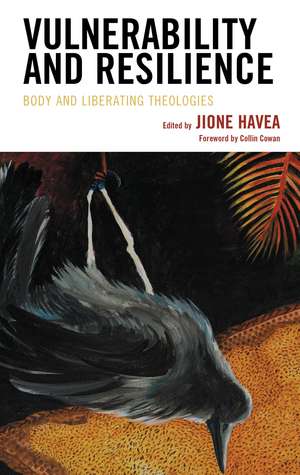
Vulnerability and Resilience: Body and Liberating Theologies: Theology in the Age of Empire
Editat de Jione Havea Contribuţii de Stephen Burns, Cláudio Carvalhaes, Wanda Deifelt, Masiiwa Ragies Gunda, Karl Hand, Dwight N. Hopkins, Adriaan van Klinken, Brian F. Kolia, Monica Jyotsna Melanchthon, Sarojini Nadar, Nienke Pruiksma, Sarasvathie Reddy, Luis N. Rivera-Pagán, Jenny Te Paa Daniel Cuvânt înainte de Collin Cowanen Limba Engleză Hardback – 28 ian 2020
The contributors to Vulnerability and Resilience refuse to be trapped. At the intersection of body and liberation theologies, they tell their stories in the hope that they will expose cultures that make individuals and communities vulnerable, and that those stories will encourage vulnerable subjects to be resilient and bring change to theological institutions that conserve vulnerability. Because of the location of the contributors-the Americas, Africa, Asia, Europe, Caribbean, and Oceania-this book is a testimony that vulnerability is present all over the world, and that resilience is a liberating alternative.


Preț: 552.89 lei
Preț vechi: 817.42 lei
-32%
Puncte Express: 829
Carte tipărită la comandă
Livrare economică 23 noiembrie-07 decembrie
Livrare prin curier în România Termenul estimat este afișat lângă disponibilitate.
Transport gratuit pentru acest produs Plată online sau ramburs, în funcție de opțiunile comenzii.
Retur gratuit în 14 zile Comandă securizată și suport în română.
Specificații
ISBN-13: 9781978703636
ISBN-10: 1978703635
Pagini: 258
Ilustrații: 1 b/w illustrations;
Dimensiuni: 160 x 233 x 22 mm
Greutate: 0.51 kg
Editura: Bloomsbury Publishing
Colecția Fortress Academic
Seria Theology in the Age of Empire
Locul publicării:New York, United States
ISBN-10: 1978703635
Pagini: 258
Ilustrații: 1 b/w illustrations;
Dimensiuni: 160 x 233 x 22 mm
Greutate: 0.51 kg
Editura: Bloomsbury Publishing
Colecția Fortress Academic
Seria Theology in the Age of Empire
Locul publicării:New York, United States
Cuprins
Foreword
Collin I. Cowan
1.Tell us
Jione Havea
Part One: Dare to (Re)story
2.Stories Telling Bodies: A Self-Disclosing Queer Theology of Sexuality and Vulnerability
Adriaan van Klinken
3.Jesus' Colonized Masculinity in Luke
Karl Hand
4."I am my Body": Toward a Body-Affirming Faith
Masiiwa Ragies Gunda
5.Utopian Couplings: When Bem Viver Meets Mary
Nienke Pruiksima
6.Eve's Serpent (Gen 3:1-9) Meets Sina's Tuna at Fagogo
Brian F. Kolia
7.Rape Matters: Dinah (Genesis 34) Meets Asifa Bano
Monica J. Melanchthon
Part Two: Dare to (Re)Imagine
8.Bodies, Identities, and Empire
Wanda Deifelt
9.In the Face of Empire: Black Liberation Theology, M.L. King, Jr., and the Jesus Story
Dwight N. Hopkins
10.In the Face of Empire: Postcolonial Theology from the Caribbean
Luis N. Rivera-Pagán
11.Theological Shifts: From Multiculturalisms to Multinaturalisms
Cláudio Carvalhaes
12.Liturgy After the Abuse
Stephen Burns
13.Embodied Epistemologies: Queering the Aca
Collin I. Cowan
1.Tell us
Jione Havea
Part One: Dare to (Re)story
2.Stories Telling Bodies: A Self-Disclosing Queer Theology of Sexuality and Vulnerability
Adriaan van Klinken
3.Jesus' Colonized Masculinity in Luke
Karl Hand
4."I am my Body": Toward a Body-Affirming Faith
Masiiwa Ragies Gunda
5.Utopian Couplings: When Bem Viver Meets Mary
Nienke Pruiksima
6.Eve's Serpent (Gen 3:1-9) Meets Sina's Tuna at Fagogo
Brian F. Kolia
7.Rape Matters: Dinah (Genesis 34) Meets Asifa Bano
Monica J. Melanchthon
Part Two: Dare to (Re)Imagine
8.Bodies, Identities, and Empire
Wanda Deifelt
9.In the Face of Empire: Black Liberation Theology, M.L. King, Jr., and the Jesus Story
Dwight N. Hopkins
10.In the Face of Empire: Postcolonial Theology from the Caribbean
Luis N. Rivera-Pagán
11.Theological Shifts: From Multiculturalisms to Multinaturalisms
Cláudio Carvalhaes
12.Liturgy After the Abuse
Stephen Burns
13.Embodied Epistemologies: Queering the Aca
Recenzii
If the first part is a confronting, visceral, poetic, embodied and liberating vulnerability (with some humor thrown in for good measure), the second is a challenging, theoretically, pastorally and theologically embedded program for transformation. Together the two parts of this book provide a glorious, erotic powerhouse for the metamorphosis of contemporary Christian theology and praxis.
Highly commendable. A moving, challenging, and liberating collection of essays that explore the subversive nature of resilience. In this book the meaning of vulnerability as powerlessness is challenged to demonstrate that the vulnerable have agency with the power to speak. Resilience comes with the courage to talk back to the powers that bind.
A sobering but hopeful read! The essays in this wide-ranging volume tackle an immensely important and yet peculiarly controversial topic: bodies in which we live. These thoughtful and provocative analyses will enable us to see various precious bodies that are being denigrated or violated bodies in our world today. They will further embolden us to embody our theological thinking and emend our theological practice.
This volume of collected essays is a "daring" project that disturbs and unsettles the biblical text and traditional theological understandings. Almost all of the essays deal with subject matter- "body" and "liberation"- that is seldom interrogated in a sustained way in theological seminaries and churches around the globe. Of note is the diverse range of authors that bring together the experiences of marginalized groups across continents, ensuring that notions of vulnerability and resilience are interrogated as they intersect with transnational locations.
Through a transnational lens, Vulnerability and Resilience brilliantly interweaves the stories from those whose bodies have been categorized as vulnerable and, thus, not fully human. However, these stories create a courageous space to challenge the traditional understandings of vulnerability, oppression, and liberation by unfolding the theological meanings of the embodiment of resilience. This book plainly shows how the vulnerable and despised bodies, in fact, produce the critically transnational and deeply theological knowledge of resilience, resistance, and liberation. I highly recommend this book to anyone who wants to meditate on the deeper meaning of the vulnerable body of Jesus in various transnational contexts. Readers will appreciate the critical voices filled with love, hope, resilience, and resistance from the vulnerable who have never lost the power of agency.
How long, one rightly asks, how long can we remain vulnerable? How long can we wait and hope? How long can the subaltern hope to be listened to? How long will our voices just echo in the wilderness and not penetrate the smugness of the powerful? The contributors to this extraordinarily evocative volume refuse to take refuge in pious platitudes or shallow sentimentalism but offer a disturbingly direct and robustly resilient reading of issues and themes that is a bellwether leading us in our complex and messy present. No one who reads this book will come away comfortable; but they may come away determined to be part of a movement that challenges persistent injustice and rapacious power with the tools refined in the forge of vulnerability and the anvil of resilience.
Highly commendable. A moving, challenging, and liberating collection of essays that explore the subversive nature of resilience. In this book the meaning of vulnerability as powerlessness is challenged to demonstrate that the vulnerable have agency with the power to speak. Resilience comes with the courage to talk back to the powers that bind.
A sobering but hopeful read! The essays in this wide-ranging volume tackle an immensely important and yet peculiarly controversial topic: bodies in which we live. These thoughtful and provocative analyses will enable us to see various precious bodies that are being denigrated or violated bodies in our world today. They will further embolden us to embody our theological thinking and emend our theological practice.
This volume of collected essays is a "daring" project that disturbs and unsettles the biblical text and traditional theological understandings. Almost all of the essays deal with subject matter- "body" and "liberation"- that is seldom interrogated in a sustained way in theological seminaries and churches around the globe. Of note is the diverse range of authors that bring together the experiences of marginalized groups across continents, ensuring that notions of vulnerability and resilience are interrogated as they intersect with transnational locations.
Through a transnational lens, Vulnerability and Resilience brilliantly interweaves the stories from those whose bodies have been categorized as vulnerable and, thus, not fully human. However, these stories create a courageous space to challenge the traditional understandings of vulnerability, oppression, and liberation by unfolding the theological meanings of the embodiment of resilience. This book plainly shows how the vulnerable and despised bodies, in fact, produce the critically transnational and deeply theological knowledge of resilience, resistance, and liberation. I highly recommend this book to anyone who wants to meditate on the deeper meaning of the vulnerable body of Jesus in various transnational contexts. Readers will appreciate the critical voices filled with love, hope, resilience, and resistance from the vulnerable who have never lost the power of agency.
How long, one rightly asks, how long can we remain vulnerable? How long can we wait and hope? How long can the subaltern hope to be listened to? How long will our voices just echo in the wilderness and not penetrate the smugness of the powerful? The contributors to this extraordinarily evocative volume refuse to take refuge in pious platitudes or shallow sentimentalism but offer a disturbingly direct and robustly resilient reading of issues and themes that is a bellwether leading us in our complex and messy present. No one who reads this book will come away comfortable; but they may come away determined to be part of a movement that challenges persistent injustice and rapacious power with the tools refined in the forge of vulnerability and the anvil of resilience.