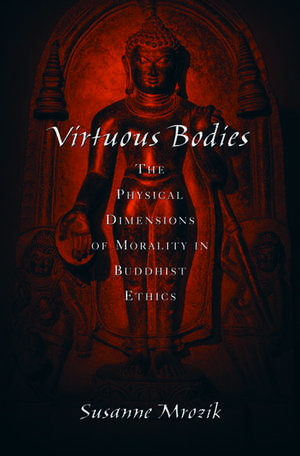
Virtuous Bodies: The Physical Dimensions of Morality in Buddhist Ethics: AAR Cultural Criticism Series
Autor Susanne Mroziken Limba Engleză Hardback – 26 iul 2007

Preț: 375.83 lei
Preț vechi: 464.72 lei
-19%
Puncte Express: 564
Carte tipărită la comandă
Livrare economică 27 noiembrie-08 decembrie
Livrare prin curier în România Termenul estimat este afișat lângă disponibilitate.
Transport gratuit de la 400.00 lei Plată online sau ramburs, în funcție de opțiunile comenzii.
Retur gratuit în 14 zile Comandă securizată și suport în română.
Specificații
ISBN-13: 9780195305005
ISBN-10: 0195305000
Pagini: 200
Dimensiuni: 234 x 157 x 23 mm
Greutate: 0.47 kg
Editura: Oxford University Press
Colecția OUP USA
Seria AAR Cultural Criticism Series
Locul publicării:New York, United States
ISBN-10: 0195305000
Pagini: 200
Dimensiuni: 234 x 157 x 23 mm
Greutate: 0.47 kg
Editura: Oxford University Press
Colecția OUP USA
Seria AAR Cultural Criticism Series
Locul publicării:New York, United States
V-ar putea interesa
-
 The Art of PowerThich Nhat HanhPreț: 71.76 lei
 -
 The Chan Whip Anthology: A Companion to Zen PracticeJeffrey L. Broughton-28%Preț: 371.22 lei518.85 lei
 -
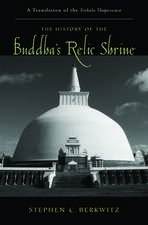 -19%Preț: 376.23 lei464.93 lei
 -
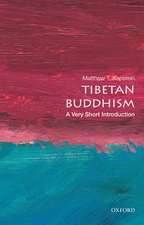 Tibetan Buddhism: A Very Short IntroductionMatthew T. Kapstein-20%Preț: 56.85 lei70.93 lei
 -
 The Joy of LivingYongey Mingyur RinpochePreț: 104.21 lei
 -
 The Diamond CutterGeshe Michael RoachPreț: 94.06 lei
 -
 This Is ItAlan WattsPreț: 73.28 lei
 -
 Mahayana Buddhism: The Doctrinal FoundationsPaul WilliamsPreț: 451.67 lei
 -
 Nature, Man and WomanAlan WattsPreț: 90.17 lei
 -
 Zen LifeDaniel LevinPreț: 93.41 lei
 -
 Practicing the JhanasStephen Snyder-27%Preț: 118.68 lei162.48 lei
 -
 The Miracle Of MindfulnessThich Nhat Hanh-27%Preț: 61.44 lei83.73 lei
 -
 Preț: 76.96 lei
Recenzii
Susanne Mrozik's Virtuous Bodies makes a valuable contribution by demonstrating, in a clear and compelling way, how morality is associated with the body in ancient Indian Buddhism. We learn that physical bodies, far from being just loathsome and defiling things, were sometimes viewed as beautiful and capable of aiding others in the pursuit of liberation. As such, Mrozik's work represents an exemplary study whereby a single text-Santideva's Compendium of Training?in tandem with insights from feminist and critical theory can be used to illuminate an important, and often overlooked, facet of early Buddhist thought.
Using Santideva's Compendium of Training as its point of focus, Mrozik's study redresses a major imbalance in modern discussions of Buddhist ethics, which have tended to emphasize the importance of the affective and cognitive dimensions of the moral development of the bodhisattva. Virtuous Bodies convincingly demonstrates that Buddhist moral discourse emphasizes the cultivation of physical qualities as much as it does psychological qualities. By clarifying the importance of the morally transformative power of Buddhas' and bodhisattvas' bodies in Mahayana literature, Mrozik offers a new way of conceptualizing the negative Buddhist discourse that devalues bodies as impermanent, foul, and lacking in intrinsic value.
Virtuous Bodies is a masterful interdisciplinary work. Mrozik's innovative approach breaks down disciplinary boundaries between ethics, gender studies, history of religions, and critical theory.
Using Santideva's Compendium of Training as its point of focus, Mrozik's study redresses a major imbalance in modern discussions of Buddhist ethics, which have tended to emphasize the importance of the affective and cognitive dimensions of the moral development of the bodhisattva. Virtuous Bodies convincingly demonstrates that Buddhist moral discourse emphasizes the cultivation of physical qualities as much as it does psychological qualities. By clarifying the importance of the morally transformative power of Buddhas' and bodhisattvas' bodies in Mahayana literature, Mrozik offers a new way of conceptualizing the negative Buddhist discourse that devalues bodies as impermanent, foul, and lacking in intrinsic value.
Virtuous Bodies is a masterful interdisciplinary work. Mrozik's innovative approach breaks down disciplinary boundaries between ethics, gender studies, history of religions, and critical theory.
Notă biografică
Susanne Mrozik is Assistant Professor of Religion, Mount Holyoke College