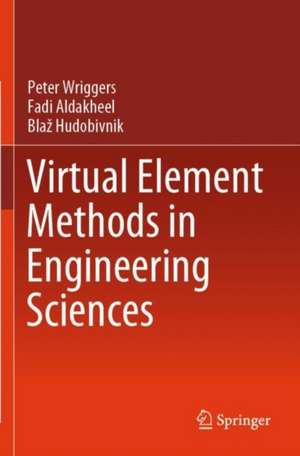
Virtual Element Methods in Engineering Sciences
Autor Peter Wriggers, Fadi Aldakheel, Bla¿ Hudobivniken Limba Engleză Paperback – 29 oct 2024
Preț: 1069.47 lei
Preț vechi: 1407.20 lei
-24%
Puncte Express: 1604
Carte tipărită la comandă
Livrare economică 24-30 noiembrie
Livrare prin curier în România Termenul estimat este afișat lângă disponibilitate.
Transport gratuit pentru acest produs Plată online sau ramburs, în funcție de opțiunile comenzii.
Retur gratuit în 14 zile Comandă securizată și suport în română.
Specificații
ISBN-13: 9783031392573
ISBN-10: 3031392574
Pagini: 468
Dimensiuni: 155 x 235 x 24 mm
Greutate: 0.79 kg
Editura: Springer
ISBN-10: 3031392574
Pagini: 468
Dimensiuni: 155 x 235 x 24 mm
Greutate: 0.79 kg
Editura: Springer
Notă biografică
Prof. Dr.-Ing. Peter Wriggers und Prof. Dr.-Ing. Udo Nackenhorst vertreten die Mechanik im Fachgebiet Bauingenieurwesen an der Leibniz Universität Hannover.
Dipl.-Ing. Sascha Beuermann (Altair Engineering), Dr.-Ing. Holger Spiess (Fraunhofer Institut SCAI) und Dr.-Ing. Stefan Löhnert (Northwestern University) waren wissenschaftliche Mitarbeiter am Institut für Baumechanik und Numerische Mechanik an der Leibniz Universität Hannover.
Cuprins
Introduction . . . . . . . . . . . . . . . . . . . . . . . . . . . . . . . . . . . . . . . . . . . . . . . . . . . 1
1.1 History and recent developments of virtual elements . . . . . . . . . . . . . 2
1.2 Introductory examples . . . . . . . . . . . . . . . . . . . . . . . . . . . . . . . . . . . . . . 7
1.2.1 Virtual element formulation of a truss using a linear ansatz . 7
1.2.2 Quadratic ansatz for a one-dimensional virtual truss element 11
1.3 Contents of the book . . . . . . . . . . . . . . . . . . . . . . . . . . . . . . . . . . . . . . . . 15
2 Continuum mechanics background . . . . . . . . . . . . . . . . . . . . . . . . . . . . . . . 17
2.1 Basic equations . . . . . . . . . . . . . . . . . . . . . . . . . . . . . . . . . . . . . . . . . . . . 17
2.1.1 Kinematics . . . . . . . . . . . . . . . . . . . . . . . . . . . . . . . . . . . . . . . . . 18
2.1.2 Balance laws . . . . . . . . . . . . . . . . . . . . . . . . . . . . . . . . . . . . . . . . 20
2.2 Constitutive Eqations . . . . . . . . . . . . . . . . . . . . . . . . . . . . . . . . . . . . . . . 24
2.2.1 Linear Elasticity . . . . . . . . . . . . . . . . . . . . . . . . . . . . . . . . . . . . . 24
2.2.2 Finite elasticity . . . . . . . . . . . . . . . . . . . . . . . . . . . . . . . . . . . . . . 26
2.2.3 Elasto-plasticity . . . . . . . . . . . . . . . . . . . . . . . . . . . . . . . . . . . . . 29
2.3 Variational formulation . . . . . . . . . . . . . . . . . . . . . . . . . . . . . . . . . . . . . . 322.3.1 Potential and weak form . . . . . . . . . . . . . . . . . . . . . . . . . . . . . . 32
2.3.2 Incompressibility . . . . . . . . . . . . . . . . . . . . . . . . . . . . . . . . . . . . 33
2.3.3 Plasticity . . . . . . . . . . . . . . . . . . . . . . . . . . . . . . . . . . . . . . . . . . . 34
2.3.4 Heat conduction . . . . . . . . . . . . . . . . . . . . . . . . . . . . . . . . . . . . . 34
3 VEM Ansatz functions and projection for solids . . . . . . . . . . . . . . . . . . . 37
3.1 Two-dimensional case . . . . . . . . . . . . . . . . . . . . . . . . . . . . . . . . . . . . . . . 38
3.1.1 General ansatz space . . . . . . . . . . . . . . . . . . . . . . . . . . . . . . . . . 39
3.1.2 Computation of the projection . . . . . . . . . . . . . . . . . . . . . . . . . 43
3.1.3 Equivalent projector . . . . . . . . . . . . . . . . . . . . . . . . . . . . . . . . . . 48
3.1.4 Projection for a linear ansatz . . . . . . . . . . . . . . . . . . . . . . . . . . . 49
3.1.5 Computation of the projection using symbolic software . . . . 52
3.1.6 Projection for a quadratic ansatz . . . . . . . . . . . . . . . . . . . . . . . . 54
3.1.7 Serendipity virtual element for a quadratic ansatz . . . . . . . . . 59
vii
viii Contents
3.1.8 Computation of the second order projection using
automatic di erentiation . . . . . . . . . . . . . . . . . . . . . . . . . . . . . . 61
3.1.9 Higher order ansatz for virtual elements . . . . . . . . . . . . . . . . . 65
3.2 Three-dimensional case . . . . . . . . . . . . . . . . . . . . . . . . . . . . . . . . . . . . . 66
3.2.1 General ansatz space in three dimensions . . . . . . . . . . . . . . . . 67
3.2.2 Computation of the projection in three dimensions . . . . . . . . 693.2.3 Projection for linear ansatz in three dimensions . . . . . . . . . . . 70
4 VEM Ansatz functions and projection for the Poisson equation . . . . . . 77
4.1 Two-dimensional case . . . . . . . . . . . . . . . . . . . . . . . . . . . . . . . . . . . . . . . 77
4.1.1 Computation of the projection . . . . . . . . . . . . . . . . . . . . . . . . . 78
4.1.2 Projection for a linear ansatz . . . . . . . . . . . . . . . . . . . . . . . . . . . 78
4.1.3 Projection for a quadratic ansatz . . . . . . . . . . . . . . . . . . . . . . . . 80
4.2 Three-dimensional case . . . . . . . . . . . . . . . . . . . . . . . . . . . . . . . . . . . . . 82
5 Construction of the virtual element. . . . . . . . . . . . . . . . . . . . . . . . . . . . . . . 85
5.1 Consistency Part . . . . . . . . . . . . . . . . . . . . . . . . . . . . . . . . . . . . . . . . . . . 86
5.1.1 Weak form . . . . . . . . . . . . . . . . . . . . . . . . . . . . . . . . . . . . . . . . . . 875.1.2 Potential . . . . . . . . . . . . . . . . . . . . . . . . . . . . . . . . . . . . . . . . . . . . 88
5.2 Stabilization techniques for virtual elements . . . . . . . . . . . . . . . . . . . . 90
5.2.1 Stabilization by a discrete bi-linear form . . . . . . . . . . . . . . . . . 90
5.2.2 Energy stabilization . . . . . . . . . . . . . . . . . . . . . . . . . . . . . . . . . . 93
5.3 Assembly to the global equation system . . . . . . . . . . . . . . . . . . . . . . . . 95
5.4 Numerical example for the Poisson equation . . . . . . . . . . . . . . . . . . . . 96
6 Virtual elements for elasticity problems . . . . . . . . . . . . . . . . . . . . . . . . . . . 103
6.1 Linear elastic response of two-dimensional solids . . . . . . . . . . . . . . . . 104
6.1.1 Consistency term using Voigt notation. . . . . . . . . . . . . . . . . . . 105
6.1.2 Consistency term using tensor notation . . . . . . . . . . . . . . . . . . 108
6.1.3 Stabilization . . . . . . . . . . . . . . . . . . . . . . . . . . . . . . . . . . . . . . . . 110
6.1.4 Definition and labeling of di erent mesh types . . . . . . . . . . . . 116
6.1.5 Numerical Example . . . . . . . . . . . . . . . . . . . . . . . . . . . . . . . . . . 118
6.2 Finite Strain: compressible elasticity . . . . . . . . . . . . . . . . . . . . . . . . . . . 121
6.2.1 Consistency term . . . . . . . . . . . . . . . . . . . . . . . . . . . . . . . . . . . . 121
6.2.2 Stability term . . . . . . . . . . . . . . . . . . . . . . . . . . . . . . . . . . . . . . . 126
6.2.3 Nonlinear virtual elements for three-dimensional problems
in elasticity . . . . . . . . . . . . . . . . . . . . . . . . . . . . . . . . . . . . . . . . . 127
6.2.4 General solution for nonlinear equations . . . . . . . . . . . . . . . . . 130
6.2.5 Numerical examples, compressible case . . . . . . . . . . . . . . . . . 1326.3 Incompressible elasticity . . . . . . . . . . . . . . . . . . . . . . . . . . . . . . . . . . . . 141
6.3.1 Linear virtual element with constant pressure . . . . . . . . . . . . . 143
6.3.2 Quadratic serendipity virtual element with linear pressure . . 144
6.3.3 Nearly incompressible behaviour . . . . . . . . . . . . . . . . . . . . . . . 150
6.3.4 Numerical examples, incompressible case . . . . . . . . . . . . . . . . 1516.4 Anisotropic elastic behaviour . . . . . . . . . . . . . . . . . . . . . . . . . . . . . . . . . 158
Contents ix
6.4.1 Numerical examples, anisotropic case . . . . . . . . . . . . . . . . . . . 161
7 Virtual elements for problems in dynamics . . . . . . . . . . . . . . . . . . . . . . . . 167
7.1 Continuum formulation . . . . . . . . . . . . . . . . . . . . . . . . . . . . . . . . . . . . . 167
7.2 Mass matrix . . . . . . . . . . . . . . . . . . . . . . . . . . . . . . . . . . . . . . . . . . . . . . . 169
7.3 Solution algorithms for small strains . . . . . . . . . . . . . . . . . . . . . . . . . . . 173
7.3.1 Matrix formulation . . . . . . . . . . . . . . . . . . . . . . . . . . . . . . . . . . . 173
7.3.2 Numerical integration in time, time stepping schemes . . . . . . 174
7.4 Solution algorithms for finite strains . . . . . . . . . . . . . . . . . . . . . . . . . . . 177
7.5 Numerical Examples . . . . . . . . . . . . . . . . . . . . . . . . . . . . . . . . . . . . . . . . 180
7.5.1 Transversal Beam Vibration . . . . . . . . . . . . . . . . . . . . . . . . . . . 181
7.5.2 Cook’s membrane problem . . . . . . . . . . . . . . . . . . . . . . . . . . . . 183
7.5.3 3D Beam . . . . . . . . . . . . . . . . . . . . . . . . . . . . . . . . . . . . . . . . . . . 185
8 Virtual element formulation for finite plasticity . . . . . . . . . . . . . . . . . . . . 1898.1 Formulation of the virtual element . . . . . . . . . . . . . . . . . . . . . . . . . . . . 189
8.1.1 Consistency part due to projection . . . . . . . . . . . . . . . . . . . . . . 189
8.1.2 Algorithmic treatment of finite strain elasto-plasticity. . . . . . 190
8.1.3 Energy stabilization of the virtual element for finite plasticity192
8.2 Numerical Examples . . . . . . . . . . . . . . . . . . . . . . . . . . . . . . . . . . . . . . . . 1938.2.1 Necking of cylindrical bar . . . . . . . . . . . . . . . . . . . . . . . . . . . . . 193
8.2.2 Taylor Anvil Test . . . . . . . . . . . . . . . . . . . . . . . . . . . . . . . . . . . . 197
9 Virtual elements for thermo-mechanical problems . . . . . . . . . . . . . . . . . 203
9.1 Introduction . . . . . . . . . . . . . . . . . . . . . . . . . . . . . . . . . . . . . . . . . . . . . . . 203
9.2 Governing equations . . . . . . . . . . . . . . . . . . . . . . . . . . . . . . . . . . . . . . . . 204
9.2.1 Energetic and dissipative response functions . . . . . . . . . . . . . . 205
9.2.2 Global constitutive equations . . . . . . . . . . . . . . . . . . . . . . . . . . 208
9.2.3 Weak form and pseudo-potential energy function . . . . . . . . . . 208
9.3 Virtual element discretization . . . . . . . . . . . . . . . . . . . . . . . . . . . . . . . . 209
9.4 Representative numerical example . . . . . . . . . . . . . . . . . . . . . . . . . . . . 213
9.4.1 Forming of a steel bolt . . . . . . . . . . . . . . . . . . . . . . . . . . . . . . . . 214
10 Virtual elements for fracture processes . . . . . . . . . . . . . . . . . . . . . . . . . . . 217
10.1 Brittle crack-propagation . . . . . . . . . . . . . . . . . . . . . . . . . . . . . . . . . . . . 218
10.1.1 Introduction . . . . . . . . . . . . . . . . . . . . . . . . . . . . . . . . . . . . . . . . . 218
10.1.2 Equations of brittle crack propagation . . . . . . . . . . . . . . . . . . . 220
10.1.3 Modeling crack propagation with virtual elements . . . . . . . . . 221
10.1.4 Computation of stress intensity factors . . . . . . . . . . . . . . . . . . 221
10.1.5 Propagation criteria: Maximum circumferential stress
criterion . . . . . . . . . . . . . . . . . . . . . . . . . . . . . . . . . . . . . . . . . . . . 223
10.1.6 Stress intensity factor analysis using virtual elements . . . . . . 223
10.1.7 Cutting Technique and crack update algorithm . . . . . . . . . . . . 227
10.1.8 Crack propagation simulations based on the cutting technique231
10.2 Phase field methods for brittle fracture using virtual elements . . . . . . 235
10.2.1 Governing equations for elasticity . . . . . . . . . . . . . . . . . . . . . . 235
x Contents
10.2.2 Regularization of a sharp crack topology . . . . . . . . . . . . . . . . 235
10.2.3 Variational formulation to brittle fracture . . . . . . . . . . . . . . . . 238
10.2.4 Formulation of the virtual element method . . . . . . . . . . . . . . . 241
10.2.5 VEM for phase field brittle fracture simulations . . . . . . . . . . . 244
10.3 Phase field methods for ductile fracture using virtual elements . . . . . 246
10.3.1 Governing equations for phase field ductile fracture . . . . . . . 248
10.3.2 Formulation of the virtual element method . . . . . . . . . . . . . . . 251
10.3.3 VEM for phase field ductile fracture simulations . . . . . . . . . . 251
10.4 An adaptive scheme to follow crack paths combining phase field
and cutting methods . . . . . . . . . . . . . . . . . . . . . . . . . . . . . . . . . . . . . . . . 257
10.4.1 Introduction . . . . . . . . . . . . . . . . . . . . . . . . . . . . . . . . . . . . . . . . . 25710.4.2 Modeling crack propagation using VEM . . . . . . . . . . . . . . . . 258
10.4.3 A discontinuous crack propagation using phase field . . . . . . 258
10.4.4 Numerical examples . . . . . . . . . . . . . . . . . . . . . . . . . . . . . . . . . 262
10.5 Fracturing analysis using damage mechanics . . . . . . . . . . . . . . . . . . . . 268
10.5.1 Governing equations for isotropic damage model . . . . . . . . . . 26810.5.2 Virtual element formulation for damage . . . . . . . . . . . . . . . . . 271
10.5.3 Numerical Examples . . . . . . . . . . . . . . . . . . . . . . . . . . . . . . . . . 274
11 Virtual element formulation for contact. . . . . . . . . . . . . . . . . . . . . . . . . . . 281
11.1 Introduction . . . . . . . . . . . . . . . . . . . . . . . . . . . . . . . . . . . . . . . . . . . . . . . 282
11.2 Theoretical background for contact of solids . . . . . . . . . . . . . . . . . . . . 283
11.2.1 Local contact kinematics . . . . . . . . . . . . . . . . . . . . . . . . . . . . . . 283
11.2.2 Constitutive relations for contact . . . . . . . . . . . . . . . . . . . . . . . 286
11.2.3 Potential form for solids in contact . . . . . . . . . . . . . . . . . . . . . . 288
11.3 Contact discretization using VEM . . . . . . . . . . . . . . . . . . . . . . . . . . . . . 290
11.3.1 Node insertion algorithm . . . . . . . . . . . . . . . . . . . . . . . . . . . . . . 290
11.3.2 Inserted node and gap in the two-dimensional case . . . . . . . . 292
11.3.3 Discretization of the contact interface in 2d . . . . . . . . . . . . . . 294
11.3.4 Penalty formulation . . . . . . . . . . . . . . . . . . . . . . . . . . . . . . . . . . 298
11.3.5 Augmented Lagrangian multiplier formulation . . . . . . . . . . . . 301
11.4 Stabilization of VEM in case of contact . . . . . . . . . . . . . . . . . . . . . . . . 30311.5 Numerical Examples . . . . . . . . . . . . . . . . . . . . . . . . . . . . . . . . . . . . . . . . 305
11.5.1 Patch test . . . . . . . . . . . . . . . . . . . . . . . . . . . . . . . . . . . . . . . . . . . 306
11.5.2 Hertzian contact problem . . . . . . . . . . . . . . . . . . . . . . . . . . . . . 306
11.5.3 Contacting Beams . . . . . . . . . . . . . . . . . . . . . . . . . . . . . . . . . . . 310
11.5.4 Hertz contact for large deformations . . . . . . . . . . . . . . . . . . . . 311
11.5.5 Ironing problem . . . . . . . . . . . . . . . . . . . . . . . . . . . . . . . . . . . . . 312
11.5.6 Wall mounting of a bolt . . . . . . . . . . . . . . . . . . . . . . . . . . . . . . . 315
12 Virtual elements for homogenization . . . . . . . . . . . . . . . . . . . . . . . . . . . . . 319
Contents xi
13 Virtual elements for beams and plates . . . . . . . . . . . . . . . . . . . . . . . . . . . . 32113.1 Virtual element formulations for Euler-Bernoulli beams . . . . . . . . . . 322
13.1.1 Fourth order ansatz for a one-dimensional virtual beam
element . . . . . . . . . . . . . . . . . . . . . . . . . . . . . . . . . . . . . . . . . . . . 326
13.2 Virtual element formulations for Kirchho -Love plates . . . . . . . . . . . 331
13.2.1 Mathematical model of the plate and constitutive relations . . 33113.3 Formulation of the virtual element . . . . . . . . . . . . . . . . . . . . . . . . . . . . 335
13.3.1 General notations . . . . . . . . . . . . . . . . . . . . . . . . . . . . . . . . . . . . 335
13.3.2 Ansatz and projection . . . . . . . . . . . . . . . . . . . . . . . . . . . . . . . . 336
13.3.3 Ansatz function . . . . . . . . . . . . . . . . . . . . . . . . . . . . . . . . . . . . . . 338
13.3.4 Plate element with constant curvature . . . . . . . . . . . . . . . . . . . 339
13.3.5 Plate element with linear curvature . . . . . . . . . . . . . . . . . . . . . 342
13.3.6 Residual and sti ness matrix of the virtual plate element . . . 345
13.4 Numerical examples . . . . . . . . . . . . . . . . . . . . . . . . . . . . . . . . . . . . . . . . 347
13.4.1 Notation used in the examples . . . . . . . . . . . . . . . . . . . . . . . . . . 347
13.4.2 Clamped plate under uniform load . . . . . . . . . . . . . . . . . . . . . . 34813.4.3 Rhombic plate . . . . . . . . . . . . . . . . . . . . . . . . . . . . . . . . . . . . . . . 352
13.4.4 Rectangular orthotropic plate . . . . . . . . . . . . . . . . . . . . . . . . . . 354
13.4.5 Plate with anisotropic material . . . . . . . . . . . . . . . . . . . . . . . . . 355
13.5 ⇠1 -continuous virtual elements for FEM codes . . . . . . . . . . . . . . . . . . 357
13.5.1 Clamped plate under uniform load . . . . . . . . . . . . . . . . . . . . . . 35813.5.2 Clamped plate under point load . . . . . . . . . . . . . . . . . . . . . . . . 359
13.5.3 L-shaped plate . . . . . . . . . . . . . . . . . . . . . . . . . . . . . . . . . . . . . . 360
A Formulae in virtual element formulations . . . . . . . . . . . . . . . . . . . . . . . . . 363
A.1 Integration over polygons . . . . . . . . . . . . . . . . . . . . . . . . . . . . . . . . . . . . 363
A.2 Computation of volume by surface integrals . . . . . . . . . . . . . . . . . . . . 365
B I-integral . . . . . . . . . . . . . . . . . . . . . . . . . . . . . . . . . . . . . . . . . . . . . . . . . . . . . . 369
References . . . . . . . . . . . . . . . . . . . . . . . . . . . . . . . . . . . . . . . . . . . . . . . . . . . . . 371
Index . . . . . . . . . . . . . . . . . . . . . . . . . . . . . . . . . . . . . . . . . . . . . . . . . . . . . . . . . . . . . 391
Textul de pe ultima copertă
This book provides a comprehensive treatment of the virtual element method (VEM) for engineering applications, focusing on its application in solid mechanics. Starting with a continuum mechanics background, the book establishes the necessary foundation for understanding the subsequent chapters. It then delves into the VEM's Ansatz functions and projection techniques, both for solids and the Poisson equation, which are fundamental to the method. The book explores the virtual element formulation for elasticity problems, offering insights into its advantages and capabilities. Moving beyond elasticity, the VEM is extended to problems in dynamics, enabling the analysis of dynamic systems with accuracy and efficiency. The book also covers the virtual element formulation for finite plasticity, providing a framework for simulating the behavior of materials undergoing plastic deformation. Furthermore, the VEM is applied to thermo-mechanical problems, where it allows for the investigation of coupled thermal and mechanical effects. The book dedicates a significant portion to the virtual elements for fracture processes, presenting techniques to model and analyze fractures in engineering structures. It also addresses contact problems, showcasing the VEM's effectiveness in dealing with contact phenomena. The virtual element method's versatility is further demonstrated through its application in homogenization, offering a means to understand the effective behavior of composite materials and heterogeneous structures. Finally, the book concludes with the virtual elements for beams and plates, exploring their application in these specific structural elements. Throughout the book, the authors emphasize the advantages of the virtual element method over traditional finite element discretization schemes, highlighting its accuracy, flexibility, and computational efficiency in various engineering contexts.
Caracteristici
Presents the history and recent developments of virtual elements
Includes several examples for deeper understanding of the formulations and associated algorithms
Describes new mathematical method for solution of ordinary and partial differential equations related to engineering
Includes several examples for deeper understanding of the formulations and associated algorithms
Describes new mathematical method for solution of ordinary and partial differential equations related to engineering