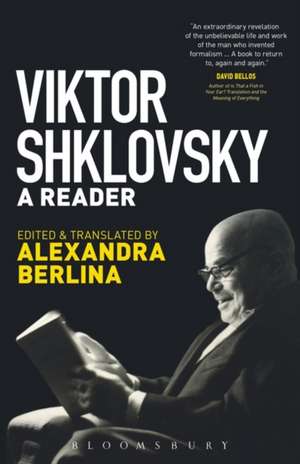
Viktor Shklovsky: A Reader
Autor Viktor Shklovsky Editat de Dr. Alexandra Berlinaen Limba Engleză Hardback – dec 2016
În peisajul academic al criticii literare, Viktor Shklovsky rămâne figura centrală a Formalismului rus, iar volumul Viktor Shklovsky: A Reader se constituie ca o resursă fundamentală pentru studiile de licență și masterat în filologie și istoria ideilor. Subliniem importanța acestei ediții îngrijite de Dr. Alexandra Berlina, care reușește să ofere, în premieră pentru spațiul anglofon, o imagine panoramică asupra unei cariere ce s-a întins pe șapte decenii. Contextul disciplinar în care se încadrează lucrarea este cel al teoriei literare aplicate, volumul fiind laureat cu premiul Aldo and Jeanne Scaglione pentru traducere academică în 2016.
Descoperim aici o structură riguroasă, organizată în secțiuni ce urmăresc evoluția cronologică și conceptuală a autorului. Prima parte se concentrează pe publicațiile OPOYAZ, incluzând eseuri canonice precum „Art as Device”, în timp ce a doua parte explorează „hibrizii autobiografici”, unde granița dintre teorie și viață se estompează. Această abordare este mult mai cuprinzătoare decât cea din Russian Formalist Criticism de Lee T. Lemon, care, deși acoperă aria esențială a eseisticii timpurii, nu oferă profunzimea biografică și contextul epistolar prezent în acest „Reader”.
Suntem de părere că forța acestui volum rezidă în capacitatea de a demonta mitul celor două cariere separate ale lui Shklovsky — cea de formalist rebel de dinainte de 1929 și cea de scriitor conformist de mai târziu. Prin includerea scrisorilor către Roman Jakobson și a fragmentelor din A Sentimental Journey, editorul demonstrează o continuitate stilistică și intelectuală remarcabilă. Față de monografia Viktor Shklovsky’s Involuntary Modernism de Asiya Bulatova, care analizează influențele fiziologice asupra operei sale, volumul de față servește drept punct de intrare direct în textul sursă, păstrând tonul tăios și vivace al autorului.
Preț: 613.50 lei
Preț vechi: 811.32 lei
-24%
Carte tipărită la comandă
Livrare economică 07-21 noiembrie
Specificații
ISBN-10: 1501310364
Pagini: 410
Dimensiuni: 140 x 216 x 26 mm
Greutate: 0.45 kg
Editura: Bloomsbury Publishing
Colecția Bloomsbury Academic
Locul publicării:New York, United States
V-ar putea interesa
-
 Full Woman, Fleshly Apple, Hot MoonStephen MitchellPreț: 104.05 lei
 -
 JournalsJohn Cheever-19%Preț: 75.00 lei92.33 lei
 -
 Eighteenth-Century Women DramatistsMary Pix-18%Preț: 70.23 lei85.80 lei
 -
 Every Riven ThingChristian WimanPreț: 97.90 lei
 -
 In PraiseRay AmorosiPreț: 93.87 lei
 -
 Preț: 133.61 lei
 -
 -27%Preț: 56.20 lei77.26 lei
 -
 Theatre Criticism: Changing LandscapesDuška Radosavljević-25%Preț: 193.83 lei257.59 lei
 -
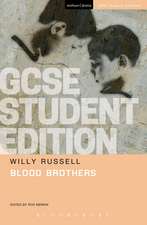 Blood Brothers GCSE Student EditionWilly Russell-19%Preț: 78.54 lei96.46 lei
 -
 Blood Brothers GCSE Student GuideRos Merkin-14%Preț: 76.97 lei89.44 lei
 -
 -20%Preț: 160.26 lei199.71 lei
 -
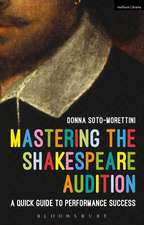 Mastering the Shakespeare Audition: A Quick Guide to Performance SuccessDonna Soto-Morettini-27%Preț: 185.65 lei254.22 lei
 -
 -19%Preț: 159.93 lei197.92 lei
 -
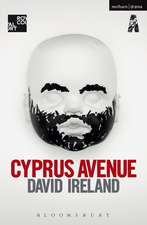 Cyprus AvenueDavid Ireland-17%Preț: 85.08 lei102.36 lei
 -
 -38%Preț: 296.41 lei474.41 lei
 -
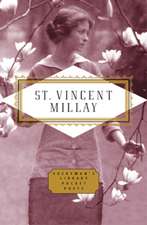 Poems: Edna St Vincent MillayEdna St Vincent MillayPreț: 84.50 lei
 -
 Identity ParadeRoddy Lumsden-25%Preț: 136.94 lei183.21 lei
De ce să citești această carte
Această antologie este esențială pentru oricine dorește să înțeleagă rădăcinile criticii literare moderne. Cititorul câștigă acces la texte fundamentale traduse cu precizie, dar și la latura umană a lui Shklovsky prin corespondența sa privată. Este recomandată studenților și cercetătorilor care au nevoie de o bază documentară solidă, oferind instrumentele necesare pentru a analiza concepte precum „înstrăinarea” (ostranenie) direct de la sursă, într-un format critic modern.
Despre autor
Viktor Shklovsky (1893-1984) a fost un teoretician literar, critic de film și romancier rus, recunoscut drept unul dintre fondatorii formalismului rus în cadrul grupului OPOYAZ. Viața sa tumultuoasă, marcată de experiența de instructor al unei divizii blindate și de exilul politic, a infuzat opera sa cu o perspectivă unică asupra structurii narative. Printre lucrările sale traduse se numără Zoo, or Letters Not about Love, Third Factory și The Hamburg Score. Shklovsky a redefinit modul în care percepem arta, propunând conceptul de „înstrăinare” ca metodă de a recupera prospețimea percepției asupra lumii.
Descriere
Viktor Shklovsky (1893-1984) was both patriarch and enfant terrible of Formalism, a literary and film scholar, a fiction writer and the protagonist of other people's novels, instructor of an armored division and professor at the Art History Institute, revolutionary and counterrevolutionary. His work was deeply informed by his long and eventful life. He wrote for over seventy years, both as a very young man in the wake of the Russian revolution and as a ninety-year old, never tiring of analyzing the workings of literature.
Viktor Shklovsky: A Reader is the first book that collects crucial writings from across Shklovsky's career, serving as an entry point for first-time readers. It presents new translations of key texts, interspersed with excerpts from memoirs and letters, as well as important work that has not appeared in English before.
Cuprins
Viktor Shklovsky: Life and Work
Ostranenie and Other Key Concepts
Shklovsky in the West: Reception and Heritage
The Poker of Russian Formalism: Shklovsky as Protagonist
In Fiction
In Diaries and Memoirs
Shklovsky's Shorts
Shklovsky's Style
Selection, Translation and Formal Remarks
Section I: OPOYAZ Publications
Translator's Introduction
Resurrection of the Word (1914)
Art as Device (1917/1919)
Literature beyond "Plot" (1921/1925)
Literature beyond Theme; Non-Linear Inheritance
Literature beyond Genre; Digressions
Literature beyond Categories; Seeing like a Child
Section II: Autobiographic Hybrids
Translator's Introduction
A Letter to Roman Jakobson (1922/1990)
Zoo, or Letters Not About Love (1923/1965)
Author's Preface to the First Edition
A Second Preface for an Old Book
A Third Preface
Letter Four
Letter Six
Letter Eight
Letter Eleven
Letter Seventeen
Letter Twenty Two
Letter Twenty Eight
Letter Thirty
A Sentimental Journey (1923)
Revolution and the Front
The Writing Desk
Knight's Move (1923)
Preface One
Driving Nails with a Samovar
On "The Great Metalworker"
A Thousand Herrings
The Tsar's Kitchen
Teaser Stallions (1924/1990)
The Third Factory (1926)
The First Factory
The Second Factory
The Third Factory
Section III: Early Soviet Criticism and Advice to Young Writers
Translator's Introduction
The Technique of Writing Craft (1927)
Introduction: Don't Hurry to Become a Professional Writer
Newspaper Work
Narrative Prose
Unfolding a Text
A Few Words on Poetry
Conclusion
Hamburg Score (1928)
Babel: A Critical Romance (1924)
In Defense of the Sociological Method (1927)
Ten Years (1927)
Hamburg Score (1928)
The Way I Write (1930/1990)
Section IV: After the Freeze
Translator's Introduction
Once Upon A Time (1964)
Childhood
Youth
The Ending of Youth
Tales about Prose (1966/1983)
A Note From the Author
On the Novella
Some Empirical Remarks on the Methods of Connecting Novellas
On the Different Meanings of "Character" when Applied to Literary Works of Different Epochs
On the True Unity of Works of Art
What Happened after the Plague of 1348?
On the Sense of Wonder
Scenes of Recognition in Dickens
Concept Renewal
Letters to Nikita Shklovsky (1965-1969/2002)
05.10.1965
05.10.1966
19.04.1968
02.04.1969
20.07.1969
Bowstring. On the Dissimilarity of the Similar. (1970)
Energy of Delusion. A Book on Plot. (1981)
Section V: On the Theory of Prose (1983)
Translator's Introduction
Preface
Words Free the Soul from Narrowness: About the OPOYAZ
The Rhyme of Poetry. The Rhyme of Prose. Structuralism through the Looking Glass: A Farewell
The First Unsuccessful Blueprint of a Whale: Chekhov's "Darling"
The Links of Art Do Not Repeat Each Other. Once Again, on the Dissimilarity of the Similar.
Sterne
In the Footsteps of Old Discoveries and Inventions
The Problem of Time in Art
The Lungs Are for Breathing. Thoughts Out Loud.
Yet Another Foreword
Ostranenie
In Reply to a Questionnaire
[More Thoughts Out Loud]
Section VI: In 60 Years: Works on Cinema. (1985)
Translator's Introduction
Introduction (1985)
On Cinema (1919)
The Plot in Cinema (1923)
Chaplin as Policeman (1923)
The Semantics of Cinema (1925)
Poetry and Prose in Cinema (1927)
On Re-Editing Films (1927)
Five Feuilletons on Eisenstein (1926)
Talking to Friends (1939)
Happy Fable-land (1948)
What the Character Knows and What the Audience Knows (1959)
The Emergence of the Word (1963)
Return the Ball into the Game (1970)
Unread Dream (1984)
Instead of an Afterword: A Letter to Evgeny Gabrilovich (1984)
Recenzii
This collection allows all readers to approach the life and opinions of Viktor Shklovsky, one of the most fascinating figures of Russian cultural life in the twentieth century.
Viktor Shklovsky: A Reader, thoughtfully translated and edited by Alexandra Berlina, is a valiant reminder of the extraordinary versatility, humor, brilliance, and sensitivity the Formalist label has come to conceal. . With this exemplary new anthology, Alexandra Berlina has helped free Shklovsky from the clanging of -isms, allowing new readers to appreciate his thought in the fullness of its diversity and beauty.
The reviewed omnibus, it must be added, challenges yet another well entrenched doxa concerning Shklovsky's work. Traditionally, it was regarded as consisting of two unequal parts: the impishly appealing pre-1929 formalist output followed by the appalling potboilers written after the author reluctantly renounced his formalist stance . Berlina, though, managed to erase the perceived caesura between the early and late Shklovsky's writings not just by telling but by showing. Her Reader, assembling texts from all periods of his long writerly career, clearly highlighted the motivic iterations binding them together as well as their overall thematic unity.