Cantitate/Preț
Produs

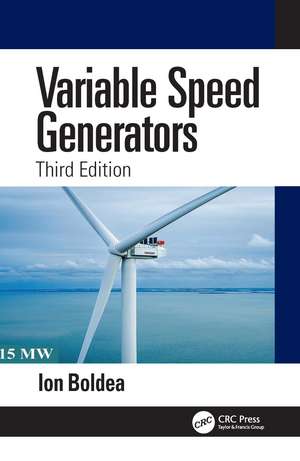
Variable Speed Generators

Autor Ion Boldea
en Limba Engleză Hardback – 31 dec 2026
The subject of Electric Generators (“Synchronous Generators” and” Variable Speed Generators” as in book here) attracted formidable R&D effort, both in Academia and in various industries in the last decade. To the point that “Electric generators design, testing and control” – the subject of present book set, may constitute a new senior or graduate Course in Universities with electric power programs and a practical guide for young professionals in industry. In the last 10 years design and control of electric generators for applications in energy conversion, through transport electrification, e-buildings, industrial processes, auxiliary power sources, inspired a rich body of new knowledge. By now, only the wind energy industry has more than 1000 GW of installed power (in 2025). In view of this progress, we decided (after 10 years) to come with a new (third) edition of this two-set book that:
  • Keeps the structure of the second edition to avoid confusion to long-term users.
  • Keeps and adds to the style with more numerical work-out examples of practical interest, together with more case studies to inspire the new R&D reader.
  • Includes additional (though minor) needed text and number corrections.
  • Adds quite a few new paragraphs, in most existing Chapters, especially as case studies of design or control of new (recent) electric generator systems of hot industrial interest.
Citește tot Restrânge

Preț: 106862 lei

Preț vechi: 141878 lei
-25% Precomandă

Puncte Express: 1603

Carte nepublicată încă

Livrare prin curier în România Precomanda se expediază când titlul devine disponibil.
Transport gratuit pentru acest produs Plată online sau ramburs, în funcție de opțiunile comenzii.
Retur gratuit în 14 zile Comandă securizată și suport în română.
Doresc să fiu notificat când acest titlu va fi disponibil:

Specificații

ISBN-13: 9781041215417
ISBN-10: 104121541X
Pagini: 968
Ilustrații: 1378
Dimensiuni: 156 x 234 mm
Ediția:3
Editura: CRC Press
Colecția CRC Press

Public țintă

General

Cuprins

1 Wound-Rotor Induction Generators: Steady State1.1 Introduction...........................................................................................................................................11.2 Construction Elements..........................................................................................................................31.2.1 Magnetic Cores …………………………………………………………………………………….41.2.2 Windings and Their mmfs..................................................................................................................51.2.3 Slip-Rings and Brushes......................................................................................................................81.3 Steady-State Equations..........................................................................................................................91.4 Equivalent Circuit................................................................................................................................111.5 Phasor Diagrams..................................................................................................................................131.6 Operation at the Power Grid................................................................................................................181.6.1 Stator Power versus Power Angle....................................................................................................191.6.2 Rotor Power versus Power Angle.....................................................................................................211.6.3 Operation at Zero Slip.......................................................................................................................211.7 Autonomous Operation of WRIG........................................................................................................221.8 Operation of WRIG in the Brushless Exciter Mode............................................................................261.9 Losses and Efficiency of WRIG..........................................................................................................311.10 Summary........................................................................................................................................... 32References ……………………………………………………………………………………………….342 Wound-Rotor Induction Generators: Transients and Control2.1 Introduction..........................................................................................................................................372.2 WRIG Phase Coordinate Model...........................................................................................................372.3 Space-Phasor Model of WRIG.............................................................................................................402.4 Space-Phasor Equivalent Circuits and Diagrams.................................................................................422.5 Approaches to WRIG Transients..........................................................................................................462.6 Static Power Converters for WRIGs.....................................................................................................472.6.1 Direct AC–AC Converters.................................................................................................................502.6.2 DC Voltage Link AC–AC Converters...............................................................................................522.7 Vector Control of WRIG at Power Grid...............................................................................................542.7.1 Principles of Vector Control of Machine (Rotor)-Side Converter....................................................542.7.2 Vector Control of Source-Side Converter.........................................................................................572.7.3 Wind Power WRIG Vector Control at the Power Grid.....................................................................592.7.3.1 Wind Turbine Model......................................................................................................................592.7.3.2 Supply-Side Converter Model........................................................................................................612.7.3.3 Generator-Side Converter Model..................................................................…………………….622.7.3.4 Simulation Results...........................................................................................…………………...632.7.3.5 Three-Phase Short Circuit on the Power Grid................................................................................652.7.3.6 Mechanism to Improve Performance during Fault.........................................................................672.8 Direct Power Control (DPC) of WRIG at Power Grid............................................................... ….682.8.1 Concept of DPC ....……………………………………………………………………….. …….692.9 Independent Vector Control of Positive and Negative Sequence Currents......................................742.10 Motion-Sensorless Control.............................................................................................................762.11 Vector Control in Stand-Alone Operation..................................................................................…792.12 Self-Starting, Synchronization, and Loading at the Power Grid..............................................…..802.13 Voltage and Current Low-Frequency Harmonics of WRIG..................................................... ….832.14 Ride-Through Control of DFIG under Unbalanced Voltage Sags.............................................….862.15 Stand-Alone DFIG Control under Unbalanced Nonlinear Loads...........................................……892.16 Advanced control of DFIGs: recent progress 2.17 Active and reactive power control in DFIGs 2.18 DFIG control in pump storage plants 2.19 A.C. and D.C. grid forming operation mode: impedance model2.20 The brushless DFIG and DFRG2.21 SummaryReferences ………………………………………………………………………………933 Wound-Rotor Induction Generators: Design and Testing3.1 Introduction.........................................................................................................................................953.2 Design Specifications: An Example...................................................................................................963.3 Stator Design......................................................................................................................................963.4 Rotor Design.....................................................................................................................................1033.5 Magnetization Current......................................................................................................................1063.6 Reactances and Resistances..............................................................................................................1093.7 Electrical Losses and Efficiency.......................................................................................................1133.8 Testing of WRIGs.............................................................................................................................1153.9 Summary...........................................................................................................................................116References ……………………………………………………………………………………………..1174 Self-Excited Induction Generators4.1 Introduction.................................................................................................................................... ..1194.2 Cage Rotor Induction Machine Principle........................................................................................ 1194.3 Self-Excitation: A Qualitative View.................................................................................................1224.4 Steady-State Performance of Three-Phase SEIGs............................................................................1234.4.1 Second-Order Slip Equation Methods...........................................................................................1244.4.2 SEIGs with Series Capacitance Compensation.............................................................................1284.5 Performance Sensitivity Analysis.....................................................................................................1284.5.1 For Constant Speed........................................................................................................................1294.5.2 For Unregulated Prime Movers.....................................................................................................1304.6 Pole Changing SEIGs for Variable Speed Operation................................................................ …..1314.7 Unbalanced Operation of Three-Phase SEIGs.................................................................................1334.8 One Phase Open at Power Grid........................................................................................................1364.9 Three-Phase SEIG with Single-Phase Output..................................................................................1384.10 Two-Phase SEIGs with Single-Phase Output.................................................................................1424.11 Three-Phase SEIG Transients.........................................................................................................1454.12 Parallel Connection of SEIGs.........................................................................................................1484.13 Direct Connection to Grid Transients in Cage Rotor Induction Generators...................................1504.14 More on Power Grid Disturbance Transients in Cage-Rotor Induction Generators………………1514.15 Summary.........................................................................................................................................160References ……………………………………………………………………………………………..1625 Stator-Converter-Controlled Induction Generators (SCIGs)5.1 Introduction.......................................................................................................................................1655.2 Grid-Connected SCIGs: The Control System...................................................................................1665.2.1 Machine-Side PWM Converter Control.........................................................................................1665.2.1.1 State Observers for DTFC of SCIGs...........................................................................................1675.2.1.2 DTFC–SVM Block......................................................................................................................1735.2.2 Grid-Side Converter Control..........................................................................................................1765.3 Grid Connection and Four-Quadrant Operation of SCIGs................................................................1765.4 Stand-Alone Operation of SCIG.......................................................................................................1795.5 Parallel Operation of SCIGs..............................................................................................................1805.6 Static Capacitor Exciter Stand-Alone IG for Pumping Systems...................................................... 1815.7 Operation of SCIGs with DC Voltage Controlled Output.................................................................1845.8 Stand-Alone SCIG with AC Output and Low Rating PWM Converter............................................1875.9 Dual Stator Winding for Grid Applications.......................................................................................1875.10 Twin Stator Winding SCIG with 50% Rating Inverter and Diode Rectifier...................................1895.11 Dual Stator Winding IG with Nested Cage Rotor............................................................................1905.12 10 MW, 10 rpm, 10 Hz directly driven induction generator (CRIG): preliminary design and key FEM validation (a case study)5.13 Dual, power-6-phase and control -3 phase CRIG with dual-diode-rectified output for small / medium wind power: a case study 5.14 CRIG – based vehicular starter generator systems: a review5.15 Summary..........................................................................................................................................190References .……………………………………………………………………………………………. 1926 Automotive Claw-Pole-Rotor Generator Systems6.1 Introduction........................................................................................................................................1956.2 Construction and Principle.................................................................................................................1956.3 Magnetic Equivalent Circuit (MEC) Modeling..................................................................................2006.4 Three-Dimensional Finite Element Method (3D FEM) Modeling.................................................... 2036.5 Losses, Efficiency, and Power Factor.................................................................................................2086.6 Design Improvement Steps.................................................................................................................2106.6.1 Claw-Pole Geometry........................................................................................................................2106.6.2 Booster Diode Effects..................................................................................................................... 2116.6.3 Assisting Permanent Magnets..........................................................................................................2126.6.4 Increasing the Number of Poles.......................................................................................................2136.6.5 Winding Tapping (Reconfiguration)................................................................................................2136.6.6 Claw-Pole Damper...........................................................................................................................2166.6.7 Controlled Rectifier..........................................................................................................................2166.7 Lundell Starter/Generator for Hybrid Vehicles...................................................................................2176.8 IPM Claw-Pole Alternator System for More Vehicle Braking Energy Recuperation:A Case Study …………………………………………………………………………………………….2256.8.1 3D Nonlinear Magnetic Circuit Model............................................................................................ 2256.8.1.1 Design Calibration........................................................................................................................ 2266.8.2 Optimal Design: Method, Code, and Sample Results with PrototypeTest Results ………………………………………………………………………………………….. …2276.8.3 3D-FEM Analysis........................................................................................................... ………….2296.8.4 Vehicle Braking Energy Recuperation Scheme and its Control...................................................... 2326.8.4.1 Dynamic Model of the Proposed System................................................. ……………………….2336.8.4.2 42 Vdc Storage Battery Model...................................................................... …………………….2366.8.4.3 Control Strategy............................................................................................ ……………………2376.8.4.4 Simulation Results........................................................................................ ……………………2386.8.5 Extension of IPM Alternator utilization up to 100 kW Systems......................................................2416.9 Summary..............................................................................................................................................241References ……………………………………………………………………………………………….2437 Induction Starter/Alternators (ISAs) for Electric Hybrid Vehicles (EHVs)7.1 EHV Configuration....................................................................................................................... …..2457.2 Essential Specifications................................................................................................................. …..2487.2.1 Peak Torque (Motoring) and Power (Generating).................................................... ………………2487.2.2 Battery Parameters and Characteristics..................................................................... ……………...2507.3 Topology Aspects of Induction Starter/Alternator (ISA)........................................................ ………2537.4 ISA Space-Phasor Model and Characteristics........................................................................... ……..2557.5 Vector Control of ISA.................................................................................................................... ….2637.6 DTFC of ISA........................................................................................................................................2647.7 ISA Design Issues for Variable Speed.................................................................................................2667.7.1 Power and Voltage Derating.............................................................................................................2667.7.2 Increasing Efficiency........................................................................................................…………2677.7.3 Increasing the Breakdown Torque....................................................................................................2687.7.4 Additional Measures for Wide Constant Power Range.............................................…………….2697.7.4.1 Winding Reconfiguration............................................................................………………........2707.8 Summary...........................................................................................................................................273References ……………………………………………………………………………………………..2768 Permanent-Magnet-Assisted Reluctance Synchronous Starter/Alternators for Electric Hybrid Vehicles8.1 Introduction................................................................................................................................... ...2798.2 Topologies of PM-RSM....................................................................................................................2808.3 Finite Element Analysis....................................................................................................................2838.3.1 Flux Distribution............................................................................................................................2838.3.2 d–q Inductances …………………………………………………………………………….……2848.3.3 Cogging Torque ………………………………………………………………………………….2888.3.4 Core Losses Computation by FEM................................................................................................2898.4 d–q Model of PM-RSM.....................................................................................................................2918.5 Steady-State Operation at No Load and Symmetric Short Circuit........................................………2978.5.1 Generator No-Load.........................................................................................................................2978.5.2 Symmetrical Short Circuit..............................................................................................................2978.6 Design Aspects for Wide Speed Range Constant Power Operation..................................................2998.7 Power Electronics for PM-RSM for Automotive Applications.........................................................3058.8 Control of PM-RSM for EHV............................................................................................................3078.9 State Observers without Signal Injection for Motion Sensorless Control.........................................3108.10 Signal Injection Rotor Position Observers.......................................................................................3128.11 Initial and Low Speed Rotor Position Tracking...............................................................................3138.12 50/100 kW, 1350–7000 rpm (600 N m Peak Torque, 40 kg) PM-Assisted ReluctanceSynchronous Motor/Generator for HEV: A Case Study ……………………………………………….3178.12.1 Introduction ……………………………………………………………………………………..3178.12.2 General Design Summary and Results..........................................................................................3188.12.2.1 Stator Core Geometry.................................................................................................................3188.12.2.2 Number of Turns Per Coil nc......................................................................................................3198.12.2.3 The Stator Leakage Inductance Ls1 and Ldm/Lqm Requirements...................................................3198.12.2.4 Rotor Lamination Design...........................................................................................................3208.12.2.5 Peak Torque Production.............................................................................................................3208.12.2.6 Slot Area/Peak Current Density/Stator Resistance Rs................................................................3218.12.2.7 Weights of Active Materials.......................................................................................................3218.12.2.8 Performance at 100 kW and 7000 rpm.......................................................................................3228.12.2.9 Performance at 50 kW, 7000 rpm, and 1350 rpm.......................................................................3238.12.2.10 Equivalent Circuit.....................................................................................................................3238.12.3 Optimal Design Methodology and Results....................................................................................3248.12.3.1 IPMSM: Analytical Model.........................................................................................................3248.12.3.2 Optimal Design of IPMSM.........................................................................................................3248.12.4 FEM Validation without and with Rotor Segmentation................................................................3278.12.5 Dynamic Model and Vector Control Performance Validation...............................……………...3308.13 PM-assisted reluctance starter – generator system for vehicular applications by case studies8.14 40-60 kW (600-2400 rpm) d.c. output RSG for small maritime ships8.15 Summary...........................................................................................................................................333References ……………………………………………………………………………………................3359 Switched Reluctance Generators and Their Control9.1 Introduction.........................................................................................................................................3399.2 Practical Topologies and Principles of Operation...............................................................................3399.2.1 kW/Peak kVA Ratio.........................................................................................................................3449.3 SRG(M) Modeling...............................................................................................................................3469.4 Flux/Current/Position Curves..............................................................................................................3489.5 Design Issues.......................................................................................................................................3499.5.1 Motor and Generator Specifications...........................................................................….………….3509.5.2 Number of Phases, Stator and Rotor Poles: m, Ns, Nr.......................................................................3519.5.3 Stator Bore Diameter Dis and Stack Length.......................................................................................3519.5.4 Number of Turns per Coil Wc for Motoring......................................................................................3539.5.5 Current Waveforms for Generator Mode..........................................................................................3539.6 PWM Converters for SRGs...................................................................................................................3569.7 Control of SRG(M)s..............................................................................................................................3589.7.1 Feed-Forward Torque Control of SRG(M) with Position Feedback..................................................3599.8 Direct Torque Control of SRG(M)........................................................................................................3649.9 Rotor Position and Speed Observers for Motion-Sensorless Control...................................................3669.9.1 Signal Injection for Standstill Position Estimation............................................................................3669.10 Output Voltage Control in SRG..........................................................................................................3699.11 Double Stator SRG with Segmented Rotor.........................................................................................3709.12 D.C. stator excited switched reluctance starter/generator system: a case study 9.13 Dynamic performance improvement by active a.c. - d.c. reversible converter of the d.c. stator excited SRM/G: a case study 9.14 Summary..............................................................................................................................................371References ……………………………………………………………………………….. ………………37410 Permanent Magnet Synchronous Generator Systems10.1 Introduction..........................................................................................................................................37710.2 Practical Configurations and Their Characterization...........................................................................37810.2.1 Distributed versus Concentrated Windings.......................................................................................38310.3 Air Gap Field Distribution, emf, and Torque.......................................................................................38610.4 Stator Core Loss Modeling...................................................................................................................39410.4.1 FEM-Derived Core Loss Formulas....................................................................................................39410.4.2 Simplified Analytical Core Loss Formulas........................................................................................39810.5 Circuit Model........................................................................................................................................40110.5.1 Phase Coordinate Model....................................................................................................................40110.5.2 d–q Model of PMSG..........................................................................................................................40210.6 Circuit Model of PMSG with Shunt Capacitors and AC Load.............................................................40810.7 Circuit Model of PMSG with Diode Rectifier Load..............................................................................41010.8 Utilization of Third Harmonic for PMSG with Diode Rectifiers..........................................................41110.9 Autonomous PMSGs with Controlled Constant Speed and AC Load..................................................41510.10 Grid-Connected Variable-Speed PMSG System.................................................................................41810.10.1 Diode Rectifier and Boost DC–DC Converter Case.........................................................................42010.11 PM Genset with Multiple Outputs.......................................................................................................42210.12 Super-High-Speed PM Generators: Design Issues..............................................................................42610.12.1 Rotor Sizing ……………………………………………………………………………………….42610.12.2 Stator Sizing ……………………………………………………………………………………….42910.12.3 Losses ……………………………………………………………………………………………...43110.13 Super-High-Speed PM Generators: Power Electronics Control Issues...............................................43210.14 Design of a 42 Vdc Battery-Controlled-Output PMSG System............................................................43410.14.1 Design Initial Data............................................................................................................................43510.14.2 Minimum Speed: nmin.................................................................................................... …………...43510.14.3 Number of Poles: 2p1...................................................................................................... ………….43710.14.4 Rotor Configuration...................................................................................................... …………...43710.14.5 Stator Winding Type.........................................................................................................................43810.14.6 Winding Tapping..............................................................................................................................43910.14.7 PMSG Current Waveform................................................................................................................44010.14.8 Diode Rectifier Imposes Almost Unity Power Factor......................................................................44010.14.9 Peak Torque-Based Sizing................................................................................................................44010.14.10 Generator to DC Voltage Relationships..........................................................................................44010.14.11 ΨPM, Ls, and Rs …………………………………………………………………………………….44210.15 Methods for Testing PMSGs................................................................................................................44310.15.1 Standstill Tests ……………………………………………………………………………………..44310.15.2 No-Load Generator Tests..................................................................................................................44710.15.3 Short Circuit Generator Tests............................................................................................................44810.15.4 Stator Leakage Inductance and Skin Effect.......................................................................................44810.15.5 Motor No-Load Test..........................................................................................................................45010.15.6 Generator Load Tests.........................................................................................................................45010.16 Grid to Stand-Alone Transition Motion-Sensorless Dual-Inverter Controlof PMSG with Asymmetrical Grid Voltage Sags and Harmonics Filtering:A Case Study ……………………………………………………………………………………..................45310.16.1 Voltage Sags Ride-Through Capability................................................................................................45410.16.1.1 Line Voltage Positive Sequence with D-Module Filter.....................................................................45610.16.1.2 Line Voltage Angle Estimation.........................................................................................………….45710.16.2 Stand-Alone PMSG Control: Harmonic and Negative Sequence VoltageCompensation under Nonlinear Load ………………………………………………………………………. .45710.16.3 Seamless Switching Transfer from Stand-Alone to Grid (and Back)......................…….....................45810.16.3.1 Transition from Stand-Alone to Grid-Connected Mode.......................…………………………….45910.16.3.2 Transition from Grid-Connected to Stand-Alone Mode....................................................................46010.16.4 PMSG Motion-Sensorless Control System...........................................................................................46010.16.4.1 PMSG Modeling.................................................................................................................................46010.16.4.2 Active Power and Current Control......................................................................................................46110.16.4.3 Rotor Position and Speed Observer.....................................................................................................46310.16.5 Test Platform and Experimental Results................................................................................................46410.16.5.1 Voltage Sags Ride Through................................................................................................................46410.16.5.2 Harmonic and Negative Sequence Voltage Compensation under Nonlinear Load ……...................46610.16.5.3 Transition from Stand-Alone to Grid-Connected Mode.....................................................................46710.16.5.4 Transition from Grid-Connected to Stand-Alone Mode.....................................................................46910.16.6 Conclusion ……………………………………………………………………………….....................46910.17 Note on Medium-Power Vehicular Electric Generator Systems...............................................................47110.18 10 MW, 10 rpm, 30 Hz spoke ferrite and bonded Nd PM rotor wind PMSG: preliminary design with FEM validation for 6 rotor variants: a case study 10.19 Smaller currents THD by robust (SM) control for PMSGs: a case study10.20 Summary....................................................................................................................................................472References ………………………………………………………………………………………..... ………….47411 Transverse Flux and Flux Reversal Permanent Magnet Generator Systems11.1 Introduction..................................................................................................................................................47911.2 Three-Phase Transverse Flux Machine (TFM): Magnetic Circuit Design...................................................48511.2.1 Phase Inductance Ls...................................................................................................................................48911.2.2 Phase Resistance and Slot Area.................................................................................................................49011.3 TFM: The d–q Model and Steady State........................................................................................................49311.4 Three-Phase Flux Reversal Permanent Magnet Generator: Magnetic and ElectricCircuit Design …………………………………………………………………………………….. …………...49611.4.1 Preliminary Geometry for 200 N m at 128 rpm via Conceptual Design...................................................49911.4.2 FEM Analysis of Pole-PM FRM at No Load............................................................................................50011.4.3 FEM Analysis at Steady State on Load.....................................................................................................50211.4.4 FEM Computation of Inductances........................................................................................... ………….50811.4.5 Inductances and the Circuit Model of FRM..............................................................................................50811.4.6 d–q Model of FRM....................................................................................................................................51011.4.7 Notes on Flux Reversal Generator (FRG) Control....................................................................................51711.5 High Power Factor Vernier Permanent Magnet Generators.........................................................................52111.5.1 Power Factor of Vernier PM Machine.......................................................................................................52111.5.1.1 Power Factor...........................................................................................................................................52111.5.2 DSSA: VPM for Higher Power Factor......................................................................................................52311.6 Summary.......................................................................................................................................................525References …………………………………………………………………………………………...…………52612 Hybrid (PM+d.c. excitation) excitation synchronous and flux-modulation generator system: recent progress12.1 Classifications and characterization12.1.1 HESGs with isolated PM and excitation paths 12.1.2 HESGs with common – series and parallel – magnetic flux paths 12.2 Biaxial hybrid (d.c. + PM) excitation sysnchronous generator systems (BEGA)12.3 Stator D.C.+PM excited doubly salient HESGs12.4 Flux-modulation (FM) HESGs13 Linear Motion Alternators13.1 Introduction................................................................................................................................... ………52913.2 LMA Principle of Operation......................................................................................................... ………52913.2.1 Motion Equation......................................................................................................................................53213.3 PM-LMA with Coil Mover........................................................................................................................53313.4 Multipole LMA with Coil Plus Iron Mover.................................................................................. ………53513.5 PM-Mover LMAs.......................................................................................................................................54113.6 Tubular Homopolar PM Mover Single-Coil LMA....................................................................................54413.7 Flux Reversal LMA with Mover PM Flux Concentration............................................................ ………54913.8 PM-LMAs with Iron Mover.......................................................................................................................55513.9 Flux Reversal PM-LMA Tubular Configuration........................................................................................55513.9.1 The Analytical Model..............................................................................................................................55513.10 Control of PM-LMAs...............................................................................................................................56013.10.1 Electrical Control...................................................................................................................................56013.10.2 Spark-Ignited Gasoline Linear Engine Model.......................................................................... ………56213.10.3 Note on Stirling Engine LMA Stability.................................................................................... ………56213.11 Progressive-Motion LMAs for Maglevs with Active Guideway................................................. ………56313.11.1 Note on Magnetohydrodynamic (MHD) Linear Generators..................................................................56613.12 Optimal design of 1 phase linear oscillatory PM motor-generator series of 100 W- 2000W: a case study13.13 Summary...................................................................................................................................................566References …………………………………………………………………………………………………… .568Index....................................................................................................................... …………..…………569

Notă biografică

Prof. Ion Boldea (IEEE Life Fellow) studied at and obtained a PhD in Electrical Engineering (on linear induction motors design and control) in 1973 at University Politehnica Timisoara, Romania. He has been an active professor since 1968, having completed a Fulbright postdoctoral scholarship in the United States (1973-1974). Over the years, he has spent more than five years as a visiting Professor at institutions across the United States, the United Kingdom, Denmark, and South Korea.
He investigated and published extensively on linear and rotary electric machine drives and magnetically levitated vehicles (MAGLEVs), focusing on their design and control for industrial applications, with his work appearing primarily in IEEE papers and books.
In recognition of his professional contribution, he received the 2015 Nikola Tesla IEEE Award and 2021 EPE Outstanding Achievement Award. He is a full member of both the Romanian Technical Sciences Academy (ASTR) and the Romanian Academy, and holds a Doctor Honoris Causa from Aalborg University, Denmark.
Prof. Boldea has given numerous keynote addresses at IEEE – sponsored international conferences and has delivered (as an IEEE-IAS Distinguished Lecturer since 2008) numerous intensive courses and lectures in the United States, Denmark, South Korea, Brazil and Italy, among other countries. He chaired and co-chaired the biannual IEEE Sponsored International Conference, OPTIM-ACEMP, for over 30 years. He has also held tech consulting contracts with international companies for decades, yearly and co-founded the company Bee-Speed (www.Bee-Speed.ro) in 1994, which is still continually active today, specializing in industrial digital electric automation in water integrated technologies.
He enjoys a rich family life and studies seminal books in philosophy, literature, economics, math and physics. He rides his bicycle to work daily, and his hobbies include gardening and tennis.

Descriere

By now, only the wind energy industry has more than 1000 GW of installed power (in 2025). In view of this progress, we decided (after 10 years) to come with a new (third) edition of this two-set book.