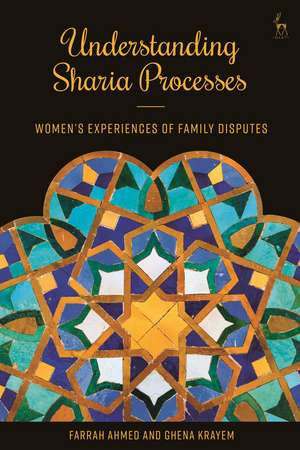
Understanding Sharia Processes: Women's Experiences of Family Disputes
Autor Farrah Ahmed, Ghena Krayemen Limba Engleză Paperback – 27 ian 2022
However, to date there has been inadequate attention to the experiences of participants in sharia processes. This open access book studies women's experiences with these processes in Australia, with attention to the question of how religious communities and liberal legal systems can best respond to the needs of Muslim women who use these processes. In doing so, the book offers unique evidence to inform future policy developments in Australia that will also have implications for other liberal jurisdictions.
In this way, the book makes a significant contribution to the international discussion and response to sharia processes.
The ebook editions of this book are available open access on bloomsburycollections.com. Open access was funded by Melbourne Law School.
Preț: 274.10 lei
Preț vechi: 365.16 lei
-25%
Puncte Express: 411
Carte tipărită la comandă
Livrare economică 20 noiembrie-04 decembrie
Livrare prin curier în România Termenul estimat este afișat lângă disponibilitate.
Transport gratuit de la 400.00 lei Plată online sau ramburs, în funcție de opțiunile comenzii.
Retur gratuit în 14 zile Comandă securizată și suport în română.
Specificații
ISBN-13: 9781509949489
ISBN-10: 1509949488
Pagini: 200
Dimensiuni: 152 x 232 x 16 mm
Greutate: 0.3 kg
Editura: Bloomsbury Publishing
Colecția Hart Publishing
Locul publicării:London, United Kingdom
ISBN-10: 1509949488
Pagini: 200
Dimensiuni: 152 x 232 x 16 mm
Greutate: 0.3 kg
Editura: Bloomsbury Publishing
Colecția Hart Publishing
Locul publicării:London, United Kingdom
V-ar putea interesa
-
 -31%Preț: 820.42 lei1192.60 lei
 -
 The Oxford Handbook of Islamic LawAnver M. Emon-36%Preț: 1161.98 lei1803.29 lei
 -
 Preț: 449.54 lei
 -
 Islamic Law in AfricaJ. N. D. Anderson-18%Preț: 1484.41 lei1810.27 lei
 -
 Islam, Law and IdentityMarinos Diamantides-18%Preț: 1295.00 lei1579.27 lei
 -
 -18%Preț: 1252.71 lei1527.70 lei
 -
 Islamic Law: Cases, Authorities and WorldviewAhmad Atif Ahmad-21%Preț: 193.48 lei245.68 lei
 -
 -35%Preț: 680.52 lei1054.97 lei
 -
 Gender Justice in Islamic Law: Homicide and Bodily InjuriesMusa Usman Abubakar-33%Preț: 614.81 lei911.32 lei
 -
 The Russian Revolutions of 1917Kari Aga Myklebost-23%Preț: 772.79 lei1003.63 lei
 -
 -33%Preț: 774.89 lei1149.41 lei
 -
 Family Law in Islam: Divorce, Marriage and Women in the Muslim WorldMaaike Voorhoeve-26%Preț: 184.39 lei248.81 lei
 -
 Brehon LawsJo KerriganPreț: 126.85 lei
 -
 Narratives of Truth in Islamic LawBaudouin Dupret-37%Preț: 850.97 lei1360.12 lei
 -
 The Law Applied: Contextualizing the Islamic Shari'aPeri Bearman-38%Preț: 802.15 lei1299.75 lei
 -
 Islam, Law and the State in Southeast Asia: Volume 1: Indonesiaprof Tim Lindsey-37%Preț: 923.84 lei1461.65 lei
 -
 -33%Preț: 773.56 lei1148.66 lei
 -
 Acquisition and Transfer of Property inYahaya Y. BambalePreț: 319.29 lei
Cuprins
1. Introduction
I. Concerns about Sharia Processes
II. Why Sharia Processes Exist
III. The Importance of Women's Experiences
IV. Methodology
V. Significance and Outline
2. People, Procedures and Practices
I. Introduction
II. British Institutions and Processes
A. Key Organisations, Procedures and Practices
III. Canadian Institutions and Processes
A. Key Organisations
B. Procedures and Practices
IV. Australian Institutions and Processes
A. Key Organisations, Procedures and Practices
V. Conclusion
3. Women's Perspectives and Experiences
I. Introduction
II. Before Sharia Processes
A. Family
B. Professionals and Community Workers
III. Reasons for Seeking a Religious Divorce
A. Spiritual Motivations
B. Ending Emotional Exploitation
C. Closure and 'Moving On'
D. Avoiding Stigma
IV. Women's Experiences of Sharia Processes
A. Emphasis on Reconciliation
B. A Lack of Skills and Training
C. A Lack of Transparency
D. Responding to Domestic Violence
E. Acknowledgement of Injustice
F. Gender Imbalance on Panels
G. Re-traumatisation, Privacy and Forum-shopping
H. Impact on Faith
V. Conclusion
4. Imams' Roles and Perspectives
I. Introduction
II. Imams' Understanding of their Role in Reconciliation
III. Imams' Understanding of their Role in Divorce
A. Role as Service-Providers and Advocates for Women
B. Backlash for Carrying Out Roles in Divorce Proceedings
IV. Responding to the Concerns of Women and Professionals
A. The Need for Training and Resources
B. Responding to Domestic Violence
C. Gender Imbalance in Sharia Processes
V. Conclusion
5. Outcomes of Sharia Processes
I. Introduction
II. Divorce Outcomes
A. Summary of the Types of Islamic Divorce
B. Divorce Outcomes from Sharia Processes
III. Financial Outcomes
A. Imams' Limited Advisory Role in Financial Matters
IV. Child Custody
V. Conclusion
6. Evolution and Change
I. Improving Sharia Processes
A. Pre-marriage Briefing and Counselling
B. Rethinking Marriage Contracts and Delegated Divorce Rights - Talaq Tafweedh
C. Financial Agreements
D. The Initial Stages of Sharia Processes
E. Women on Panels
F. Professionals on Panels
G. Education and Transparency about Divorce Options and Financial Entitlements
H. Clearer Processes and Procedures
I. Acknowledgement and Response to Injustice, Abuse and Harm
J. Domestic Violence
K. Referral and Integration of Support Services
L. Sensitivity to Cultural and Linguistic Diversity
M. Support and Resources for Religious Divorce
N. Enhanced Role for Muslim Women's Organisations
O. Tracking the Australian Legal System
II. Improving the Family Law System
A. Better Enforcement of Orders against Former Partners
B. Better Tailored Legal Aid
C. Enhancing the Cultural Sensitivity of Mainstream Services
D. Legal Recognition of the Mahr
E. A Muslim Family Relationship Centre/Service: A One Stop Shop for Muslim Families
III. Conclusion
7. Conclusion
Appendix A: Methodology and Project Phases
Appendix B: Board of Imams Victoria Marriage Contract
Appendix C: Board of Imams Victoria Islamic Mediation/Reconciliation Application
Appendix D: Board of Imams Islamic Divorce Application
Appendix E: Lebanese Muslim Association Application
Appendix F: Summary of Key Sunni Positions on Islamic Divorce
Appendix G: Qatari Family Law Code
I. Concerns about Sharia Processes
II. Why Sharia Processes Exist
III. The Importance of Women's Experiences
IV. Methodology
V. Significance and Outline
2. People, Procedures and Practices
I. Introduction
II. British Institutions and Processes
A. Key Organisations, Procedures and Practices
III. Canadian Institutions and Processes
A. Key Organisations
B. Procedures and Practices
IV. Australian Institutions and Processes
A. Key Organisations, Procedures and Practices
V. Conclusion
3. Women's Perspectives and Experiences
I. Introduction
II. Before Sharia Processes
A. Family
B. Professionals and Community Workers
III. Reasons for Seeking a Religious Divorce
A. Spiritual Motivations
B. Ending Emotional Exploitation
C. Closure and 'Moving On'
D. Avoiding Stigma
IV. Women's Experiences of Sharia Processes
A. Emphasis on Reconciliation
B. A Lack of Skills and Training
C. A Lack of Transparency
D. Responding to Domestic Violence
E. Acknowledgement of Injustice
F. Gender Imbalance on Panels
G. Re-traumatisation, Privacy and Forum-shopping
H. Impact on Faith
V. Conclusion
4. Imams' Roles and Perspectives
I. Introduction
II. Imams' Understanding of their Role in Reconciliation
III. Imams' Understanding of their Role in Divorce
A. Role as Service-Providers and Advocates for Women
B. Backlash for Carrying Out Roles in Divorce Proceedings
IV. Responding to the Concerns of Women and Professionals
A. The Need for Training and Resources
B. Responding to Domestic Violence
C. Gender Imbalance in Sharia Processes
V. Conclusion
5. Outcomes of Sharia Processes
I. Introduction
II. Divorce Outcomes
A. Summary of the Types of Islamic Divorce
B. Divorce Outcomes from Sharia Processes
III. Financial Outcomes
A. Imams' Limited Advisory Role in Financial Matters
IV. Child Custody
V. Conclusion
6. Evolution and Change
I. Improving Sharia Processes
A. Pre-marriage Briefing and Counselling
B. Rethinking Marriage Contracts and Delegated Divorce Rights - Talaq Tafweedh
C. Financial Agreements
D. The Initial Stages of Sharia Processes
E. Women on Panels
F. Professionals on Panels
G. Education and Transparency about Divorce Options and Financial Entitlements
H. Clearer Processes and Procedures
I. Acknowledgement and Response to Injustice, Abuse and Harm
J. Domestic Violence
K. Referral and Integration of Support Services
L. Sensitivity to Cultural and Linguistic Diversity
M. Support and Resources for Religious Divorce
N. Enhanced Role for Muslim Women's Organisations
O. Tracking the Australian Legal System
II. Improving the Family Law System
A. Better Enforcement of Orders against Former Partners
B. Better Tailored Legal Aid
C. Enhancing the Cultural Sensitivity of Mainstream Services
D. Legal Recognition of the Mahr
E. A Muslim Family Relationship Centre/Service: A One Stop Shop for Muslim Families
III. Conclusion
7. Conclusion
Appendix A: Methodology and Project Phases
Appendix B: Board of Imams Victoria Marriage Contract
Appendix C: Board of Imams Victoria Islamic Mediation/Reconciliation Application
Appendix D: Board of Imams Islamic Divorce Application
Appendix E: Lebanese Muslim Association Application
Appendix F: Summary of Key Sunni Positions on Islamic Divorce
Appendix G: Qatari Family Law Code
Recenzii
This book is a welcome addition to the existing literature on Muslims practising sharia in the West.
Notă biografică
Farrah Ahmed is Professor at Melbourne Law School, University of Melbourne, Australia.