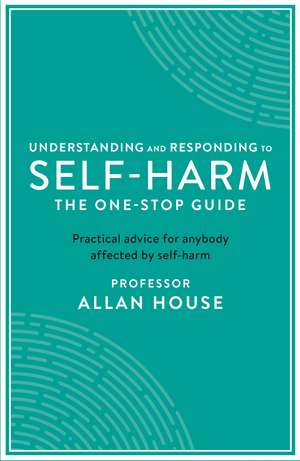
Understanding and Responding to Self-Harm: The One Stop Guide: Practical Advice for Anybody Affected by Self-Harm: One Stop Guides
Autor Allan Houseen Limba Engleză Paperback – 6 iun 2019
În contextul unei incidențe crescute a comportamentelor de autovătămare în societatea contemporană, volumul Understanding and Responding to Self-Harm de Allan House aduce o perspectivă clinică riguroasă, dar accesibilă, asupra unei problematici adesea stigmatizate. Această ediție, publicată în seria One Stop Guides, propune o abordare pragmatică ce depășește simpla descriere a fenomenului, oferind protocoale de intervenție și strategii de sprijin bazate pe dovezi. Putem afirma că forța acestui text rezidă în echilibrul dintre rigoarea academică și utilitatea imediată pentru cei afectați, familiile lor și profesioniștii din sănătatea mentală.
Suntem de părere că expertiza autorului în psihiatrie de legătură, reflectată și în lucrarea sa anterioară Seminars in Consultation-Liaison Psychiatry, se traduce aici printr-o capacitate remarcabilă de a naviga între complexitatea medicală și realitatea socială. Găsim în această carte nu doar o analiză a motivelor din spatele autovătămării, ci și un ghid clar despre serviciile disponibile și metodele de auto-gestionare. Acolo unde Can I Tell You About Self-Harm? de Pooky Knightsmith se concentrează pe o introducere narativă adresată adolescenților, volumul de față aprofundează mecanismele de răspuns pentru toate categoriile de vârstă, integrând cercetarea clinică într-un limbaj care nu devine niciodată arid.
Față de alte lucrări ale autorului, precum Understanding Clinical Papers, unde accentul este pus pe metodologie, aici Allan House prioritizează aplicabilitatea, oferind un instrument esențial pentru navigarea situațiilor de criză. Structura este logică, facilitând identificarea rapidă a strategiilor de urmat și, mai important, a celor care trebuie evitate în interacțiunea cu o persoană care se autovătămează.


Preț: 53.28 lei
Preț vechi: 70.63 lei
-25%
Carte disponibilă
Livrare economică 02-16 noiembrie
Livrare express 16-22 octombrie pentru 31.90 lei
Specificații
ISBN-10: 1788160274
Pagini: 192
Dimensiuni: 128 x 204 x 16 mm
Greutate: 0.19 kg
Ediția:Main
Editura: Profile
Colecția Profile Books
Seria One Stop Guides
Locul publicării:London, United Kingdom
V-ar putea interesa
-
 Self-Harm: A Guide to ManagementEmmanuel Nii-Boye Quarshie-24%Preț: 277.26 lei363.09 lei
 -
 -22%Preț: 101.39 lei130.52 lei
 -
 Nowhere GirlCarla CicconePreț: 122.34 lei
 -
 Twenty-Four Hours a DayANONYMOUSPreț: 105.65 lei
 -
 How to Talk to YourselfRo Mitchell-30%Preț: 75.76 lei107.87 lei
 -
 -28%Preț: 85.20 lei118.65 lei
 -
 This is Vital InformationKaran RajanPreț: 121.90 lei
 -
 Stop Lying to YourselfSimon Gilham-20%Preț: 85.46 lei106.76 lei
 -
 Are You Mad At Me?Meg JosephsonPreț: 108.04 leiRecomandat
 -
 -19%Preț: 102.95 lei127.29 lei
 -
 -27%Preț: 98.09 lei133.51 lei
 -
 -21%Preț: 91.74 lei116.36 lei
 -
 A Beginner's Guide to DyingSimon BoasPreț: 71.16 lei
 -
 -20%Preț: 146.09 lei181.97 lei
 -
 -21%Preț: 108.11 lei136.63 lei
 -
 -28%Preț: 89.80 lei124.21 lei
 -
 -26%Preț: 183.14 lei248.06 lei
 -
 -21%Preț: 113.48 lei143.53 lei
 -
 Safe with Self-InjuryKay IncklePreț: 207.75 lei
 -
 From Trauma to HealingThe School Of LifePreț: 121.80 lei
De ce să citești această carte
Această carte este o resursă indispensabilă pentru oricine caută să înțeleagă rădăcinile psihologice ale autovătămării fără a se pierde în jargon medical. Cititorul câștigă o busolă etică și practică, învățând cum să ofere sprijin eficient și cum să acceseze serviciile specializate. Este recomandată în special familiilor care au nevoie de un ghid de conduită validat științific și persoanelor care caută strategii de auto-gestionare a suferinței emoționale.
Despre autor
Allan House este profesor în cadrul Facultății de Medicină de la Universitatea din Leeds, Marea Britanie, având o carieră dedicată psihiatriei și sănătății mentale. Expertiza sa vastă acoperă domenii precum psihiatria de legătură și metodologia cercetării clinice, fiind recunoscut pentru capacitatea de a traduce datele complexe în ghiduri practice. Alături de colaboratori precum David Owens și David Bowers, a contribuit la dezvoltarea unor resurse esențiale pentru studenți și practicieni, axându-se pe medicina bazată pe dovezi. Lucrările sale sunt fundamentale pentru înțelegerea intersecției dintre sănătatea fizică și cea mentală în sistemele de sănătate moderne.
Notă biografică
Descriere scurtă
Recenzii
I haven't come across anything quite like this before - it's great. At its heart this is a self-help book for people who have harmed themselves but it is underpinned by a robust evidence base. ... The book will also help carers to understand, and health professionals to provide, the high-quality care that people deserve.
This is a must read book for anyone who has been affected or touched by self harm. It distills a wealth of knowledge and understanding into a jargon free text that explains: what self harm is? why people do it? how they can be helped? or how they can help themselves? The book's approach is simple but not simplistic. Complex psychological ideas are presented in ways that can be easily understood, and related directly to personal situations. Advice is given about when and where to seek help. Reading this book feels like listening to very good friend; a warm hearted friend who explains, understands and gives clear, thoughtful, authoritative and helpful advice. Psychiatrists can also learn a lot from reading this book, particularly the non-judgemental way it deals with human frailty.
I haven't come across anything quite like this before - it's great. At its heart this is a self-help book for people who have harmed themselves but it is underpinned by a robust evidence base. The research never gets in the way though because the book is written in such an engaging and accessible style. It contains a wealth of sensible, practical advice for getting help from family, friends, and health professionals as well as what to expect from services and what to do if you don't get what you need. Professor House also covers everything from the sometimes surprising functions of self-harm, to the unhelpfulness of diagnostic labels, through to the role of social media. The quotes from service users and clinicians keep the book firmly anchored in the real world. But this isn't just a book for people who have hurt themselves. It will also help carers to understand and health professionals to provide the high quality care that people deserve.