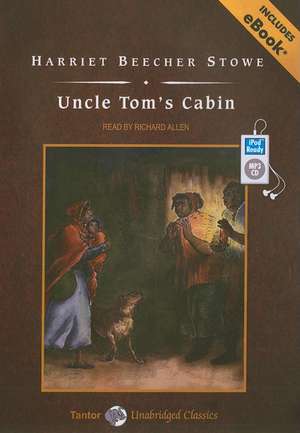
Uncle Tom's Cabin: Tantor Unabridged Classics
Autor Harriet Beecher Stowe Richard Allenen Limba Engleză CD-Audio – 30 noi 2008 – vârsta de la 14 până la 18 ani
Vezi toate premiile Carte premiată
Găsim în paginile acestui volum o arhitectură narativă ce împletește destine multiple, construite prin perspective care se ramifică din inima suferinței și a speranței. Deși figura centrală rămâne unchiul Tom, structura operei permite cititorului să urmărească traiectorii paralele, precum fuga disperată a Elizei sau dilemele morale ale familiei Shelby. Această ediție Collins Classics nu se limitează la textul literar, ci oferă un aparat critic impresionant, incluzând prefețele originale din 1852 și documente istorice despre mișcarea aboliționistă, elemente care ancorează ficțiunea în realitatea brutală a vremii. Suntem de părere că forța cărții rezidă în capacitatea sa de a transforma discursul politic în emoție pură, folosind dragostea creștină ca antidot pentru dezumanizare. În tradiția scrierilor lui Harriet Beecher Stowe, cum este și American Woman's Home, acest roman continuă să exploreze valorile morale și structura socială americană, însă o face cu o virulență și o pasiune care au transformat-o într-un fenomen mondial. Față de alte lucrări ale epocii, Uncle Tom's Cabin se distinge prin refuzul autoarei de a se ascunde în spatele unui anonimat protectiv, abordând frontal teme precum rasa și naționalismul. Credem că ritmul narațiunii, deși marcat de sentimentalismul specific secolului al XIX-lea, păstrează o actualitate frapantă prin modul în care analizează relațiile de putere și demnitatea umană în fața opresiunii.
Din seria Tantor Unabridged Classics
-
 Preț: 108.92 lei
 -
 Preț: 132.11 lei
 -
 Preț: 94.86 lei
 -
 Preț: 85.97 lei
 -
 Preț: 94.68 lei
 -
 Preț: 94.86 lei
 -
 Preț: 108.54 lei
 -
 Preț: 131.92 lei
 -
 Preț: 95.08 lei
 -
 Preț: 94.86 lei
 -
 Preț: 173.46 lei
 -
 Preț: 108.76 lei
 -
 Preț: 108.76 lei
 -
 Preț: 141.04 lei
 -
 Preț: 136.07 lei
 -
 Preț: 94.86 lei
 -
 Preț: 94.68 lei
 -
 Preț: 131.92 lei
 -
 Preț: 98.05 lei
 -
 Preț: 108.54 lei
 -
 Preț: 176.43 lei
 -
 Preț: 96.03 lei
 -
 Preț: 249.61 lei
 -
![Don Quixote [With Other]](https://i1.books-express.ro/bs/9781400159017/don-quixote-with-other.jpg) Preț: 232.09 lei
Preț: 232.09 lei -
 Preț: 136.31 lei
 -
 Preț: 136.31 lei
 -
 Preț: 131.92 lei
 -
 Preț: 211.91 lei
 -
 Preț: 95.25 lei
 -
 Preț: 94.86 lei
 -
 Preț: 86.14 lei
 -
 Preț: 112.50 lei
 -
 Preț: 136.47 lei
 -
 Preț: 131.92 lei
 -
 Preț: 171.14 lei
 -
 Preț: 117.86 lei
 - 9%
 Preț: 611.24 lei
 -
 Preț: 94.86 lei
 -
 Preț: 86.14 lei
 -
 Preț: 108.54 lei
 -
 Preț: 109.14 lei
 -
 Preț: 108.76 lei
 -
 Preț: 85.97 lei
 -
 Preț: 136.07 lei
Preț: 141.60 lei
Indisponibil temporar
Specificații
ISBN-10: 1400160391
Dimensiuni: 134 x 189 x 16 mm
Greutate: 0.11 kg
Ediția:Completă
Editura: TANTOR MEDIA INC
Seria Tantor Unabridged Classics
V-ar putea interesa
-
 Little WomenLouisa May AlcottPreț: 28.01 lei
 -
 XCLASSICS-LEAVES OF GRASS PBWalt WhitmanPreț: 28.98 lei
 -
 The One and Only IvanKatherine ApplegatePreț: 70.33 lei
 -
 Tales of Uncle Remus (Puffin Modern Classics)Julius LesterPreț: 50.22 lei
 -
 Home of the BraveKatherine ApplegatePreț: 58.77 lei
 -
 The Wonderful Wizard Of OzFrank L BaumPreț: 40.60 lei
 -
 The Fall of the House of Usher and Other TalesEdgar Allan PoePreț: 43.82 lei
 -
 The Turn of the ScrewHenry JamesPreț: 28.46 lei
 -
 Romeo & JulietWilliam Shakespeare-19%Preț: 20.29 lei24.96 lei
 -
 The Queen of Spades and Other StoriesAleksandr Sergeevich PushkinPreț: 26.36 lei
 -
 FrankensteinMary ShelleyPreț: 35.93 lei
 -
 The Communist ManifestoFriedrich EngelsPreț: 11.26 lei
 -
 Paradise LostJohn MiltonPreț: 53.84 lei
 -
 Moby-DickHerman Melville-33%Preț: 63.76 lei94.56 lei
 -
 The Forsyte SagaJohn GalsworthyPreț: 39.80 lei
 -
 EmmaJane AustenPreț: 32.13 lei
 -
 Mrs. DallowayVirginia WoolfPreț: 30.34 lei
 -
 Christmas BooksCharles DickensPreț: 37.35 lei
 -
 Billy Budd & Other StoriesHerman MelvillePreț: 28.01 lei
 -
 IvanhoeWalter ScottPreț: 57.43 lei
 -
 A Farewell to ArmsErnest Hemingway-33%Preț: 52.74 lei78.99 lei
De ce să citești această carte
Recomandăm această carte oricui dorește să înțeleagă rădăcinile profunde ale literaturii sociale americane. Cititorul câștigă nu doar o perspectivă istorică asupra sclaviei, ci și o lecție despre puterea cuvântului scris de a schimba cursul istoriei. Este o lectură fundamentală pentru cei care apreciază romanele care îmbină conștiința morală cu o poveste umană zguduitoare, fiind un document cultural esențial pentru înțelegerea drepturilor omului.
Despre autor
Harriet Beecher Stowe (1811–1896) a fost o scriitoare și aboliționistă americană de renume, provenind dintr-o familie cu puternice convingeri religioase. Cariera sa a fost marcată de publicarea a peste 30 de volume, însă Uncle Tom's Cabin rămâne lucrarea care a propulsat-o pe scena internațională, devenind o figură emblematică a luptei împotriva sclaviei. Spre deosebire de multe contemporane, Stowe și-a asumat public opiniile, indiferent de controversele generate. Opera sa reflectă o preocupare constantă pentru justiție socială și moralitate creștină, influențând decisiv opinia publică din Statele Unite și Marea Britanie în secolul al XIX-lea.
Descriere scurtă
Recenzii
Notă biografică
Descriere
Cuprins
Introduction
Harriet Beecher Stowe: A Brief Chronology
A Note on the Text
Uncle Tom’s Cabin; or, Life Among the Lowly
Appendix A: Frontispiece and Illustrations for the first American Edition (1852)
Appendix B: The European Prefaces to Uncle Tom’s Cabin
- Harriet Beecher Stowe, Preface to the English Edition (1852)
- Harriet Beecher Stowe, Preface to the European Edition (1852)
- Harriet Beecher Stowe, Preface to the French Illustrated Edition (1853)
- Harriet Beecher Stowe, Preface to the French Edition (1852-53)
- “Preamble,” to the Constitution of the Pennsylvania Abolitionist Society (1787), and Sections 1-3 from“An ACT to give Relief to certain Persons taking Refuge in [the] State [of Pennsylvania], with Respectto their Slaves” (1780)
- From David Walker, Walker’s Appeal in Four Articles; Together with a Preamble,To the Coloured Citizens of theWorld, but in Particular, and Very Expressly, to Those of the United States of America (1830)
- William Lloyd Garrison, “To the Public,” The Liberator (1 January 1831)
- From Lyman Beecher, “Dr. Beecher’s Address,” The African Repository and Colonial Journal (November1834)
- “A Declaration of the Sentiments of the People of Hartford, Regarding the Measures of the Abolitionists”(1835)
- Maria Chapman, et al., “Address of the Boston Female Anti-Slavery Society to the Women of Massachusetts,” The Liberator (13 August 1836)
- William Lloyd Garrison, “The American Union,” The Liberator (10 January 1845)
- From George Fitzhugh, “The Universal Slave Trade,” Cannibals All! Or Slaves Without Masters (1857)
- Georgiana May (6 January 1836)
- Calvin Stowe (16 June 1845)
- Calvin Stowe (29 June 1849)
- Henry Ward Beecher (1 February 1851)
- Gamaliel Bailey (9 March 1851)
- Elizabeth Cabot Follen (16 December 1852)
- The Fugitive Slave Law of 1850 with a Synopsis and Poem by S.M. Africanus (1850)
- From Charles Beecher, “The Duty of Disobedience to Wicked Laws. A Sermon on the Fugitive SlaveLaw” (1851)
- John C. Lord, “‘The Higher Law’ in its Application to the Fugitive Slave Bill. A Sermon on the DutiesMen Owe to God and to Governments” (1851)
Section 1: Abolitionist and African American Views
- William Lloyd Garrison, “In the execution of her very familiar task,” The Liberator (26 March 1852)
- William G. Allen, “I have recently read ‘Uncle Tom,’ Frederick Douglass’s Paper (20 May 1852)
- “Letter from Martin Delany,” with “Remarks” by Frederick Douglass, Frederick Douglass’s Paper (1 April 1853)
- Unsigned reprint, “Uncle Tom’s Cabin,” The New York Observer (21 October 1852)
- From Louisa S. McCord, “Uncle Tom’s Cabin,” Southern Quarterly Review (January 1853)
- Mary Chesnut, Diary entries from Mary Chesnut’s Civil War (1861-65)
- “American Slavery,” New York Times (18 September 1852)
- George Sand, “Review of Uncle Tom’s Cabin,” La Presse (17 December 1852)
- From Émile Montégut, “The Abolitionist Novel in America,” Revue des deux mondes (October-December, 1852)
- Anonymous, from “The American Novel: Uncle Tom’s Cabin,” Allgemeine Zeitung (7-8 October 1852)
- “B,” “Mistress Harriet Beecher-Stowe and the Novel,” El Universo Pintoresco (15 July 1853)
- “J,” “Mrs. Stowe’s Drama,” [Review of Mary Webb’s performance of “The Christian Slave”], The Liberator (14 December 1855)
- “Uncle Tom’s Cabin at Barnum’s,” New York Daily Tribune (15 November 1853)
- “Uncle Tom’s Cabin at Barnum’s Museum,” Illustrated News (26 November 1853)
- “I am going there, or the death of little Eve,” Lithograph (1852)
- “The famous Jarrett & Palmer London Company consolidated with Slavin’s Original American Troupein Uncle Tom’s Cabin,” Lithograph (1881)
- “Eliza,” from George Peck’s grand revival of Stetson’s Uncle Tom’s Cabin booked by Klaw & Erlanger (1886)
- “Old Uncle Tom,” Palmer’s Uncle Tom’s Cabin Co, Lithograph (1899)
- “Little Eva’s Death Scene,” Scene from stage production of Uncle Tom’s Cabin (1901)
- “In The Cotton Field,” Cotton Picking Scene from stage production of Uncle Tom’s Cabin (1901)
- Eugene Lund, from “Trouping with Uncle Tom,” Century Magazine (1928)
- “Uncle Tom’s Cabin new Uncle Tom’s Cabin Co.,” Lithograph (1923)
- “Poster or lobby card for 1958 colorized and narrated re-release of Universal Studio’s 1927 Super-Jewel Production of Uncle Tom’s Cabin,Told by Raymond Massey”
Works Cited
Premii
- Listen Up Editor's Choice, 2014