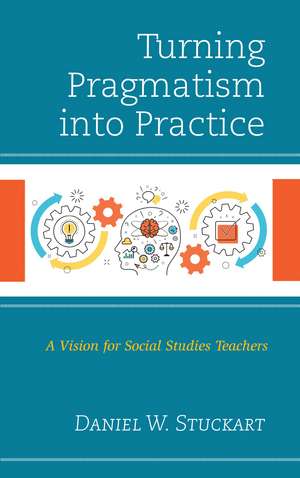
Turning Pragmatism into Practice: A Vision for Social Studies Teachers
Autor Daniel W. Stuckarten Limba Engleză Hardback – 19 ian 2018
Preț: 418.31 lei
Preț vechi: 597.29 lei
-30%
Puncte Express: 627
Carte tipărită la comandă
Livrare economică 07-21 decembrie
Livrare prin curier în România Termenul estimat este afișat lângă disponibilitate.
Transport gratuit pentru acest produs Plată online sau ramburs, în funcție de opțiunile comenzii.
Retur gratuit în 14 zile Comandă securizată și suport în română.
Specificații
ISBN-13: 9781475837704
ISBN-10: 1475837704
Pagini: 160
Ilustrații: 1 b/w illustration; 5 tables
Dimensiuni: 150 x 232 x 16 mm
Greutate: 0.41 kg
Editura: Bloomsbury Publishing
Colecția Rowman & Littlefield
Locul publicării:New York, United States
ISBN-10: 1475837704
Pagini: 160
Ilustrații: 1 b/w illustration; 5 tables
Dimensiuni: 150 x 232 x 16 mm
Greutate: 0.41 kg
Editura: Bloomsbury Publishing
Colecția Rowman & Littlefield
Locul publicării:New York, United States
V-ar putea interesa
-
 Learning to Look at Modern ArtMary Acton-18%Preț: 1016.77 lei1239.96 lei
 -
 Screened Out: Playing Gay in Hollywood from Edison to StonewallRichard BarriosPreț: 377.80 lei
 -
 -33%Preț: 711.82 lei1054.81 lei
 -
 -36%Preț: 678.83 lei1053.96 lei
 -
 Mediating Cultures: Parenting in Intercultural ContextsAlberto González-28%Preț: 349.46 lei482.20 lei
 -
 Theorizing about Intercultural CommunicationWilliam B. Gudykunst-18%Preț: 1144.30 lei1395.48 lei
 -
 Gender Communication Theories and AnalysesCharlotte Krolokke-23%Preț: 630.29 lei818.56 lei
 -
 -15%Preț: 538.14 lei633.11 lei
 -
 Theories of Small GroupsMarshall Scott Poole-18%Preț: 961.77 lei1172.89 lei
 -
 Media EconomicsAdam Finn-27%Preț: 920.46 lei1260.90 lei
 -
 Communication TheoryDavid Holmes-15%Preț: 637.71 lei750.24 lei
 -
 The Media and GlobalizationTerhi Rantanen-15%Preț: 615.54 lei724.16 lei
 -
 Preț: 230.05 lei
 -
 Civil Society, Communication and Global GovernanceNormand LandryPreț: 427.12 lei
 -
 The Deepening DivideJan Van Dijk-18%Preț: 815.67 lei994.73 lei
 -
 Opening ActsJudith Hamera-15%Preț: 632.10 lei743.64 lei
 -
 Electronic Media LawRoger L. Sadler-27%Preț: 1366.15 lei1871.44 lei
 -
 Media AnthropologyEric W. Rothenbuhler-18%Preț: 827.41 lei1009.03 lei
 -
 Group Communication PitfallsJohn O Burtis-23%Preț: 632.94 lei822.01 lei
 -
 Sontag and the Camp Aesthetic: Advancing New PerspectivesBruce E. Drushel-33%Preț: 639.92 lei958.62 lei
 -
 Africana Race and CommunicationJames L Conyers-15%Preț: 684.19 lei804.93 lei
 -
 -23%Preț: 319.86 lei413.42 lei
 -
 Preț: 330.39 lei
Descriere
Despite the founding of the modern social studies curriculum nearly a century ago based on John Dewey's pragmatism philosophy, the field has never achieved a significant and broad implementation of his ideas. Dewey's instrumentalism offers social studies educators a tool for addressing vexing problems such as whether they should design classroom experiences using a traditional or a social studies approach to learning history, the role of digital technologies, the purpose and challenges of younger learners working with an expanding horizons curriculum, and many more. At the same time, Dewey's time-tested theories describe how students use the social studies curriculum to make meaning as well as provide teachers a blueprint for implementing engaging and interactive lessons. We have neglected Dewey, which has led to confusion, student disinterest, and widespread teaching methodologies contrary to theoretical and research best practices. Revisiting Dewey provides the why and how of what we do, an ideal for creating a challenging and rigorous social studies curriculum while engaging students' interests.
Cuprins
CHAPTER
NatureFrom Humble Origins to Greatness
His Works
Organizational Strategies Related to Dewey's Writings
Ideological Trends and Major Works
Dewey and the Social Studies
A Paradox or Misunderstanding?
A Radical Turn in PhilosophyGreek and Early Modern Metaphysics
Dewey's Theory of Nature
The Social Studies Wars Revisited
Dewey's Philosophy in Action
The Instrumental Nature of Social Studies and the Social Sciences
Misunderstanding the Middle Position
Developing a Democratic Vision for Teaching Social Studies
The Central Problem of the Social Studies
Developing a Rationale for Teaching Social Studies
SummaryCurriculumHuman Participation in Nature's Rhythms
The Unity of Teaching and LearningThe Social Studies Teacher's InteractionTeacher Beliefs and Enacting a Social Studies CurriculumThe Intersection of Beliefs and Teacher PreparationAims Talk RevisitedThe Three Pedagogical TraditionsThe Traditional Approach: Citizenship Transmission TeachersDisciplinary Tools: Social Scientist Approach TeachersDewey in Action: Reflective Inquiry TeachersDesigning and Implementing a Reflective Inquiry CurriculumActive OccupationsCurriculum StructuresLong-Term ProjectsThematic UnitsIssues-Centered Units and LessonsReverse Chronology UnitsThe Social Studies Curriculum Continuum
Using the Curriculum to Enlarge an Experience
SummaryExperienceExperience and the Natural World
Having an Experience
The Denotative Method: Evolution Versus Intelligent Design
Scientific Principles
The Public and Its Social Beliefs
Dewey, Experience and Education
Educative Experiences
Characteristics of Educative Social Studies Experiences
Psychologizing the Social Studies Curriculum with Experience
Experience and Judgment
Moral Development as Judgment
Historical Judgment
History Education as Instrumental
Summary
MoralityImpulse Psychology
Interest and Growth in Education
Maslow's Hierarchy
Developing Student Interests
Interest and Pleasure
Effort, Motivation and Thinking
Valuation and Ethics
Valuation Theory
Primitive Valuations
Valuings, Desires and Interests
Means-End Relationships
Contextualism
Moral Philosophy
Dewey's Moral Life
Habits
A Moral Self
Teacher Character Traits and Attitudes
Character Education
A Social Studies Reflective Moral Inquiry Model
Summary
InquiryA Return to Dewey's Ontology
The Nature of Inquiry
The Unification of Theory and Practice in a Problematic Situation
Knowledge as Production
Inquiry and Tools
A New Terminology for Old Ways of Doing and Undergoing
Inquiry as Continuous
Doing the Social Studies
Social Studies Inquiry
Inquiry is More than Big Investigations
Digital Tools and Artifacts
The Problem
The Curious Case of the Common Core State Standards
Summary
CitizenshipDewey's Democracy
Social Naturalism
The State as Instrument
Young Persons' Publics
Publics, Officials and Government
Publics and Democracy
Public Officials as Experts
Public Problems
The Social Studies
Controversial Public Issues
Refining Your Rationale with CPI and Local Values
Building a CPI Curriculum
Enacting a PPD Curriculum
Discussion
Democracy in Schools
Summary
References
NatureFrom Humble Origins to Greatness
His Works
Organizational Strategies Related to Dewey's Writings
Ideological Trends and Major Works
Dewey and the Social Studies
A Paradox or Misunderstanding?
A Radical Turn in PhilosophyGreek and Early Modern Metaphysics
Dewey's Theory of Nature
The Social Studies Wars Revisited
Dewey's Philosophy in Action
The Instrumental Nature of Social Studies and the Social Sciences
Misunderstanding the Middle Position
Developing a Democratic Vision for Teaching Social Studies
The Central Problem of the Social Studies
Developing a Rationale for Teaching Social Studies
SummaryCurriculumHuman Participation in Nature's Rhythms
The Unity of Teaching and LearningThe Social Studies Teacher's InteractionTeacher Beliefs and Enacting a Social Studies CurriculumThe Intersection of Beliefs and Teacher PreparationAims Talk RevisitedThe Three Pedagogical TraditionsThe Traditional Approach: Citizenship Transmission TeachersDisciplinary Tools: Social Scientist Approach TeachersDewey in Action: Reflective Inquiry TeachersDesigning and Implementing a Reflective Inquiry CurriculumActive OccupationsCurriculum StructuresLong-Term ProjectsThematic UnitsIssues-Centered Units and LessonsReverse Chronology UnitsThe Social Studies Curriculum Continuum
Using the Curriculum to Enlarge an Experience
SummaryExperienceExperience and the Natural World
Having an Experience
The Denotative Method: Evolution Versus Intelligent Design
Scientific Principles
The Public and Its Social Beliefs
Dewey, Experience and Education
Educative Experiences
Characteristics of Educative Social Studies Experiences
Psychologizing the Social Studies Curriculum with Experience
Experience and Judgment
Moral Development as Judgment
Historical Judgment
History Education as Instrumental
Summary
MoralityImpulse Psychology
Interest and Growth in Education
Maslow's Hierarchy
Developing Student Interests
Interest and Pleasure
Effort, Motivation and Thinking
Valuation and Ethics
Valuation Theory
Primitive Valuations
Valuings, Desires and Interests
Means-End Relationships
Contextualism
Moral Philosophy
Dewey's Moral Life
Habits
A Moral Self
Teacher Character Traits and Attitudes
Character Education
A Social Studies Reflective Moral Inquiry Model
Summary
InquiryA Return to Dewey's Ontology
The Nature of Inquiry
The Unification of Theory and Practice in a Problematic Situation
Knowledge as Production
Inquiry and Tools
A New Terminology for Old Ways of Doing and Undergoing
Inquiry as Continuous
Doing the Social Studies
Social Studies Inquiry
Inquiry is More than Big Investigations
Digital Tools and Artifacts
The Problem
The Curious Case of the Common Core State Standards
Summary
CitizenshipDewey's Democracy
Social Naturalism
The State as Instrument
Young Persons' Publics
Publics, Officials and Government
Publics and Democracy
Public Officials as Experts
Public Problems
The Social Studies
Controversial Public Issues
Refining Your Rationale with CPI and Local Values
Building a CPI Curriculum
Enacting a PPD Curriculum
Discussion
Democracy in Schools
Summary
References
Recenzii
John Dewey's pedagogical concepts are timeless and Dr. Stuckart has delivered the preeminent writing on Dewey for the social studies classroom. His book provides social studies educators with the mechanisms for using Dewey's instrumentalism philosophy to facilitate student learning towards an informed democratic populace. This should be on the bookshelf of every social studies educator!
Daniel Stuckart's Turning Pragmatism into Practice: A Vision for Social Studies Teachers, a text aimed at pre-service and practicing teachers, provides a vision for turning the philosophic constructs of John Dewey into a vision of what a secondary social studies curriculum and classroom might look like. By providing the reader an understanding of inquiry-based learning Professor Stuckart hopes to guide educators towards the establishment of democratic norms as part of secondary social studies classroom experiences.
In his new book, Daniel Stuckart provides a comprehensive yet accessible treatment of how Dewey's philosophy can inform social studies teachers tending the curricular-instructional gate.
In many ways, the social studies has been turning in circles for a century. In this engaging book, Daniel Stuckart revisits, revitalizes, and returns the field to the educational ideas of John Dewey that might enliven classrooms. Stuckart takes the rather dense works from Dewey's long career and makes them accessible for educators and applicable to the classroom. Pre-service to veteran social studies educators would be wise to engage with these pragmatic ideas as they prepare the next generation of citizens for democratic living.
Daniel Stuckart's Turning Pragmatism into Practice: A Vision for Social Studies Teachers, a text aimed at pre-service and practicing teachers, provides a vision for turning the philosophic constructs of John Dewey into a vision of what a secondary social studies curriculum and classroom might look like. By providing the reader an understanding of inquiry-based learning Professor Stuckart hopes to guide educators towards the establishment of democratic norms as part of secondary social studies classroom experiences.
In his new book, Daniel Stuckart provides a comprehensive yet accessible treatment of how Dewey's philosophy can inform social studies teachers tending the curricular-instructional gate.
In many ways, the social studies has been turning in circles for a century. In this engaging book, Daniel Stuckart revisits, revitalizes, and returns the field to the educational ideas of John Dewey that might enliven classrooms. Stuckart takes the rather dense works from Dewey's long career and makes them accessible for educators and applicable to the classroom. Pre-service to veteran social studies educators would be wise to engage with these pragmatic ideas as they prepare the next generation of citizens for democratic living.