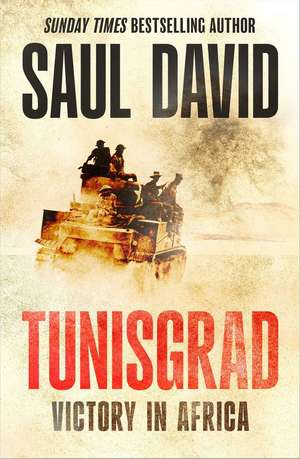
Tunisgrad
Autor Saul Daviden Limba Engleză Hardback – 11 sep 2025
Evoluția istoriografiei dedicate celui de-al Doilea Război Mondial a făcut trecerea, în ultimele decenii, de la cronici generale spre analize aprofundate ale teatrelor de operațiuni considerate anterior secundare. Tunisgrad reflectă această schimbare de paradigmă, oferind o reevaluare critică a luptelor din Tunisia (noiembrie 1942 – mai 1943), pe care autorul Saul David le plasează la același nivel de importanță strategică cu Stalingrad sau Guadalcanal. Apreciem rigoarea documentării acestei ediții în format [Hardback](format), care integrează mărturii directe de la toate nivelurile de comandă și execuție. Subliniem faptul că volumul nu se limitează la descrierea manevrelor militare, ci investighează modul în care alianța anglo-americană și-a sincronizat resursele industriale și logistice pentru prima dată. Remarcăm atenția acordată cifrelor: capitularea a peste 250.000 de soldați ai Axei a însemnat o pierdere mai mare decât cea suferită de germani pe frontul de est, un fapt care justifică denumirea ironică de „Tunisgrad” dată de publicul german de la acea vreme. Această lucrare reprezintă o alternativă la The War in North Africa, 1940-1943 de Colin F. Baxter pentru cursurile de istorie militară, având avantajul unei structuri narative ce îmbină deciziile strategice ale lui Eisenhower sau Montgomery cu realitatea brutală a luptelor din trecătorile montane. În contextul operei sale, Saul David extinde aici temele legate de experiența combatantului abordate în Sky Warriors sau Devil Dogs, trecând de la monografii de unitate la o istorie exhaustivă a unui moment definitoriu. Stilul este precis, evitând speculațiile și ancorând fiecare concluzie în datele oferite de sursele de arhivă, oferind o imagine clară a modului în care controlul asupra Africii de Nord a asigurat victoria finală în Europa.
Preț: 196.64 lei
Carte disponibilă
Livrare economică 14-28 noiembrie
Livrare express 31 octombrie-06 noiembrie pentru 52.97 lei
Specificații
ISBN-10: 000865381X
Pagini: 576
Dimensiuni: 162 x 239 x 51 mm
Greutate: 0.87 kg
Editura: HarperCollins Publishers
V-ar putea interesa
-
 Battle of the ArcticHugh Sebag-MontefiorePreț: 239.04 lei
 -
 Battle of the ArcticHugh Sebag-MontefiorePreț: 145.99 lei
 -
 Sky WarriorsSaul DavidPreț: 81.65 lei
 -
 Operation BitingMax HastingsPreț: 81.30 lei
 -
 WolfpackRoger MoorhousePreț: 143.50 lei
 -
 The Mad and the BraveColin FreemanPreț: 142.36 lei
 -
 Saint PetersburgSinclair McKayPreț: 194.45 lei
 -
 IndignityLea Ypi-28%Preț: 102.16 lei142.26 lei
 -
 An Army At Dawn: The War in North Africa, 1942-1943Rick Atkinson-25%Preț: 93.11 lei124.00 lei
 -
 Voices of VictoryGeraint JonesPreț: 123.77 lei
 -
 Britain's Forgotten BattleAdrian And Dawn L. BridgePreț: 167.63 lei
 -
 The History of World War IIArnaud de la CroixPreț: 167.29 lei
 -
 Gardens of Stone: My Boyhood in the French ResistanceStephen Grady-26%Preț: 73.58 lei99.74 lei
 -
 -25%Preț: 92.71 lei123.73 lei
 -
 The People's WarJohn WillisPreț: 228.83 lei
 -
 Cairo GambitS. W. PerryPreț: 137.53 lei
 -
 Allies at WarTim BouveriePreț: 188.57 lei
De ce să citești această carte
Recomandăm Tunisgrad cititorilor care doresc să înțeleagă mecanismele logistice și strategice care au decis soarta celui de-al Doilea Război Mondial. Cititorul câștigă o perspectivă unică asupra modului în care s-a format cooperarea militară anglo-americană, analizând atât eșecurile inițiale în fața lui Rommel, cât și triumful logistic final. Este o resursă esențială pentru studenții la istorie și pasionații de strategie militară, oferind argumente solide pentru importanța crucială a frontului tunisian.
Despre autor
Saul David este un istoric militar britanic de renume, profesor la Universitatea din Buckingham și un autor de succes, recunoscut pentru capacitatea de a transforma cercetarea academică în narațiuni captivante. Interesele sale de cercetare acoperă o gamă largă, de la logistica militară — subiect pe care l-a explorat și în colaborări cu BBC — până la istoria unităților de elită. Printre lucrările sale de referință se numără Sky Warriors, The Force și SBS - Silent Warriors. Prin Tunisgrad, David își demonstrează măiestria în utilizarea surselor primare, oferind o sinteză documentată a campaniilor care au modelat armata britanică și pe cea americană în secolul XX.