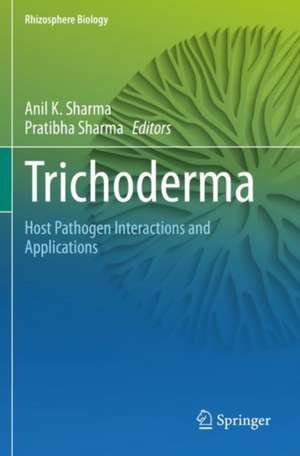
Trichoderma: Host Pathogen Interactions and Applications: Rhizosphere Biology
Editat de Anil K. Sharma, Pratibha Sharmaen Limba Engleză Paperback – 16 iun 2021
Remarcăm importanța acestui volum pentru cercetătorii și specialiștii care vizează certificări în managementul durabil al culturilor și biotehnologie agricolă. Trichoderma, publicat sub egida Springer în seria Rhizosphere Biology, reprezintă o sinteză tehnică a celor mai recente date despre interacțiunile gazdă-patogen. Structura cărții este riguros organizată, pornind de la cadrul experimental necesar înțelegerii bazei genetice a colonizării radiculare și avansând spre aplicații practice în teren.
Notăm cu interes modul în care editorii Anil K. Sharma și Pratibha Sharma au integrat capitole dedicate „vocabularului” interacțiunilor plantă-microbi, oferind o claritate conceptuală esențială pentru studiul imunității sistemice induse. Cititorii familiarizați cu Trichoderma Biological Control Agent de Sudisha Jogaiah vor aprecia în acest volum focalizarea sporită pe mecanismele de semnalizare moleculară și pe adaptarea comunităților fungice la ecosisteme dinamice. În timp ce lucrările anterioare ale lui Sharma, precum Methods in Rhizosphere Biology Research, se concentrau pe metodologie, acest titlu aprofundează studiile de caz, cum ar fi utilizarea Trichoderma împotriva bolilor porumbului sau interacțiunea specifică cu patogenul Fusarium.
Progresia capitolelor reflectă o trecere logică de la cercetarea fundamentală de laborator la implementarea în agricultura organică, evidențiind potențialul acestui fung ca biostimulator. Este o resursă care depășește sfera teoretică, oferind soluții concrete pentru sănătatea solului și productivitatea agricolă globală.




Preț: 912.09 lei
Preț vechi: 1112.30 lei
-18%
Carte disponibilă
Livrare economică 07-21 noiembrie
Specificații
ISBN-10: 9811533237
Pagini: 319
Ilustrații: XXI, 319 p. 33 illus., 20 illus. in color.
Dimensiuni: 155 x 235 mm
Greutate: 0.54 kg
Ediția:1st ed. 2020
Editura: Springer Nature Singapore
Colecția Springer
Seria Rhizosphere Biology
Locul publicării:Singapore, Singapore
De ce să citești această carte
Această lucrare este esențială pentru micologi și agronomi, oferind o înțelegere profundă a modului în care Trichoderma poate înlocui pesticidele chimice. Cititorul câștigă acces la protocoale de cercetare actualizate și strategii de biocontrol testate, fiind un instrument indispensabil pentru cei care doresc să implementeze soluții de agricultură sustenabilă și regenerativă bazate pe dovezi științifice solide.
Despre autor
Anil K. Sharma este un expert recunoscut în biologia rizosferei, ocupându-se de editarea unor lucrări fundamentale care explorează sustenabilitatea agricolă. Contribuțiile sale anterioare, precum Re-visiting the Rhizosphere Eco-system for Agricultural Sustainability și Volatiles and Food Security, subliniază interesul său constant pentru interacțiunile benefice dintre plante și microbi. Alături de Pratibha Sharma, acesta coordonează în prezent cercetări avansate în cadrul seriei Rhizosphere Biology la Springer Nature Singapore, fiind o autoritate în utilizarea agenților biologici pentru protecția mediului și securitatea alimentară.
Descriere scurtă
Cuprins
Notă biografică
Prof. Pratibha Sharma is an ICAR Emeritus Scientist and former Principal Scientist and Professor at the Division of Plant Pathology, ICAR Indian Agricultural Research Institute, New Delhi. Her major area of research concerns biological control agents, especially Trichoderma, Metarhizium, Beauveria and Pseudomonas and their use in IPM and IDM for various crop systems. Prof. Sharma has more than 100 peer-reviewed research papers in national and international journals, as well as a patent on Trichoderma, to her credit. Having received several awards from professional societies, Prof. Sharma is currently working on the application of Trichoderma harzianum and Metarhizium anisopilae to combat major pests impacting groundnut and cumin.