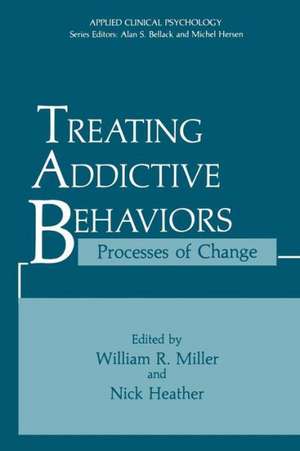
Treating Addictive Behaviors: Advances in Behavioral Biology, cartea 13
Editat de William R. Miller, Nick Heatheren Limba Engleză Paperback – 15 apr 2013
Din seria Advances in Behavioral Biology
- 5%
 Preț: 354.03 lei
 -
 Preț: 386.52 lei
 -
 Preț: 391.16 lei
 - 15%
 Preț: 624.46 lei
 -
 Preț: 375.41 lei
 -
 Preț: 389.88 lei
 -
 Preț: 383.74 lei
 - 5%
 Preț: 388.57 lei
 - 5%
 Preț: 696.54 lei
 - 5%
 Preț: 642.75 lei
 - 5%
 Preț: 364.56 lei
 - 15%
 Preț: 646.64 lei
 -
 Preț: 388.01 lei
 - 15%
 Preț: 647.26 lei
 -
 Preț: 391.91 lei
 - 5%
 Preț: 689.18 lei
 - 5%
 Preț: 375.58 lei
 - 15%
 Preț: 654.19 lei
 - 20%
 Preț: 657.69 lei
 -
 Preț: 405.03 lei
 - 20%
 Preț: 649.92 lei
 - 15%
 Preț: 637.65 lei
 - 5%
 Preț: 386.88 lei
 - 5%
 Preț: 355.28 lei
 -
 Preț: 393.75 lei
 - 15%
 Preț: 634.69 lei
 -
 Preț: 374.23 lei
 - 15%
 Preț: 665.03 lei
 -
 Preț: 387.82 lei
 -
 Preț: 382.49 lei
 -
 Preț: 391.16 lei
 - 5%
 Preț: 763.35 lei
 - 5%
 Preț: 391.10 lei
 - 20%
 Preț: 642.76 lei
 - 5%
 Preț: 375.10 lei
 - 5%
 Preț: 377.23 lei
 - 5%
 Preț: 691.96 lei
 -
 Preț: 377.79 lei
 - 5%
 Preț: 1476.51 lei
 - 5%
 Preț: 1482.28 lei
 - 5%
 Preț: 2202.73 lei
 - 5%
 Preț: 462.53 lei
 - 5%
 Preț: 1141.68 lei
 - 18%
 Preț: 1284.92 lei
Preț: 367.09 lei
Preț vechi: 386.41 lei
-5%
Puncte Express: 551
Carte tipărită la comandă
Livrare economică 08-22 decembrie
Livrare prin curier în România Termenul estimat este afișat lângă disponibilitate.
Transport gratuit de la 400.00 lei Plată online sau ramburs, în funcție de opțiunile comenzii.
Retur gratuit în 14 zile Comandă securizată și suport în română.
Specificații
ISBN-13: 9781461292890
ISBN-10: 1461292891
Pagini: 488
Ilustrații: XIX, 464 p. 6 illus.
Dimensiuni: 152 x 229 x 27 mm
Greutate: 0.7 kg
Ediția:Softcover reprint of the original 1st ed. 1986
Editura: Springer
Colecția Advances in Behavioral Biology
Seria Advances in Behavioral Biology
Locul publicării:New York, NY, United States
ISBN-10: 1461292891
Pagini: 488
Ilustrații: XIX, 464 p. 6 illus.
Dimensiuni: 152 x 229 x 27 mm
Greutate: 0.7 kg
Ediția:Softcover reprint of the original 1st ed. 1986
Editura: Springer
Colecția Advances in Behavioral Biology
Seria Advances in Behavioral Biology
Locul publicării:New York, NY, United States
V-ar putea interesa
-
 Problem DrinkingNick Heather-32%Preț: 729.91 lei1069.93 lei
 -
 Addiction and Choice: Rethinking the relationshipNick Heather-31%Preț: 707.84 lei1019.48 lei
 -
 Giardia and GiardiasisErnest A. Meyer-5%Preț: 1469.21 lei1546.53 lei
 -
 Women and AIDSO'Leary-5%Preț: 1068.39 lei1124.62 lei
 -
 Handbook of Health Behavior Research IIDavid S. Gochman-5%Preț: 1160.39 lei1221.47 lei
 -
 AIDS EducationG. Sabar-Friedman-5%Preț: 1472.58 lei1550.08 lei
 -
 Handbook of Economic Evaluation of HIV Prevention ProgramsDavid R Holtgrave-5%Preț: 1152.50 lei1213.16 lei
 -
 Leaders and Health Care Organizational ChangeStewart Gabel-5%Preț: 739.62 lei778.54 lei
 -
 Protecting Infants through Human MilkLarry K. Pickering-5%Preț: 829.61 lei873.28 lei
 -
 Positive PreventionSeth C Kalichman-5%Preț: 747.44 lei786.78 lei
 -
 Handbook of Diabetes ManagementDonna Zazworsky-5%Preț: 764.41 lei804.64 lei
 -
 The Illusion of CertaintyErik Rifkin-5%Preț: 384.58 lei404.83 lei
 -
 Choices in Palliative CareArthur Blank-5%Preț: 386.12 lei406.45 lei
 -
 Treatment Approaches for Alcohol and Drug DependenceTracey J Jarvis-8%Preț: 552.87 lei600.94 lei
 -
 -23%Preț: 503.75 lei654.22 lei
 -
 LovingkindnessWilliam R. MillerPreț: 87.16 lei
 -
 Is It Time for Your Checkup?Mrs Kasi L. Freeman-5%Preț: 55.58 lei58.51 lei
 -
 I Want a HospitalJose Benegas-5%Preț: 31.56 lei33.22 lei
 -
 Body in BalanceDavid Dansereau Mspt-5%Preț: 103.09 lei108.51 lei
 -
 -5%Preț: 59.83 lei62.98 lei
 -
 -5%Preț: 90.68 lei95.45 lei
 -
 Beyond True StoriesDr Anita Khokhar M. D.-5%Preț: 85.50 lei90.00 lei
 -
 Changing Behaviour in an EpidemicProf Lawrence a. Adeokun-5%Preț: 98.31 lei103.49 lei
 -
 PortalsWilliam R. MillerPreț: 83.42 lei
 -
 Listening WellWilliam R. MillerPreț: 232.13 lei
 -
 Preț: 41.40 lei
 -
 Let's Drink to Your HealthNick HeatherPreț: 333.90 lei
Public țintă
ResearchCuprins
I. Change in the Addictive Behaviors.- 1. Toward a Comprehensive Model of Change.- 2. Implications of a Self-Regulation Model of Therapy for Treatment of Addictive Behaviors.- II. Contemplation: Motivation for Change and Prevention.- 3. From Contemplation to Action: The Role of the World Health Organization.- 4. From Contemplation to Determination: Contributions from Cognitive Psychology.- 5. Critical Conditions for Change in the Addictive Behaviors.- 6. Trying to Stop Smoking: A Decision-Making Perspective.- III. Action: Aspects and Processes of Change.- 7. The Effectiveness of Alcoholism Treatment: What Research Reveals.- 8. Matching Problem Drinkers with Optimal Treatments.- 9. Early Intervention with Problem Drinkers.- 10. Strategies of Change in Eating Disorders.- 11. Early Indications of Treatment Outcome in Multiple Drug Users.- 12. Description and First Results of an Outpatient Drug-Free Treatment Program for Opiate Dependents.- 13. Smoking Cessation Strategies.- 14. Mutual Aid in the Change Process.- 15. The Family in the Change Process.- 16. Cognitive Processes in Addictive Behavior Change.- 17. Change without Therapists: The Use of Self-Help Manuals by Problem Drinkers.- 18. Dependence and Compulsion: Experimental Models of Change.- 19. Merits of Simple Intervention.- IV. Maintenance: Preventing Relapse.- 20. Alcoholism Survival: The Prevention of Relapse.- 21. A Relapse Prevention Model for Treatment of Alcoholics.- 22. Aftercare in Alcoholism Treatment: A Review.
Recenzii
"An excellent place to start for those interested in contemporary thinking in this area."
(Journal of Studies on Alcohol (on the First Edition)
"Refreshingly optimistic...an important reference book."
(British Psychological Society)
(Journal of Studies on Alcohol (on the First Edition)
"Refreshingly optimistic...an important reference book."
(British Psychological Society)