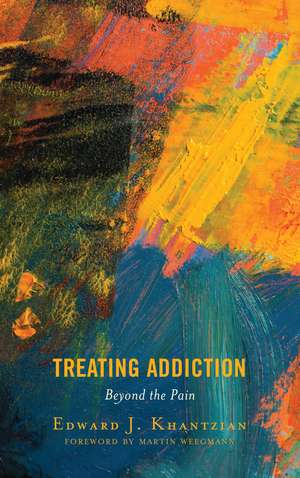
Treating Addiction: Beyond the Pain
Autor Edward J. Khantzian Cuvânt înainte de Martin Weegmanen Limba Engleză Hardback – 13 feb 2018
Preț: 980.95 lei
Preț vechi: 1276.43 lei
-23%
Puncte Express: 1471
Carte tipărită la comandă
Livrare economică 01-15 decembrie
Livrare prin curier în România Termenul estimat este afișat lângă disponibilitate.
Transport gratuit pentru acest produs Plată online sau ramburs, în funcție de opțiunile comenzii.
Retur gratuit în 14 zile Comandă securizată și suport în română.
Specificații
ISBN-13: 9781538108574
ISBN-10: 1538108577
Pagini: 368
Ilustrații: 2 b/w illustrations; 6 tables
Dimensiuni: 162 x 237 x 27 mm
Greutate: 0.6 kg
Editura: Bloomsbury Publishing
Colecția Rowman & Littlefield
Locul publicării:New York, United States
ISBN-10: 1538108577
Pagini: 368
Ilustrații: 2 b/w illustrations; 6 tables
Dimensiuni: 162 x 237 x 27 mm
Greutate: 0.6 kg
Editura: Bloomsbury Publishing
Colecția Rowman & Littlefield
Locul publicării:New York, United States
Cuprins
Foreword by Martin Weegmann
Introduction
Part I. The Internal Terrain of Addiction Psychodynamics
1. Understanding Addictive Vulnerability: An Evolving Psychodynamic Perspective
2. Questions of Substance: Psychodynamic Reflections On Addictive Vulnerability and
Treatment
3. Addiction: Why Are Some of Us More Vulnerable Than Others
4. The Capacity for Self-Care and Addiction
5. The Self-Medication Hypothesis and Attachment Theory: Pathways for Understanding and
Ameliorating Addictive Suffering
Part II. The Self-Medication Hypothesis Revisited
6. The SMH and Addiction as a Problem in Self-Regulation
7. The Self-Medication Hypothesis Revisited: The Dually Diagnosed Patient
8. Self-Medication Hypothesis: Connecting Affective Experience and Drug Choice
9. The Self-Medication Hypothesis and Psychostimulant Treatment of Cocaine Dependence: An Update
10. The Psychodynamics of Addiction and Its Treatment: An Interview with New Therapist Magazine
Part III. Treatment of Addictive Disorders
11.Reflections on Group Treatments as a Corrective for Addictive Vulnerability
12.More Reflections on Group Therapy (Interview by Martin Weegmann)
13. 'Dangerous Desires and Inanimate Attachments': Modern Psychodynamic Approaches to Substance Misuse
14. Reflections on Treating Addictive Disorders: A Psychodynamic Perspective
15. A Psychodynamic Perspective on the Efficacy of 12-Step Programs
Part IV. Reflections and Lessons Learned
16. We Are All At Least a Little Lost and Off-Putting: On Transformation
17. Tragic Trends in the Treatment of Addictive Illness
18. Insights on the Insanity of Addiction
19. The Cruel Scourge of Addiction: An Addiction Psychiatrist's Clinical View
20. Life Learned from Addictions
21. Psychophobia and Getting it Right
22. The Theory of Self-Medication and Addiction
Introduction
Part I. The Internal Terrain of Addiction Psychodynamics
1. Understanding Addictive Vulnerability: An Evolving Psychodynamic Perspective
2. Questions of Substance: Psychodynamic Reflections On Addictive Vulnerability and
Treatment
3. Addiction: Why Are Some of Us More Vulnerable Than Others
4. The Capacity for Self-Care and Addiction
5. The Self-Medication Hypothesis and Attachment Theory: Pathways for Understanding and
Ameliorating Addictive Suffering
Part II. The Self-Medication Hypothesis Revisited
6. The SMH and Addiction as a Problem in Self-Regulation
7. The Self-Medication Hypothesis Revisited: The Dually Diagnosed Patient
8. Self-Medication Hypothesis: Connecting Affective Experience and Drug Choice
9. The Self-Medication Hypothesis and Psychostimulant Treatment of Cocaine Dependence: An Update
10. The Psychodynamics of Addiction and Its Treatment: An Interview with New Therapist Magazine
Part III. Treatment of Addictive Disorders
11.Reflections on Group Treatments as a Corrective for Addictive Vulnerability
12.More Reflections on Group Therapy (Interview by Martin Weegmann)
13. 'Dangerous Desires and Inanimate Attachments': Modern Psychodynamic Approaches to Substance Misuse
14. Reflections on Treating Addictive Disorders: A Psychodynamic Perspective
15. A Psychodynamic Perspective on the Efficacy of 12-Step Programs
Part IV. Reflections and Lessons Learned
16. We Are All At Least a Little Lost and Off-Putting: On Transformation
17. Tragic Trends in the Treatment of Addictive Illness
18. Insights on the Insanity of Addiction
19. The Cruel Scourge of Addiction: An Addiction Psychiatrist's Clinical View
20. Life Learned from Addictions
21. Psychophobia and Getting it Right
22. The Theory of Self-Medication and Addiction
Recenzii
In Treating Addiction: Beyond the Pain, Khantzian (Harvard Medical School) presents a collection of his previously published, seminal articles that explore the relevance of psychodynamic theory to the current understanding of addictions and their treatment. He traces the evolution of his thinking and provides supporting evidence specifically related to the self-medication hypothesis of addiction. In contrast to some other hypotheses, including recent neurobiological formulations, Khantzian posits that addictions are rooted in suffering and pain as opposed to pleasure. In his formulation, he humanizes those with substance use disorders, acknowledging their psychological vulnerabilities, quest to alleviate pain, and resiliency in the face of challenges. Through his use of case examples and vignettes, he fosters readers' empathy for people struggling with substance use disorders. This perspective is greatly needed at a time when such people continue to be stigmatized and judged. In presenting complex ideas about addictions, Khantzian uses a conversational style that promotes understanding and openness rather than defensiveness regarding alternative views. Throughout the book, he champions the idea of a "kinder understanding of addicted individuals" alongside a more integrated, humanistic approach to treatment.
Summing Up: Recommended. Graduate students through faculty and professionals.
I would recommend Khantzian's book to beginners and practitioners alike. It shows beginners the person behind this disorder, while serving as a reminder for experienced practitioners of the human suffering associated with drug misuse.
Few patients suffer as much as those with addictive disorders and few doctors understand the pain and suffering these patients go through as much as Dr. Khantzian. This book is a must read for all healthcare professionals and families helping their patients deal better with their aching souls.
It has been my joy and privilege to work with and learn from Ed Khantzian for more than a quarter century. These collected works flesh out the many facets of the self-medication hypothesis, as I have heard Ed clearly and patiently articulate them over the years. At its heart, the approach to understanding and treating people suffering with addictions that Ed has pioneered is empathic and compassionate. It sees beyond the stigmata of addiction to the vulnerability and suffering at its core. Reading this book is bound to make us all better companions and caregivers of those we know and love who struggle with addiction.
This is a masterful, humanistic perspective on addiction and its treatment from a thought leader who helped define the very nature of this field. It's a must read for anyone who wants an understanding of where we have been and where we are heading with treatment.
Summing Up: Recommended. Graduate students through faculty and professionals.
I would recommend Khantzian's book to beginners and practitioners alike. It shows beginners the person behind this disorder, while serving as a reminder for experienced practitioners of the human suffering associated with drug misuse.
Few patients suffer as much as those with addictive disorders and few doctors understand the pain and suffering these patients go through as much as Dr. Khantzian. This book is a must read for all healthcare professionals and families helping their patients deal better with their aching souls.
It has been my joy and privilege to work with and learn from Ed Khantzian for more than a quarter century. These collected works flesh out the many facets of the self-medication hypothesis, as I have heard Ed clearly and patiently articulate them over the years. At its heart, the approach to understanding and treating people suffering with addictions that Ed has pioneered is empathic and compassionate. It sees beyond the stigmata of addiction to the vulnerability and suffering at its core. Reading this book is bound to make us all better companions and caregivers of those we know and love who struggle with addiction.
This is a masterful, humanistic perspective on addiction and its treatment from a thought leader who helped define the very nature of this field. It's a must read for anyone who wants an understanding of where we have been and where we are heading with treatment.