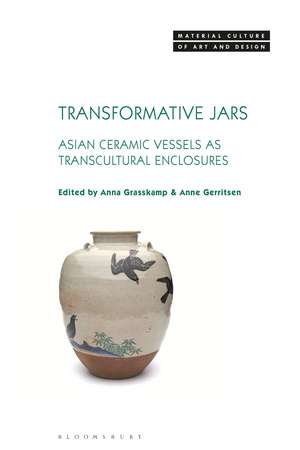
Transformative Jars: Asian Ceramic Vessels as Transcultural Enclosures: Material Culture of Art and Design
Editat de Anna Grasskamp, Dr Anne Gerritsenen Limba Engleză Hardback – 29 dec 2022
The contributors to this volume understand jars not only as household utensils or evidence of human civilizations, but also as artefacts in their own right. Asian jars are culturally and aesthetically defined crafted goods and as objects charged with spiritual meanings and ritual significance. Transformative Jars situates Asian jars in a global context and focuses on relationships between the filling, emptying and re-filling of jars with a variety of contents and meanings through time and throughout space.
Transformative Jars brings together an interdisciplinary team of scholars with backgrounds in curating, art history and anthropology to offer perspectives that go beyond archaeological approaches with detailed analyses of a broad range of objects. By looking at jars as things in the hands of makers, users and collectors, this book presents these objects as agents of change in cultures of craftsmanship and consumption.
Din seria Material Culture of Art and Design
- 27%
 Preț: 185.91 lei
 - 23%
 Preț: 191.93 lei
 - 27%
 Preț: 189.28 lei
 - 19%
 Preț: 166.39 lei
 - 36%
 Preț: 588.41 lei
 - 35%
 Preț: 608.62 lei
 - 18%
 Preț: 155.22 lei
 - 35%
 Preț: 600.61 lei
 - 23%
 Preț: 188.98 lei
 - 26%
 Preț: 191.60 lei
 - 35%
 Preț: 606.07 lei
 - 26%
 Preț: 207.35 lei
 - 23%
 Preț: 861.79 lei
 - 25%
 Preț: 214.90 lei
 - 32%
 Preț: 587.47 lei
 - 23%
 Preț: 259.78 lei
 - 34%
 Preț: 836.71 lei
 - 22%
 Preț: 247.94 lei
 - 28%
 Preț: 208.46 lei
 - 28%
 Preț: 209.30 lei
 - 18%
 Preț: 195.49 lei
 - 30%
 Preț: 216.44 lei
 - 27%
 Preț: 214.90 lei
 - nou
 Preț: 565.49 lei
Preț: 571.06 lei
Preț vechi: 882.85 lei
-35%
Puncte Express: 857
Carte disponibilă
Livrare economică 16-30 noiembrie
Livrare prin curier în România Termenul estimat este afișat lângă disponibilitate.
Transport gratuit pentru acest produs Plată online sau ramburs, în funcție de opțiunile comenzii.
Retur gratuit în 14 zile Comandă securizată și suport în română.
Specificații
ISBN-13: 9781350277434
ISBN-10: 1350277436
Pagini: 296
Ilustrații: 28 colour & 40 bw illus
Dimensiuni: 160 x 236 x 24 mm
Greutate: 0.82 kg
Editura: Bloomsbury Publishing
Colecția Bloomsbury Visual Arts
Seria Material Culture of Art and Design
Locul publicării:London, United Kingdom
ISBN-10: 1350277436
Pagini: 296
Ilustrații: 28 colour & 40 bw illus
Dimensiuni: 160 x 236 x 24 mm
Greutate: 0.82 kg
Editura: Bloomsbury Publishing
Colecția Bloomsbury Visual Arts
Seria Material Culture of Art and Design
Locul publicării:London, United Kingdom
V-ar putea interesa
-
 The Book of TeaKakuzo Okakura-36%Preț: 18.56 lei29.07 lei
 -
 I Deliver Parcels in BeijingHu AnyanPreț: 200.48 lei
 -
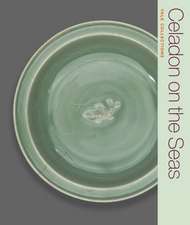 Celadon on the Seas: Chinese Ceramics from the 9th to the 14th CenturyDenise Patry LeidyPreț: 179.62 lei
 -
 Preț: 431.11 lei
 -
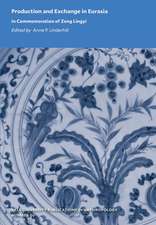 Production and Exchange in Eurasia: In Commemoration of Zeng LingyiAnne P UnderhillPreț: 360.22 lei
 -
 Chigusa and the Art of TeaAndrew M. WatskyPreț: 310.05 lei
 -
 Preț: 386.78 lei
 -
 -9%Preț: 1327.62 lei1458.92 lei
 -
 Pitchers of American Life: Art Within ReachEzra ShalesPreț: 195.04 lei
 -
 -21%Preț: 187.08 lei236.25 lei
 -
 The Teabowl: East and WestBonnie Kemske-45%Preț: 203.01 lei366.72 lei
 -
 Shipping ContainerDr. Craig Martin-32%Preț: 52.11 lei76.32 lei
 -
 The Care of ThingsJerome DenisPreț: 237.50 lei
 -
 How to Read Chinese CeramicsDenise Patry LeidyPreț: 178.55 lei
 -
 Treasured Possessions: From the Renaissance to the EnlightenmentDr Melissa CalaresuPreț: 310.24 lei
 -
 Precious beyond Measure: A History of Korean CeramicsBeth McKillop-19%Preț: 257.70 lei317.39 lei
 -
 -24%Preț: 124.16 lei162.64 lei
 -
 Expressions in BlueFelicity AylieffPreț: 192.06 lei
 -
 Lacquerware Masterpieces from Southeast AsiaSylvia Fraser-LuPreț: 341.64 lei
Cuprins
List of Contributors
List of Illustrations
Transformative Jars: An Introduction
Anna Grasskamp, University of St Andrews, UK; Anne Gerritsen, University of Warwick, UK, and Leiden University, Netherlands
Part I. Transformative Matters: Ceramic Vessels, Chemistry and Socio-Economic Change
Chapter 1. Dreams of Transformation: A 14th-century Flask from Cizhou
Anne Gerritsen, University of Warwick and Leiden University
Chapter 2. Jars that Cheered: Alcohol and Stoneware Containers in Java before 1500
Jiri Jakl, University of Heidelberg
Part II. Transformative Spaces: Ceramic Vessels and Asian Locations
Chapter 3. Siamese Jars and their Significance in Southeast-Asian Trade from the 14th to the 18th Century
Atthasit Sukkham, Bangkok University
Chapter 4. Weaving Networks: Production and Exchange of Ceramic Jars in South China and Vietnam from the 14th to the 16th Century
Wong Wai-yee Sharon, Chinese University of Hong Kong
Part III. Transcultural Enclosures: Containers and their Contents in Global Context
Chapter 5. For Oil, Date Syrup and the Tomb of a Chinese Queen: The Reciprocal Trade in Chinese and West Asian Jars in the Late Tang/Early Abbasid Periods
Eva Ströber, Curator Emerita, National Museum of Ceramics Princessehof Leeuwarden
Chapter 6. Translocation and Transformation: The Lives of Chinese Fishbowls in the Early Modern Period
Wen-ting Wu, National Taiwan University
Part IV. Transformative Containers: Individual Jars and Modes of Agency
Chapter 7. The Jars Have Ears: Circulation and Proliferation of Chinese Prototype Container Jars and their Offspring in Asia
Louise Cort, Curator Emerita for Ceramics, Freer Gallery of Art and Arthur M. Sackler Gallery, Smithsonian Institution
Chapter 8. Dragons in Flux: A Changing Relationship between People and Jars in the Kelabit Highlands, Borneo, from the 19th to the 21st century
Borbala Nyiri, independent scholar
Chapter 9. Jar Interventions: Ceramic Containers as Disobedient Objects in Contemporary Asian Art
Sooyoung Leam, The Courtauld Institute of Art, UK; Anna Grasskamp, University of St Andrews, UK
Chapter 10. Concluding Thoughts on Transformative Jars: Asian Ceramic Vessels as Transcultural Enclosures
Anna Grasskamp, University of St Andrews, UK; Anne Gerritsen, University of Warwick, UK, and Leiden University, Netherlands
Index
List of Illustrations
Transformative Jars: An Introduction
Anna Grasskamp, University of St Andrews, UK; Anne Gerritsen, University of Warwick, UK, and Leiden University, Netherlands
Part I. Transformative Matters: Ceramic Vessels, Chemistry and Socio-Economic Change
Chapter 1. Dreams of Transformation: A 14th-century Flask from Cizhou
Anne Gerritsen, University of Warwick and Leiden University
Chapter 2. Jars that Cheered: Alcohol and Stoneware Containers in Java before 1500
Jiri Jakl, University of Heidelberg
Part II. Transformative Spaces: Ceramic Vessels and Asian Locations
Chapter 3. Siamese Jars and their Significance in Southeast-Asian Trade from the 14th to the 18th Century
Atthasit Sukkham, Bangkok University
Chapter 4. Weaving Networks: Production and Exchange of Ceramic Jars in South China and Vietnam from the 14th to the 16th Century
Wong Wai-yee Sharon, Chinese University of Hong Kong
Part III. Transcultural Enclosures: Containers and their Contents in Global Context
Chapter 5. For Oil, Date Syrup and the Tomb of a Chinese Queen: The Reciprocal Trade in Chinese and West Asian Jars in the Late Tang/Early Abbasid Periods
Eva Ströber, Curator Emerita, National Museum of Ceramics Princessehof Leeuwarden
Chapter 6. Translocation and Transformation: The Lives of Chinese Fishbowls in the Early Modern Period
Wen-ting Wu, National Taiwan University
Part IV. Transformative Containers: Individual Jars and Modes of Agency
Chapter 7. The Jars Have Ears: Circulation and Proliferation of Chinese Prototype Container Jars and their Offspring in Asia
Louise Cort, Curator Emerita for Ceramics, Freer Gallery of Art and Arthur M. Sackler Gallery, Smithsonian Institution
Chapter 8. Dragons in Flux: A Changing Relationship between People and Jars in the Kelabit Highlands, Borneo, from the 19th to the 21st century
Borbala Nyiri, independent scholar
Chapter 9. Jar Interventions: Ceramic Containers as Disobedient Objects in Contemporary Asian Art
Sooyoung Leam, The Courtauld Institute of Art, UK; Anna Grasskamp, University of St Andrews, UK
Chapter 10. Concluding Thoughts on Transformative Jars: Asian Ceramic Vessels as Transcultural Enclosures
Anna Grasskamp, University of St Andrews, UK; Anne Gerritsen, University of Warwick, UK, and Leiden University, Netherlands
Index
Recenzii
This fascinating, multidisciplinary collection of essays on ceramic jars from, and in, global contexts illuminates ceramic trade, consumption, production and reception through the lens of a single form, demonstrating the agency of vessels as both containers and cultural objects.
A brainstorm of a book, with scholars from a wide range of different fields, Transformative Jars gathers fresh studies on Asian ceramics. It not only totally reshapes our ideas on these most common and practical vessels but also greatly contributes to the interdisciplinary nature of material culture
studies.
A brainstorm of a book, with scholars from a wide range of different fields, Transformative Jars gathers fresh studies on Asian ceramics. It not only totally reshapes our ideas on these most common and practical vessels but also greatly contributes to the interdisciplinary nature of material culture
studies.