
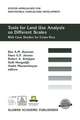
Tools for Land Use Analysis on Different Scales: With Case Studies for Costa Rica: System Approaches for Sustainable Agricultural Development, cartea 8
Editat de B.A.M Bouman, Hans G.P. Jansen, Robert A. Schipper, Huib Hengsdijk, André Nieuwenhuyseen Limba Engleză Hardback – 30 sep 2000
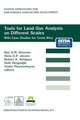
This book offers a detailed account of a range of interdisciplinary methodologies for land use analysis, developed over a twelve-year period (1986-1998) in Costa Rica, through collaborative research between three institutions: one from the North (Wageningen Agricultural University of The Netherlands), and two from the South (the Tropical Agricultural Research and Higher Education Center [CATIE] and the Ministry of Agriculture and Livestock [MAG]). The methodologies span a number of spatial scales, ranging from the field level all the way to the national level. Concepts of systems analysis and information technology play a pivotal role in each of the methodologies. Together, they form a unique toolbox that deserves ample use in the process of agricultural policy design.

Preț: 859.14 lei
Preț vechi: 1130.45 lei
-24%
Puncte Express: 1289
Carte tipărită la comandă
Livrare economică 11-17 noiembrie
Livrare prin curier în România Termenul estimat este afișat lângă disponibilitate.
Transport gratuit pentru acest produs Plată online sau ramburs, în funcție de opțiunile comenzii.
Retur gratuit în 14 zile Comandă securizată și suport în română.
Specificații
ISBN-13: 9780792364795
ISBN-10: 0792364791
Pagini: 274
Ilustrații: IX, 274 p.
Dimensiuni: 155 x 235 x 19 mm
Greutate: 0.59 kg
Ediția:2000
Editura: SPRINGER NETHERLANDS
Colecția Springer
Seria System Approaches for Sustainable Agricultural Development
Locul publicării:Dordrecht, Netherlands
ISBN-10: 0792364791
Pagini: 274
Ilustrații: IX, 274 p.
Dimensiuni: 155 x 235 x 19 mm
Greutate: 0.59 kg
Ediția:2000
Editura: SPRINGER NETHERLANDS
Colecția Springer
Seria System Approaches for Sustainable Agricultural Development
Locul publicării:Dordrecht, Netherlands
V-ar putea interesa
-
 Ecology and Evolution of the Grass-Endophyte SymbiosisGregory P. Cheplick-31%Preț: 676.72 lei983.23 lei
 -
 The Biology of Polar RegionsD.N. Thomas-22%Preț: 475.76 lei611.91 lei
 -
 Allee Effects in Ecology and ConservationFranck Courchamp-26%Preț: 426.03 lei575.06 lei
 -
 -18%Preț: 927.38 lei1130.96 lei
 -
 -29%Preț: 422.79 lei594.80 lei
 -
 Environmental BiologyMike Calver-23%Preț: 812.68 lei1055.42 lei
 -
 Too Smart for our Own GoodCraig Dilworth-8%Preț: 434.91 lei472.73 lei
 -
 Aquatic EcosystemsNicholas V. C. Polunin-14%Preț: 1084.83 lei1261.43 lei
 -
 Reintroduction BiologyJohn G Ewen-8%Preț: 465.98 lei506.49 lei
 -
 Wetland Environments - A Global PerspectiveJames S. Aber-23%Preț: 590.01 lei766.24 lei
 -
 Bayesian Analysis for Population EcologyRuth King-18%Preț: 1125.98 lei1373.15 lei
 -
 Preț: 427.21 lei
 -
 Marine Conservation EcologyJohn Roff-15%Preț: 571.32 lei672.14 lei
 -
 The Ecology of Browsing and GrazingIain J. Gordon-18%Preț: 922.01 lei1124.41 lei
 -
 How Likely is Extraterrestrial Life?J. Woods HalleyPreț: 382.81 lei
Public țintă
ResearchCuprins
1 Introduction.- 1.1.- 1.2 Choosing between methodologies.- 1.3 Methodologies for land use analysis.- 1.4 Outline of the book.- 2 The physical and socio-economic setting: the northern Atlantic Zone of Costa Rica.- 2.1 Introduction.- 2.2 Geology and geomorphology.- 2.3 Climate.- 2.4 Soils.- 2.5 Land use.- 2.6 Farm structure.- 2.7 Macro-economic and agricultural policy.- 2.8 Social and institutional factors.- 2.9 Issues Affecting Sustainability.- Appendix 2.1.- 3 Using the CLUE framework to model changes in land use on multiple scales.- 3.1 Introduction.- 3.2 Methods and materials.- 3.4 Results.- 3.5 Conclusions and discussion.- Appendix 3.1.- Appendix 3.2.- Appendix 3.3.- 4 Spatial equilibrium modeling for evaluating inter-regional trade flows, land use and agricultural policy.- 4.1 Introduction.- 4.2 Main agricultural policies in Costa Rica after 1980.- 4.3 Regional analysis and commodity selection.- 4.4 Methodology.- 4.5 Model results.- 4.6 Summary and conclusions.- Appendix 4.1.- 5 Technical Coefficient Generators for quantifying land use systems.- 5.1 Introduction.- 5.2 Concepts involved in the generation of technical coefficients.- 5.3 PASTOR.- 5.4 LUCTOR.- 5.5 Examples.- 5.6 Conclusions.- 6 Integrated biophysical and socio-economic analysis of regional land use.- 6.1 Land use analysis.- 6.2 Application of SOLUS to the AZ.- 6.3 Land use scenarios.- 6.4 Conclusions.- Appendix 6.1.- 7 Exploring future land use options: combining biophysical opportunities and societal objectives.- 7.1 Introduction.- 7.2 Concepts and methodology of exploring biophysical land use options.- 7.3 The methodology applied to the northern Atlantic Zone.- 7.4 Results.- 7.5 Incorporating economic constraints: implications for land use options.- 7.6 Discussion and conclusions.- Appendix 7.1.- 8 Farm modeling for policy analysis on the farm and regional level.- 8.1 Introduction.- 8.2 Stakeholders and the policy priorities for regional development.- 8.3 Methodology and specification of partial models for individual farm types in the Atlantic Zone.- 8.4 Partial and aggregate simulation methodology.- 8.5 Model implementation and results.- 8.6 Conclusions and discussion.- 9 Linking information technology and farmer knowledge in a decision support system for improved banana cultivation.- 9.1 Introduction.- 9.2 The Costa Rican banana sector.- 9.3 A decision support system for precision agriculture in banana management.- 9.4 Application of precision agriculture at the Rebusca banana plantation.- 9.5 Discussion and conclusion.- 10 A toolbox for land use analysis.- 10.1 Introduction.- 10.2 Scope and terminology of land use analysis.- 10.3 Spatial scales and aggregation issues.- 10.4 Complementarity of methodologies.- 10.5 Sustainability issues.- 10.6 User involvement in land use analysis.- 10.7 Conclusions.- References.- Abbreviations.- Concepts and definitions employed in land use analysis.- to the CDROM.- Authors’ affiliations.
Recenzii
`The volume does a great job of demonstrating that established and tested techniques continue to be used in new and exciting ways. The strength of this volume lies in its thorough treatment of a number of land-use and land-cover change modelling topics from a policy-oriented view. ... This book is therefore valuable to professionals working in the field and useful to researchers embarking on their own land-use or sustainability projects. Finally, it offers one of the relatively few examples of research projects that successfully use technology to integrate across academic disciplines at multiple spatio-temporal scales.'
JASSS, 5/4 (2002)
JASSS, 5/4 (2002)