
Toms River: A Story of Science and Salvation
Autor Dan Faginen Limba Engleză Paperback – 7 apr 2015
WINNER OF THE PULITZER PRIZE • Winner of The New York Public Library’s Helen Bernstein Book Award
A new classic of science reporting.”—The New York Times
The true story of a small town ravaged by industrial pollution, Toms River won the 2014 Pulitzer Prize and has been hailed by The New York Times as "a new classic of science reporting." Now available in paperback with a new afterword by acclaimed author Dan Fagin, the book masterfully blends hard-hitting investigative journalism, scientific discovery, and unforgettable characters.
One of New Jersey’s seemingly innumerable quiet seaside towns, Toms River became the unlikely setting for a decades-long drama that culminated in 2001 with one of the largest environmental legal settlements in history. For years, large chemical companies had been using Toms River as their private dumping ground, burying tens of thousands of leaky drums in open pits and discharging billions of gallons of acid-laced wastewater into the town’s namesake river. The result was a notorious cluster of childhood cancers scientifically linked to local air and water pollution.
Fagin recounts the sixty-year saga of rampant pollution and inadequate oversight that made Toms River a cautionary tale. He brings to life the pioneering scientists and physicians who first identified pollutants as a cause of cancer and the everyday people in Toms River who struggled for justice: a young boy whose cherubic smile belied the fast-growing tumors that had decimated his body from birth; a nurse who fought to bring the alarming incidence of childhood cancers to the attention of authorities who didn’t want to listen; and a mother whose love for her stricken child transformed her into a tenacious advocate for change.
Rooted in a centuries-old scientific quest, Toms River is an epic of dumpers at midnight and deceptions in broad daylight, of corporate avarice and government neglect, and of a few brave individuals who refused to keep silent until the truth was exposed.
A new classic of science reporting.”—The New York Times
The true story of a small town ravaged by industrial pollution, Toms River won the 2014 Pulitzer Prize and has been hailed by The New York Times as "a new classic of science reporting." Now available in paperback with a new afterword by acclaimed author Dan Fagin, the book masterfully blends hard-hitting investigative journalism, scientific discovery, and unforgettable characters.
One of New Jersey’s seemingly innumerable quiet seaside towns, Toms River became the unlikely setting for a decades-long drama that culminated in 2001 with one of the largest environmental legal settlements in history. For years, large chemical companies had been using Toms River as their private dumping ground, burying tens of thousands of leaky drums in open pits and discharging billions of gallons of acid-laced wastewater into the town’s namesake river. The result was a notorious cluster of childhood cancers scientifically linked to local air and water pollution.
Fagin recounts the sixty-year saga of rampant pollution and inadequate oversight that made Toms River a cautionary tale. He brings to life the pioneering scientists and physicians who first identified pollutants as a cause of cancer and the everyday people in Toms River who struggled for justice: a young boy whose cherubic smile belied the fast-growing tumors that had decimated his body from birth; a nurse who fought to bring the alarming incidence of childhood cancers to the attention of authorities who didn’t want to listen; and a mother whose love for her stricken child transformed her into a tenacious advocate for change.
Rooted in a centuries-old scientific quest, Toms River is an epic of dumpers at midnight and deceptions in broad daylight, of corporate avarice and government neglect, and of a few brave individuals who refused to keep silent until the truth was exposed.
Preț: 186.18 lei
Puncte Express: 279
Carte disponibilă
Livrare economică 11-25 noiembrie
Livrare express 28 octombrie-03 noiembrie pentru 47.75 lei
Livrare prin curier în România Termenul estimat este afișat lângă disponibilitate.
Transport gratuit de la 400.00 lei Plată online sau ramburs, în funcție de opțiunile comenzii.
Retur gratuit în 14 zile Comandă securizată și suport în română.
Specificații
ISBN-13: 9781610915915
ISBN-10: 1610915917
Pagini: 576
Ilustrații: 1 illustration
Dimensiuni: 156 x 235 x 36 mm
Greutate: 0.82 kg
Editura: Island Press
Colecția Island Press
ISBN-10: 1610915917
Pagini: 576
Ilustrații: 1 illustration
Dimensiuni: 156 x 235 x 36 mm
Greutate: 0.82 kg
Editura: Island Press
Colecția Island Press
V-ar putea interesa
-
 A River Ran WildLynne CherryPreț: 57.07 lei
 -
 Children of RadiumJoe DunthornePreț: 123.40 lei
 -
 Particles of TruthC. Arden PopePreț: 164.97 lei
 -
 Full Body BurdenKristen IversenPreț: 134.30 lei
 -
 -24%Preț: 93.50 lei123.59 lei
 -
 The JungleUpton SinclairPreț: 48.12 lei
 -
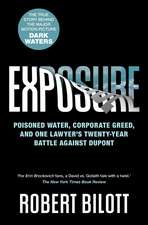 ExposureRobert Bilott-10%Preț: 71.47 lei79.79 lei
 -
 SnoSverker SörlinPreț: 124.75 lei
 -
 Water ContaminationTrudy BeckerPreț: 51.85 lei
 -
 Preț: 193.02 lei
 -
 Preț: 63.81 leiRecomandat
 -
 Clearing the AirHannah RitchiePreț: 121.89 lei
 -
 DuskRobbie ArnottPreț: 122.64 lei
 -
 SunbirthAn YuPreț: 108.24 lei
 -
 What We Can KnowIan McEwanPreț: 115.91 leiRecomandat
 -
 Behind the Beautiful ForeversKatherine BooPreț: 78.85 lei
 -
 Going NuclearTim GregoryPreț: 124.00 lei
 -
 -19%Preț: 58.43 lei71.88 leiRecomandat
 -
 Earth A.D.Michael Lee NirenbergPreț: 126.53 lei
 -
 They Poisoned the WorldMariah BlakePreț: 146.39 lei
Notă biografică
Dan Fagin is an associate professor of journalism and the director of the Science, Health, and Environmental Reporting Program at New York University’s Arthur L. Carter Journalism Institute. His work has been recently published in Nature, The New York Times, Scientific American, and Slate and he is also the co-author of Toxic Deception. Visit danfagin.com for more information.
Cuprins
Prologue: Marking Time
PART I. The Ice Cream Factory
Chapter 1. Pirates
Chapter 2. Insensible Things
Chapter 3. First Fingerprints
Chapter 4. Secrets
Chapter 5. Sharkey and Columbo at the Rustic Acres
Chapter 6. Cells
Chapter 7. On Cardinal Drive
PART II. Breach
Chapter 8. Water and Salt
Chapter 9. Hippies in the Kitchen
Chapter 10. The Coloring Contest
Chapter 11. Cases
Chapter 12. Acceptable Risks
Chapter 13. Friends and Neighbors
PART III. Counting
Chapter 14. Two Wards, Two Hits
Chapter 15. Cluster Busting
Chapter 16. Moving On
Chapter 17. Invisible Trauma
Chapter 18. A Cork in the Ocean
Chapter 19. Expectations
PART IV. Causes
Chapter 20. Outsiders
Chapter 21. Surrogacy
Chapter 22. Blood Work
Chapter 23. Associations
Chapter 24. Legacies
Afterword
Dedication
Acknowledgements
Notes
About the Author
PART I. The Ice Cream Factory
Chapter 1. Pirates
Chapter 2. Insensible Things
Chapter 3. First Fingerprints
Chapter 4. Secrets
Chapter 5. Sharkey and Columbo at the Rustic Acres
Chapter 6. Cells
Chapter 7. On Cardinal Drive
PART II. Breach
Chapter 8. Water and Salt
Chapter 9. Hippies in the Kitchen
Chapter 10. The Coloring Contest
Chapter 11. Cases
Chapter 12. Acceptable Risks
Chapter 13. Friends and Neighbors
PART III. Counting
Chapter 14. Two Wards, Two Hits
Chapter 15. Cluster Busting
Chapter 16. Moving On
Chapter 17. Invisible Trauma
Chapter 18. A Cork in the Ocean
Chapter 19. Expectations
PART IV. Causes
Chapter 20. Outsiders
Chapter 21. Surrogacy
Chapter 22. Blood Work
Chapter 23. Associations
Chapter 24. Legacies
Afterword
Dedication
Acknowledgements
Notes
About the Author
Recenzii
"Deftly combines investigative reporting and historical research to probe a New Jersey seashore town's cluster of childhood cancers linked to water and air pollution."
"It's high time a book did for epidemiology what Jon Krakauer's best-selling Into Thin Air did for mountain climbing: transform a long sequence of painfully plodding steps and missteps into a narrative of such irresistible momentum that the reader not only understands what propels enthusiasts forward, but begins to strain forward as well, racing through the pages to get to the heady views at the end. And such is the power of Dan Fagin's Toms River, surely a new classic of science reporting. . . a sober story of probability and compromise, laid out with the care and precision that characterizes both good science and great journalism."
"Dan Fagin's narrative of the arrival and explosive growth of a chemical plant in New Jersey in the 1950s weaves a complex tale of powerful industry, local politics, water rights, epidemiology, public health and cancer in a gripping, page-turning environmental thriller."
"Immaculate research . . . unstoppable reading . . . Fagin's book may not endear him to Toms River's real estate agents, but its exhaustive reporting and honest look at the cause, obstacles, and unraveling of a cancerous trail should berequired environmental reading."
"If you have but a single new book to read, let this be the one. Its personalities, depth, and driving, detective-story-like narrative are as gripping as anything in recent memory."
"Fagin's meticulously researched and compellingly recounted story of Toms River families struggling to find out what was causing the cancers that claimed their children belongs on the shelf with other environmental/medical mysteries. It's every bit as important—and as well-written—as A Civil Action and The Immortal Life of Henrietta Lacks."
"Absorbing and thoughtful."
"This hard-hitting account of cancer epidemiology in the New Jersey town of Toms River is a triumph."
"In an account equal parts sociology, epidemiology, and detective novel, veteran environmental journalist Dan Fagin chronicles the ordeal of this quiet coastal town, which for decades was a dumping ground for chemical manufacturers. Fagin's compelling book raises broader questions about what communities are willing to sacrifice in the name of economic development."
"This book stood out for its superb combination of compelling narrative and for its explanations of science and history....This thought-provoking work speaks to how the tragic tale of Toms River can happen—and is happening—other places."
"Dan Fagin spent seven years investigating and writing the tale that is Toms River, and its Pulitzer Prize and more than 500 pages are a suitably epic testimony to those who fought for decades to bring justice to their town."
"...richly informative..."
"A thrilling journey through the twists and turns of cancer epidemiology, Toms River is essential reading for our times. Dan Fagin handles topics of great complexity with the dexterity of a scholar, the honesty of a journalist, and the dramatic skill of a novelist."
"[Fagin] does a superb job of investigative research in documenting this story, one that is well worth preserving...highly recommended."
"Toms River is an epic tale for our chemical age. Dan Fagin has combined deep reporting with masterful storytelling to recount an extraordinary battle over cancer and pollution in a New Jersey town. Along the way—as we meet chemists, businessmen, doctors, criminals, and outraged citizens—we see how Toms River is actually a microcosm of a world that has come to depend on chemicals without quite comprehending what they might do to our health."
"At once intimate and objective, Toms River is the heartbreaking account of one town's struggle with a legacy of toxic pollution. Dan Fagin has written a powerful and important book."
"Powerful, in-depth reporting that informs the public, shapes policy, and changes the world."
"Masterful portrayal of the scientific process at work in a town facing environmental crisis."
"A crisp, hard-nosed probe into corporate arrogance and the power of public resistance makes this environmental caper essential reading."
"Waterborne destruction has visited Toms River before, albeit via less conspicuous channels, which Dan Fagin traces with marvelous precision in his new book, Toms River: A Story of Science and Salvation."
"Deeply and thoroughly researched, it's a gripping, beautifully told, and thought-provoking account of a human tragedy. It also presents a fine history of a number of science and health-related topics that bear directly on the story that unfolds in the Toms River. Fagin is a gifted storyteller."
"Toms River is absolutely riveting. I couldn't put it down. Dan Fagin has crafted a book about the consequences of industrial pollution that reads like a murder mystery. Read this book and the next time someone complains about too many environmental regulations you'll have clear answers for why government oversight of industrial waste production and disposal is so important."
"It’s a sure bet to keep you engrossed the whole way through. It’s got to be the best nonfiction book I’ve read since “A Civil Action” (1995)."
Descriere
WINNER OF THE PULITZER PRIZE • Winner of The New York Public Library’s Helen Bernstein Book Award
A new classic of science reporting.”—The New York Times
The true story of a small town ravaged by industrial pollution, Toms River won the 2014 Pulitzer Prize and has been hailed by The New York Times as "a new classic of science reporting." Now available in paperback with a new afterword by acclaimed author Dan Fagin, the book masterfully blends hard-hitting investigative journalism, scientific discovery, and unforgettable characters. Rooted in a centuries-old scientific quest, Toms River is an epic of dumpers at midnight and deceptions in broad daylight, of corporate avarice and government neglect, and of a few brave individuals who refused to keep silent until the truth was exposed.
A new classic of science reporting.”—The New York Times
The true story of a small town ravaged by industrial pollution, Toms River won the 2014 Pulitzer Prize and has been hailed by The New York Times as "a new classic of science reporting." Now available in paperback with a new afterword by acclaimed author Dan Fagin, the book masterfully blends hard-hitting investigative journalism, scientific discovery, and unforgettable characters. Rooted in a centuries-old scientific quest, Toms River is an epic of dumpers at midnight and deceptions in broad daylight, of corporate avarice and government neglect, and of a few brave individuals who refused to keep silent until the truth was exposed.