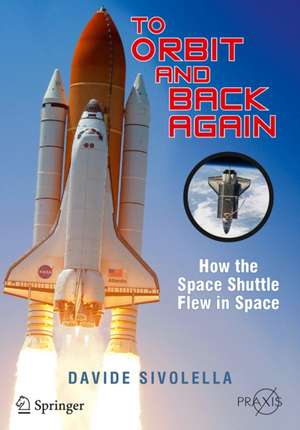
To Orbit and Back Again: Springer Praxis Books
Autor Davide Sivolellaen Limba Engleză Paperback – 27 aug 2013
Ca și N. A. S. A. în NASA Space Shuttle Transportation System Manual, autorul distilează experiență reală în principii acționabile, oferind o perspectivă tehnică riguroasă asupra celei mai complexe mașinării de zbor create vreodată. Totuși, acolo unde manualele oficiale se rezumă la descrierea componentelor, Davide Sivolella reușește să contextualizeze ingineria în fluxul dinamic al unei misiuni reale. Găsim în această carte o analiză profundă a sistemelor care au definit programul Space Shuttle timp de trei decenii, de la protecția termică la sistemele de suport al vieții. Reținem organizarea metodică a volumului în două părți distincte. Prima secțiune, intitulată „Mașina de la A la Z”, funcționează ca un inventar tehnic detaliat: sunt analizate propulsia, boosterele cu combustibil solid și sistemele de manevră orbitală. A doua parte, „Zborul mașinii”, transformă teoria în practică, urmărind cronologic fazele de ascensiune, operațiunile pe orbită și reintrarea critică în atmosferă. Această structură oglindește evoluția autorului de la lucrări precum The Complete Book of Spacecraft, unde analiza era vastă și istorică, spre o focalizare precisă pe mecanica aplicată și soluțiile inginerești concrete. Spre deosebire de Ben Evans în The Space Shuttle: An Experimental Flying Machine, care pune accent pe realizările istorice și misiunile emblematice, Davide Sivolella se concentrează pe „cum” și „de ce”. Ilustrațiile și desenele tehnice nu sunt doar accesorii, ci instrumente de învățare care explică modul în care au fost gestionate anomaliile tehnice în timpul zborurilor. Este o resursă care transformă documentația aridă NASA într-o narațiune tehnică accesibilă, fără a sacrifica precizia necesară unui cititor cu pregătire de specialitate sau unui pasionat de astronautică.
Din seria Springer Praxis Books
-
 Preț: 306.06 lei
 -
 Preț: 289.78 lei
 -
 Preț: 212.55 lei
 -
 Preț: 322.33 lei
 -
 Preț: 324.12 lei
 -
 Preț: 299.26 lei
 -
 Preț: 507.31 lei
 -
 Preț: 223.52 lei
 -
 Preț: 310.41 lei
 -
 Preț: 333.61 lei
 -
 Preț: 230.44 lei
 - 18%
 Preț: 911.62 lei
 -
 Preț: 216.42 lei
 -
 Preț: 229.65 lei
 -
 Preț: 315.58 lei
 -
 Preț: 215.75 lei
 -
 Preț: 266.34 lei
 -
 Preț: 260.26 lei
 -
 Preț: 253.05 lei
 -
 Preț: 351.38 lei
 -
 Preț: 227.17 lei
 -
 Preț: 281.23 lei
 -
 Preț: 159.75 lei
 - 18%
 Preț: 1256.95 lei
 - 18%
 Preț: 990.74 lei
 -
 Preț: 323.74 lei
 - 18%
 Preț: 1290.02 lei
 - 18%
 Preț: 1048.03 lei
 -
 Preț: 216.72 lei
 -
 Preț: 269.95 lei
 -
 Preț: 217.22 lei
 -
 Preț: 316.07 lei
 -
 Preț: 256.84 lei
 - 18%
 Preț: 972.77 lei
 -
 Preț: 219.27 lei
 -
 Preț: 222.12 lei
 -
 Preț: 392.52 lei
 -
 Preț: 261.25 lei
 -
 Preț: 319.85 lei
 -
 Preț: 350.65 lei
 - 15%
 Preț: 632.63 lei
 -
 Preț: 330.21 lei
 -
 Preț: 322.04 lei
 -
 Preț: 208.76 lei
 -
 Preț: 250.46 lei
 -
 Preț: 326.81 lei
 -
 Preț: 106.06 lei
 - 18%
 Preț: 1178.23 lei
 -
 Preț: 298.45 lei
Preț: 422.88 lei
Carte tipărită la comandă
Livrare economică 30 noiembrie-14 decembrie
Specificații
ISBN-10: 1461409829
Pagini: 528
Ilustrații: XXII, 502 p. 245 illus., 95 illus. in color.
Dimensiuni: 168 x 240 x 29 mm
Greutate: 0.88 kg
Ediția:2014
Editura: Springer
Colecția Springer Praxis Books
Seria Springer Praxis Books
Locul publicării:New York, NY, United States
V-ar putea interesa
-
 Stick and Rudder: An Explanation of the Art of FlyingWolfgang Langewiesche-32%Preț: 192.07 lei283.57 lei
 -
 Ace The Technical Pilot Interview 2/EGary Bristow-33%Preț: 171.41 lei254.30 lei
 -
 -19%Preț: 34.60 lei42.64 lei
 -
 Gemini and Mercury RemasteredAndy SaundersPreț: 408.99 lei
 -
 ChallengerAdam HigginbothamPreț: 88.69 lei
 -
 Dark StarMatthew H. HerschPreț: 354.16 lei
 -
 Into the BlackRowland White-16%Preț: 80.28 lei96.03 lei
 -
 The Complete Book of SpacecraftMichael H. Gorn-19%Preț: 183.52 lei227.29 lei
 -
 Preț: 163.35 lei
 -
 Space Shuttle StoriesTom JonesPreț: 247.54 lei
 -
 -23%Preț: 307.79 lei397.60 lei
 -
 Space Shuttle: A Photographic JourneyLuke Wesley PricePreț: 200.64 lei
 -
 NASA Moon Mission Operations ManualDavid BakerPreț: 235.28 lei
 -
 Apollo 13 Manual 50th Anniversary EditionDavid BakerPreț: 234.81 lei
 -
 Peep Inside How a Rocket WorksLara BryanPreț: 69.97 lei
 -
 The Space ShuttleDavid BakerPreț: 112.92 lei
 -
 NASA Space Shuttle Owners'' Workshop ManualDavid BakerPreț: 193.84 lei
 -
 Space Shuttle: Fact ArchiveRobert Godwin-12%Preț: 53.18 lei60.24 lei
 -
 Shaping the VulcanStephen LiddlePreț: 281.33 lei
 -
 Cut-out Curiosities Space, Science & Technology: A Collage BookMaximillian Malone-18%Preț: 125.96 lei153.75 lei
Public țintă
Popular/generalDe ce să citești această carte
Această carte se adresează inginerilor și entuziaștilor care doresc să înțeleagă arhitectura internă a navetei spațiale dincolo de aspectul exterior. Cititorul câștigă o înțelegere clară a modului în care subsistemele interacționează sub presiune, beneficiind de expertiza unui inginer aerospațial care traduce manualele complexe în explicații logice și diagrame clare. Este un ghid tehnic esențial pentru oricine vrea să exploreze ingineria din spatele explorării spațiale.
Despre autor
Davide Sivolella este un inginer aerospațial cu o pasiune de o viață pentru explorarea spațiului, fiind specializat în interpretarea și sintetizarea documentației tehnice complexe pentru un public extins. Expertiza sa este reflectată în numeroase lucrări publicate în seria Springer Praxis Books, precum The Untold Stories of the Space Shuttle Program sau Privatizing Space. Prin scrierile sale, Sivolella face puntea între istoria astronauticii și specificațiile tehnice de ultimă oră, analizând evoluția sistemelor de zbor și impactul acestora asupra industriei aerospațiale globale.
Descriere scurtă
The author describes the structures and systems of the Space Shuttle, and then follows a typical mission, explaining how the structures and systems were used in the launch, orbital operations and the return to Earth. Details of how anomalous events were dealt with on individual missions are also provided, as are the recollections of those who built and flew the Shuttle. Many photographs and technical drawings illustrate how the Space Shuttle functions, avoiding the use of complicated technical jargon.
The book is divided into two sections: Part 1 describes each subsystem in a technical style, supported by diagrams, technical drawings, and photographs to enable a better understanding of the concepts. Part 2 examines different flight phases, from liftoff to landing. Technical material has been obtained from NASA as well as from other forums and specialists.
Author Davide Sivolella is an aerospace engineer with a life-long interest in space and is ideally qualified to interpret technical manuals for a wider audience. This book provides comprehensive coverage of the topic including the evolution of given subsystems, reviewing the different configurations, and focusing on the solutions implemented.
Cuprins
Recenzii
“This book focuses on the space shuttle and its technology, including the shuttle’s design, engineering, integration, and operations. … This comprehensive volume provides a good overview of the accomplishments of the engineers who designed the shuttle and its operational protocols. Summing Up: Highly recommended. All readers interested in space science and technology.” (A. M. Strauss, Choice, Vol. 51 (7), March, 2014)
“Davide Sivolella’s book To Orbit and Back Again … becomes apparent just how complex the shuttle was, and how remarkable it was that it flew as successfully as it did for three decades. … There is, as promised, considerable technical information about the shuttle’s systems, far more than the general reader might expect, or want. … someone seeking to go beyond the basics of the engineering of the shuttle. … this book provides a good reminder of what made those launches possible.” (Jeff Foust, TheSpaceReview.com, November, 2013)
Notă biografică
Textul de pe ultima copertă
Highly illustrated with many diagrams, photographs and technical drawings, To Orbit and Back Again
• focuses on the engineering aspects of the Shuttle
• describes the systems and subsystems in clear, non-technical terms
• brings to the fore the design work behind the Space Shuttle and the mission itself.