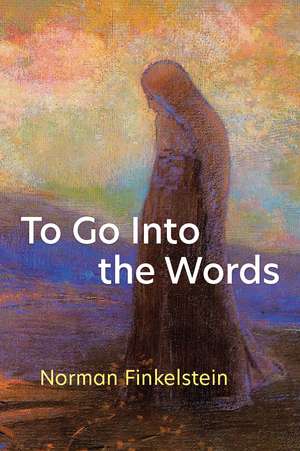
To Go Into the Words: Poets On Poetry
Autor Norman Finkelsteinen Limba Engleză Paperback – 3 oct 2023
Recomandăm To Go Into the Words ca pe un instrument critic esențial pentru înțelegerea modului în care limbajul poetic poate deveni un vehicul al cunoașterii profunde. Aplicabilitatea practică a acestui volum rezidă în capacitatea lui Norman Finkelstein de a deschide textul poetic, căutând acea „gnosis” sau perspectivă interioară care transformă lectura dintr-o simplă receptare estetică într-o experiență de iluminare intelectuală. Analizele sale riguroase asupra unor figuri precum William Bronk sau Nathaniel Mackey nu sunt simple exerciții teoretice, ci hărți de navigare prin complexitatea poeziei moderne.
Subliniem modul în care acest volum completează perspectiva oferită de The Poetics of Transcendence, adăugând o dimensiune specifică experienței evreiești și o atenție sporită asupra materialității cuvântului ca sursă de transcendență. În timp ce alte lucrări se concentrează pe aspecte teologice largi, Finkelstein ancorează discuția în rigoarea filologică și în tradiția critică seculară. Această abordare este familiară cititorilor operei sale anterioare; dacă în poemul serial de mari dimensiuni Track autorul explorează aceste teme prin practică creativă, aici el le sistematizează sub formă de eseu critic, oferind o structură coerentă ce progresează de la studii de caz individuale către reflecții ample despre cultura poetică.
Ne-a atras atenția organizarea volumului, care, deși include materiale ce au avut inițial un caracter ocazional sub formă de recenzii, reușește să construiască un argument unitar despre forța transformatoare a limbajului. Tonul este unul precis, academic, dar infuzat de pasiunea unui practician care înțelege poezia din interior. Este o resursă valoroasă pentru curricula de literatură comparată și pentru orice cititor interesat de intersecția dintre misticism, filozofie și actul scrierii.
Din seria Poets On Poetry
-
 Preț: 100.04 lei
 -
 Preț: 98.81 lei
 -
 Preț: 148.16 lei
 -
 Preț: 124.10 lei
 -
 Preț: 121.61 lei
 -
 Preț: 122.92 lei
 -
 Preț: 221.57 lei
 -
 Preț: 151.93 lei
 -
 Preț: 98.81 lei
 -
 Preț: 149.27 lei
 -
 Preț: 176.58 lei
 -
 Preț: 176.58 lei
 -
 Preț: 167.70 lei
 -
 Preț: 261.06 lei
 -
 Preț: 185.45 lei
 -
 Preț: 157.91 lei
 -
 Preț: 146.46 lei
 -
 Preț: 213.02 lei
 -
 Preț: 194.62 lei
 - 9%
 Preț: 144.38 lei
 - 28%
 Preț: 489.78 lei
 -
 Preț: 221.83 lei
 -
 Preț: 158.94 lei
 -
 Preț: 184.56 lei
 -
 Preț: 176.25 lei
 - 8%
 Preț: 135.76 lei
 - 9%
 Preț: 143.18 lei
 -
 Preț: 375.58 lei
 -
 Preț: 150.27 lei
 -
 Preț: 185.23 lei
 -
 Preț: 109.22 lei
 -
 Preț: 149.88 lei
 - 23%
 Preț: 454.63 lei
 -
 Preț: 150.66 lei
 -
 Preț: 374.89 lei
 -
 Preț: 242.92 lei
 -
 Preț: 103.74 lei
 -
 Preț: 374.30 lei
 - 24%
 Preț: 458.02 lei
 - 18%
 Preț: 365.83 lei
 -
 Preț: 186.26 lei
 - 8%
 Preț: 169.08 lei
 -
 Preț: 158.53 lei
 -
 Preț: 171.11 lei
 -
 Preț: 168.14 lei
 -
 Preț: 149.57 lei
 -
 Preț: 112.43 lei
Preț: 182.44 lei
Carte disponibilă
Livrare economică 22 mai-05 iunie
Specificații
ISBN-10: 0472039415
Pagini: 222
Dimensiuni: 137 x 203 x 15 mm
Greutate: 0.25 kg
Editura: UNIVERSITY OF MICHIGAN PRESS
Colecția University of Michigan Press
Seria Poets On Poetry
V-ar putea interesa
-
 GazaNorman FinkelsteinPreț: 178.43 lei
 -
 With Heroic TruthNorman FinkelsteinPreț: 86.14 lei
 -
 The Way Things Never WereNorman FinkelsteinPreț: 64.48 lei
 -
 Pipe NozzleBarry Roberts GreerPreț: 68.00 lei
 -
 a la Recherche Du Temps Perdu - Vol.1/7M. Marcel ProustPreț: 126.51 lei
 -
 Diana, Farben Und BegierdeGregor Von Ewersbach-DreihausenPreț: 89.75 lei
 -
 Passeggiando Con Oscar WildeManuel AneddaPreț: 36.08 lei
 -
 The Crocodile Prize 2014 AnthologyPhilip FitzpatrickPreț: 129.09 lei
 -
 The Crocodile Prize Anthology 2015Philip FitzpatrickPreț: 100.91 lei
 -
 Black Girl Magic Lit MagKenesha N. WilliamsPreț: 63.24 lei
 -
 Sacred GroundsLee WarrenPreț: 63.07 lei
 -
 All Hail the Black QueenClifford R. BrownPreț: 59.71 lei
 -
 MiddlemarchEliot, GeogePreț: 146.46 lei
De ce să citești această carte
Această carte se adresează studenților, cercetătorilor și poeților care doresc să depășească analiza formală a textului. Cititorul câștigă o înțelegere profundă a modului în care poezia modernă poate genera cunoaștere metafizică. Este o recomandare solidă pentru cei care caută o punte între critica literară riguroasă și experiența spirituală a lecturii, oferită de unul dintre cei mai avizați exegeți ai literaturii evreiești contemporane.
Despre autor
Norman Finkelstein s-a născut în New York în 1954 și este un reputat poet și cercetător al literaturii evreiești. Profesor de engleză la Universitatea Xavier din Cincinnati, acesta a dezvoltat o carieră prodigioasă marcată de o dublă perspectivă: cea de creator și cea de critic. Printre lucrările sale poetice de referință se numără poemul serial în trei volume Track (cuprinzând volumele Track, Columns și Powers), iar contribuțiile sale critice acoperă pe larg poezia modernă și postmodernă. Expertiza sa academică, dublată de practica poetică, îi permite o abordare unică a textelor literare, integrând elemente de istorie, filozofie și religie.
Descriere scurtă
Pulling from Finkelstein’s experience of writing thirteen books of poetry and six books of literary criticism, To Go Into the Words consistently rewards the reader with insights as transformative as they are well-considered and deftly mapped out. This volume opens the world of poetry to poets, scholars, and readers by showcasing “the gnosis that is to be found in modern poetry.”
Notă biografică
Cuprins
- Introduction
- William Bronk
- Helen Adam
- Ronald Johnson
- Michael Palmer
- Nathaniel Mackey
- Paul Bray
- Lawrence Joseph
- Total Midrash
- Secular Jewish Culture and Its Radical Poetic Discontents
- The Master of Turning
Recenzii
“Finkelstein, one of our most perceptive poet-critics, gives us masterful readings of important contemporary poets in essays that integrate his decades-long conversation with their work. The last sections examine the gnostic impulse in poetry and commentary of secular Jewish poets, including Finkelstein himself, that leads them, through language, to ‘circle around some. . . absent center which still has compelling power.’”
“We approach truth, said Gershom Scholem, not by systems but by commentary. In these essays on an array of poets ranging from William Bronk to Nathaniel Mackey, Norman Finkelstein provides commentary informed by a host of systems—deconstruction, the New Criticism, Freudian psychoanalysis, Marxian materialism, and more. Standing above them all is the idea of gnosis, the quest for insight into who we are and who we might become. And, in Finkelstein’s comments on midrash, we find the best commentary yet on Finkelstein’s own poetry. Open this book and open the world.”
“Norman Finkelstein does not exaggerate the scope of his criticism when he defines it as ‘part close reading, part psychoanalysis, part historicism, and 100 percent mystical analysis’—the writing collected here has all those elements and much more. His lucidity and erudition are accompanied by an inspiring openness of spirit—as he considers such poets as William Bronk, Helen Adam, Ronald Johnson, Nathaniel Mackey, and Lawrence Joseph, he gives us a companionate sense of his own developing involvement with their work. These are passionately engaging, fantastically nuanced readings, equally attuned to the circadian rhythms of Johnson, the ghostly ballads of Adam, Mackey’s unfolding mythos, and Joseph’s vision of contemporary catastrophe. His sense of how poets work and why it matters—enriched by explorations of the midrashic traditions of Jewish thought and the competing claims of experiment and tradition—provide uncommon excitement.”
"[To Go Into the Words] has something of an "occasional" feel--most of the chapters on specific poets compile two or more then-contemporaneous reviews of their latest books--but instead of coming across as partial or haphazard, the structure communicates powerfully both the consistencies and the developments in Finkelstein's interests and tastes over time."