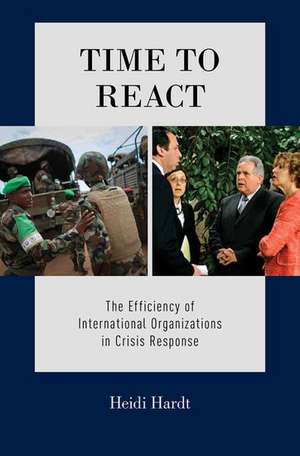
Time to React: The Efficiency of International Organizations in Crisis Response
Autor Heidi Hardten Limba Engleză Hardback – 27 feb 2014
Preț: 661.56 lei
Preț vechi: 843.87 lei
-22%
Puncte Express: 992
Carte disponibilă
Livrare economică 23 octombrie-03 noiembrie
Livrare prin curier în România Termenul estimat este afișat lângă disponibilitate.
Transport gratuit pentru acest produs Plată online sau ramburs, în funcție de opțiunile comenzii.
Retur gratuit în 14 zile Comandă securizată și suport în română.
Specificații
ISBN-13: 9780199337118
ISBN-10: 019933711X
Pagini: 272
Ilustrații: 13 illustrations
Dimensiuni: 239 x 163 x 28 mm
Greutate: 0.49 kg
Editura: Oxford University Press
Colecția OUP USA
Locul publicării:New York, United States
ISBN-10: 019933711X
Pagini: 272
Ilustrații: 13 illustrations
Dimensiuni: 239 x 163 x 28 mm
Greutate: 0.49 kg
Editura: Oxford University Press
Colecția OUP USA
Locul publicării:New York, United States
Recenzii
This important book looks at the informal norms and networks governing the way international organizations 'really' work. Drawing on an impressive array of interviews and survey data, Hardt shows persuasively how much we miss when we ignore the personal ties and trust that are essential to decisions in a crisis. Interpersonal relationships and organizational culture can trump formal rules in ways that help get things done. Essential reading for anyone interested in when and why international organizations work well (or don't).
The findings described in the book challenge the realist view of international relations. Hardt makes the case that humans, even diplomats, are social creatures, and interpersonal dynamics, rather than national interest alone, can influence the timeliness of a multinational response to crisis.
The findings described in the book challenge the realist view of international relations. Hardt makes the case that humans, even diplomats, are social creatures, and interpersonal dynamics, rather than national interest alone, can influence the timeliness of a multinational response to crisis.
Notă biografică
Heidi Hart is Assistant Professor of Political Science at the University of Texas at Arlington
Cuprins
- 1. Introduction
- 2. Why Speed of Response Matters
- 3. Differences in Organization Response Rates
- 4. Institutional Design in Crisis Decision-making
- 5. The Impact of Unspoken Rules and Interpersonal Relations
- 6. Informal Norms: Barriers and Facilitators
- 7. Informal Relations: Friends and Foes
- 8. Conclusion
- Appendix
- Notes
- References
- Index