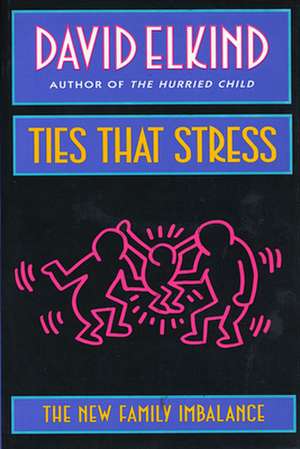
Ties That Stress
Autor David Elkinden Limba Engleză Paperback – 21 iul 1998
În contextul programelor de studii axate pe sociologia familiei și psihologia dezvoltării, Ties That Stress oferă o aplicabilitate practică imediată prin deconstrucția mecanismelor de stres care afectează structura domestică actuală. Considerăm că valoarea acestui volum rezidă în modul în care David Elkind explică tranziția de la familia modernă, centrată pe protecția copilului, la modelul postmodern, caracterizat prin flexibilitate dar și printr-o vulnerabilitate crescută a tinerilor. Subliniem analiza autorului asupra modului în care intuiția parentală a fost înlocuită de o dependență mecanică de tehnici de parenting, transformând copiii în „adulți în miniatură” privați de securitatea emoțională necesară. Descoperim aici o critică riguroasă a instituțiilor — școala, sistemul juridic și media — care nu au reușit să se adapteze noilor presiuni economice resimțite de părinți. Această ediție revizuită nu se limitează la a deplânge declinul valorilor tradiționale, ci propune un cadru teoretic solid pentru înțelegerea „familiei vitale”, un model hibrid ce caută echilibrul între nevoile fiecărui membru. Textul completează perspectiva oferită de Emotions, the Social Bond, and Human Reality, adăugând o analiză specifică asupra impactului structurilor sociale asupra psihicului infantil, acolo unde Thomas J. Scheff se concentrează pe micro-interacțiunile emoționale generale. De asemenea, spre deosebire de Parent-child Relations Throughout Life, care explorează relațiile pe parcursul întregii vieți, lucrarea lui David Elkind prioritizează presiunea imediată a postmodernității asupra dezvoltării timpurii, oferind o sinteză coerentă a fragmentelor de realitate socială contemporană.
Preț: 207.26 lei
Carte disponibilă
Livrare economică 16-30 noiembrie
Specificații
ISBN-10: 0674891503
Pagini: 272
Dimensiuni: 145 x 223 x 19 mm
Greutate: 0.37 kg
Ediția:Revised edition
Editura: Harvard University Press
V-ar putea interesa
-
 KithJay GriffithsPreț: 124.56 lei
 -
 -31%Preț: 550.66 lei802.17 lei
 -
 Preț: 183.87 lei
 -
 MiseducationDavid ElkindPreț: 117.90 lei
 -
 Hucks Raft – A History of American ChildhoodSteven MintzPreț: 240.40 lei
 -
 At the Threshold – The Developing Adolescent (Paper)S Shirley FeldmanPreț: 407.45 lei
 -
 Preț: 354.77 lei
 -
 -5%Preț: 419.00 lei441.06 lei
 -
 The Child′s Path to Spoken LanguageJohn L LockePreț: 405.25 lei
 -
 Dialogues with Children (Paper)Gareth B. MatthewsPreț: 241.33 lei
 -
 Preț: 289.03 lei
 -
 You Can't Say You Can't PlayVivian Gussin PaleyPreț: 163.37 lei
 -
 The Power of Play: Learning What Comes NaturallyDavid ElkindPreț: 107.09 lei
 -
 Parenting on the Go: Birth to Six, A to ZDavid ElkindPreț: 181.46 lei
 -
 Great Myths of Child DevelopmentStephen HuppPreț: 149.27 lei
 -
 Preț: 356.32 lei
 -
 Children's Emotions in Policy and PracticeMatej BlazekPreț: 410.29 lei
 -
 Media and the Sexualization of ChildhoodBarrie GunterPreț: 378.50 lei
 -
 -22%Preț: 402.97 lei516.63 lei
De ce să citești această carte
Recomandăm această carte profesioniștilor din educație, psihologilor și părinților care doresc să înțeleagă rădăcinile stresului familial contemporan. Cititorul câștigă o perspectivă clară asupra motivului pentru care modelul actual de familie eșuează adesea în protejarea copilăriei. Este o resursă esențială pentru a naviga între exigențele carierei și nevoile emoționale ale copiilor, oferind soluții pentru restabilirea unui echilibru funcțional în cămin.
Despre autor
David Elkind este un renumit psiholog infantil american, cunoscut la nivel internațional pentru cercetările sale asupra dezvoltării cognitive și sociale a copiilor și adolescenților. Profesor emerit la Universitatea Tufts, Elkind a explorat în mod constant tensiunile dintre presiunile societății moderne și ritmul natural de creștere al tinerilor. Lucrările sale sunt fundamentale în curriculumul de psihologie, fiind autorul unor concepte cheie precum „copilul grăbit”. În Ties That Stress, el își folosește vasta experiență clinică și academică pentru a sintetiza teorii sociologice și psihologice într-un ghid critic despre evoluția familiei americane și globale.