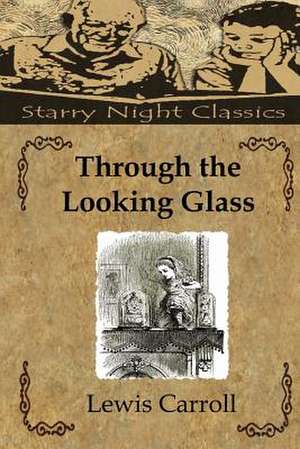
Through the Looking Glass
Autor Lewis Carroll Editat de Richard S. Hartmetzen Limba Engleză Paperback – vârsta de la 8 până la 11 ani
Vezi toate premiile Carte premiată
Observăm cum, la șase luni după prima incursiune în Wonderland, curiozitatea o împinge pe protagonistă spre o nouă frontieră: oglinda din sufragerie. Through The Looking Glass nu este doar o continuare, ci o explorare a unei lumi guvernate de logica inversă, unde pentru a ajunge undeva trebuie să mergi în direcția opusă. Recomandăm acest volum părinților care doresc să introducă copiii în universul fascinant al literaturii „nonsense”, unde limbajul devine un teren de joacă interactiv prin poeme precum „Jabberwocky”. Deși formatul Collins Classics pune accent pe textul original în limba engleză, bogăția imaginilor mentale create de Lewis Carroll funcționează ca niște „flapuri” invizibile pe care mintea cititorului le deschide la fiecare pagină.
Atmosfera amintește de Alice's Adventures in Wonderland and Through the Looking Glass, dar aici mizele sunt mult mai legate de structura unui joc de șah uriaș, iar personajele, de la Regina Roșie la simpaticii Tweedledum și Tweedledee, sunt mai rigide și mai preocupate de reguli bizare. Față de primul volum, Alice's Adventures in Wonderland, unde căderea în gaura de iepure simboliza o pierdere a controlului, aici Alice alege activ să exploreze reflectarea lumii sale, oferind o perspectivă mai matură asupra identității.
Credem că experiența lecturii este potențată de ritmul alert și de jocurile de cuvinte matematice. Lewis Carroll reușește să transforme logica riguroasă într-o fantezie pură, oferind copiilor ocazia de a vedea limba engleză într-o lumină creativă și plină de umor, dincolo de regulile gramaticale rigide.
Preț: 55.88 lei
Carte disponibilă
Livrare economică 17 noiembrie-01 decembrie
Specificații
ISBN-10: 1481880721
Pagini: 172
Dimensiuni: 152 x 229 x 9 mm
Greutate: 0.24 kg
Editura: CREATESPACE
V-ar putea interesa
-
 -26%Preț: 42.78 lei58.16 lei
 -
 Alice's Adventures in WonderlandLewis Carroll-25%Preț: 43.73 lei58.69 lei
 -
 Thinking, Fast and SlowDaniel Kahneman-27%Preț: 90.79 lei123.57 leiRecomandat
 -
 -17%Preț: 66.97 lei80.26 lei
 -
 Through the Looking Glass and What Alice Found ThereLewis CarrollPreț: 64.37 lei
 -
 Nonzero: History, Evolution & Human CooperationRobert Wright-25%Preț: 75.69 lei101.05 lei
 -
 The Evolution Of God: The origins of our beliefsRobert Wright-25%Preț: 82.25 lei108.96 lei
 -
 Anne of Green GablesL M MontgomeryPreț: 41.69 lei
 -
 Preț: 40.89 lei
 -
 A Brief History of TimeStephen HawkingPreț: 104.96 lei
 -
 Why Zebras Don't Get UlcersM. SapolskyPreț: 149.58 lei
 -
 Alice in Wonderland and Through the Looking GlassLewis Carroll-24%Preț: 79.24 lei104.44 lei
 -
 Alice Through the Looking GlassLewis CarrollPreț: 58.47 lei
 -
 Alice Through the Looking-GlassLewis CarrollPreț: 111.32 lei
 -
 -27%Preț: 188.69 lei256.77 lei
 -
 -28%Preț: 45.32 lei63.07 lei
 -
 -28%Preț: 45.55 lei63.20 lei
 -
 -43%Preț: 47.62 lei82.88 lei
 -
 Through the Looking-Glass and What Alice Found ThereLewis CarrollPreț: 40.34 lei
 -
 Alice's Adventures in Wonderland and Other StoriesLewis Carroll-15%Preț: 127.43 lei149.28 lei
 -
 Preț: 58.16 lei
 -
 Alice Through the Looking Glass (Collector's Edition)Lewis CarrollPreț: 72.28 lei
 -
 Alice's Adventures in WonderlandLewis CarrollPreț: 37.38 lei
 -
 Alice in WonderlandLewis CarrollPreț: 36.96 lei
 -
 Alice in WonderlandLewis CarrollPreț: 38.27 lei
 -
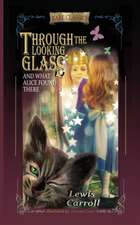 Through the Looking-GlassLewis CarrollPreț: 33.27 lei
De ce să citești această carte
Recomandăm această ediție pentru copiii de peste 9-10 ani care stăpânesc limba engleză și doresc să exploreze un text clasic fundamental. Cititorul câștigă o viziune unică asupra creativității lingvistice și a logicii abstracte. Este o lectură esențială pentru dezvoltarea gândirii laterale, oferind un motiv concret de a analiza cum perspectivele diferite pot schimba realitatea, totul sub forma unei aventuri memorabile într-o lume de oglinzi.
Despre autor
Lewis Carroll (1832-1898), pe numele său real Charles Lutwidge Dodgson, a fost o personalitate complexă a epocii victoriene: scriitor, matematician la Oxford, logician și fotograf. Această pregătire academică i-a permis să creeze opere literare unice, în care fantezia se împletește cu puzzle-uri logice riguroase. Este recunoscut la nivel mondial pentru inventarea genului „literary nonsense”, prin care a revoluționat literatura pentru copii. Opera sa, marcată de o înțelegere profundă a universului infantil, rămâne relevantă și astăzi, fiind celebrată prin numeroase societăți literare dedicate studiului vieții și creației sale.
Descriere scurtă
Descriere
Through the Looking-Glass, and What Alice Found There (1871) is a novel by Lewis Carroll (Charles Lutwidge Dodgson), the sequel to Alice's Adventures in Wonderland (1865). Set some six months later than the earlier book, Alice again enters a fantastical world, this time by climbing through a mirror into the world that she can see beyond it. Through the Looking-Glass includes such celebrated verses as "Jabberwocky" and "The Walrus and the Carpenter," and the episode involving Tweedledum and Tweedledee. The mirror which inspired Carroll remains displayed in Charlton Kings. Charles Lutwidge Dodgson (1832-1898), better known by his pen name Lewis Carroll was an English writer, mathematician, logician, Anglican deacon, and photographer. His most famous writings are Alice's Adventures in Wonderland, its sequel Through the Looking-Glass, which includes the poem "Jabberwocky," and the poem The Hunting of the Snark, all examples of the genre of literary nonsense. He is noted for his facility at word play, logic, and fantasy. There are societies in many parts of the world dedicated to the enjoyment and promotion of his works and the investigation of his life.
Notă biografică
Premii
- Benjamin Franklin Award Finalist, 2012