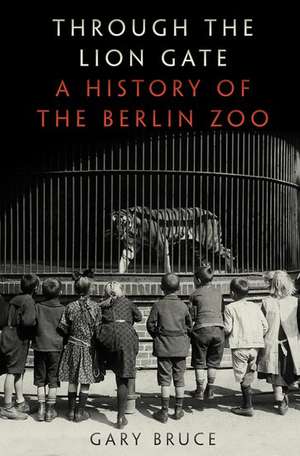
Through the Lion Gate: A History of the Berlin Zoo: OXFORD UNIV PR
Autor Gary Bruceen Limba Engleză Hardback – 24 aug 2017
Remarcăm în Through the Lion Gate o metodologie riguroasă care transformă o instituție de loisir într-un laborator de analiză a istoriei germane moderne. Organizat cronologic, materialul explorează modul în care Grădina Zoologică din Berlin a oglindit transformările politice radicale, de la autoritarismul imperial la democrația contemporană, trecând prin perioadele întunecate ale național-socialismului și divizării Războiului Rece. Apreciem modul în care Gary Bruce nu se limitează la o istorie a captivității animale, ci investighează intersecția dintre zoologie și ideologie, documentând episoade precum expozițiile „exotice” umane sau politizarea biodiversității sub regimul nazist.
Stilul narativ este precis și ancorat în cercetare arhivistică, oferind portrete detaliate ale directorilor și furnizorilor de animale care au navigat condiții politice volatile. Comparabil cu World War Zoos de John M. Kinder în ceea ce privește rigoarea documentării impactului conflictelor armate asupra menageriilor, volumul de față este actualizat pentru contextul specific al identității naționale germane, oferind o perspectivă mai largă asupra unificării din 1990. Această lucrare completează opera anterioară a lui Gary Bruce, The Firm; dacă acolo autorul analiza mecanismele de control social prin intermediul poliției politice Stasi, în Through the Lion Gate acesta investighează o formă diferită de influență statală: utilizarea spațiului public și a naturii ca instrumente de propagandă și simboluri ale anduranței naționale.
Din seria OXFORD UNIV PR
- 11%
 Preț: 556.22 lei
 -
 Preț: 229.40 lei
 - 20%
 Preț: 125.26 lei
 - 31%
 Preț: 693.75 lei
 - 28%
 Preț: 378.98 lei
 - 30%
 Preț: 949.79 lei
 - 14%
 Preț: 709.10 lei
 - 23%
 Preț: 368.20 lei
 - 19%
 Preț: 388.40 lei
 - 35%
 Preț: 538.59 lei
 - 15%
 Preț: 406.18 lei
 - 21%
 Preț: 239.44 lei
 - 11%
 Preț: 266.59 lei
 - 20%
 Preț: 258.54 lei
 - 24%
 Preț: 180.59 lei
 - 6%
 Preț: 298.13 lei
 - 9%
 Preț: 353.39 lei
 - 32%
 Preț: 532.88 lei
 - 28%
 Preț: 368.78 lei
 - 20%
 Preț: 258.17 lei
 - 33%
 Preț: 854.69 lei
 - 18%
 Preț: 314.30 lei
 - 28%
 Preț: 435.85 lei
 - 23%
 Preț: 582.13 lei
 - 28%
 Preț: 347.35 lei
 - 28%
 Preț: 380.69 lei
 - 31%
 Preț: 892.23 lei
 - 20%
 Preț: 274.68 lei
 - 13%
 Preț: 296.03 lei
 - 31%
 Preț: 980.33 lei
 - 14%
 Preț: 809.53 lei
 - 30%
 Preț: 404.35 lei
 - 29%
 Preț: 440.34 lei
 - 18%
 Preț: 348.80 lei
 - 22%
 Preț: 356.05 lei
 - 31%
 Preț: 726.87 lei
 - 19%
 Preț: 347.19 lei
 - 31%
 Preț: 602.19 lei
 -
 Preț: 384.91 lei
 -
 Preț: 361.18 lei
 - 31%
 Preț: 677.42 lei
 - 20%
 Preț: 298.58 lei
 - 31%
 Preț: 709.10 lei
 - 19%
 Preț: 369.21 lei
 - 23%
 Preț: 221.33 lei
 - 29%
 Preț: 439.67 lei
 - 24%
 Preț: 141.95 lei
 - 21%
 Preț: 340.85 lei
 - 20%
 Preț: 274.64 lei
Preț: 290.27 lei
Carte disponibilă
Livrare economică 12-18 noiembrie
Specificații
ISBN-10: 0190234989
Pagini: 320
Ilustrații: 16 illus.
Dimensiuni: 163 x 236 x 25 mm
Greutate: 0.68 kg
Editura: Oxford University Press
Colecția OUP USA
Seria OXFORD UNIV PR
Locul publicării:New York, United States
De ce să citești această carte
Recomandăm această carte cititorilor pasionați de istorie culturală și politică. Veți descoperi cum o grădină zoologică poate deveni un simbol al supraviețuirii unui oraș distrus de război. Este o lectură esențială pentru a înțelege cum ideologiile modelează nu doar societatea umană, ci și relația noastră cu lumea animală, oferind o perspectivă inedită asupra Berlinului, de la fondare până la căderea Zidului.
Despre autor
Gary Bruce este un istoric respectat, specializat în istoria modernă a Germaniei și a Europei Centrale. Expertiza sa în mecanismele statului totalitar a fost consolidată prin lucrarea sa de referință The Firm, o analiză exhaustivă a Ministerului Securității Statului (Stasi) din Germania de Est, bazată pe documente desecretizate și interviuri directe. În Through the Lion Gate, publicată de Oxford University Press, Bruce își extinde aria de cercetare către istoria socială și culturală, fiind primul autor care oferă publicului anglofon o istorie completă a celei mai faimoase instituții zoologice germane, integrând-o magistral în contextul politic al secolelor XIX și XX.
Descriere
Recenzii
Gary Bruce is certainly a captivating storyteller who keeps the reader interested from beginning to end. The book is geared toward a general audience interested in urban history or the cultural history of zoological gardens. It will also make for enticing reading for undergraduate and beginning graduate students. ... this is surely a highly readable book that adds to our knowledge of zoos as well as to the history of Berlin in the modern period.
Bruce uncovers the many sinister sides of the zoo's history and the immense challenges during wartime.
With Through the Lion Gate, the Canadian historian Gary Bruce has written the first comprehensive history of Germany's oldest and arguably most prestigious zoo in English.
[Bruce] provides not only an ambitiously researched, convincingly written, and detailed history of the Berlin Zoological Garden, but an insightful study of Berlin and its people....Recommended.
[A] thoroughly engaging history of the zoo's development through time. What makes it so fascinating is that the story of the zoo is equally telling about contemporary society and politics.
With Through the Lion Gate: A History of the Berlin Zoo, historian Gary Bruce (The Firm) delivers a fascinating historical account of Berliners through the lens of their beloved zoo .Bruce's engaging narrative is complemented with photos of Bobby, Knut and other beloved animals; the Inuit and Nubian tribes; and the beautiful pagoda-style zoo architecture.
Gary Bruce's lively book tells the story of the Berlin Zoo from its origins to the present. He explains its popularity but does not neglect the darker side of its history
Gary Bruce has compellingly chronicled the history over the two centuries of one of the most important European zoos. His narrative evokes both the human and the non-human participants in that history. Perhaps its greatest strength is that he does not present the Berlin zoo as an isolated institution. On the contrary, he interweaves his account of the zoo's internal affairs with the larger cultural and political vicissitudes experienced by the city of Berlin and by the larger German society.
In this fascinating account, based on meticulous research, Gary Bruce has uncovered the ways in which the Berlin Zoo, a favorite rendezvous for Berliners, adapted to the ideology of the political regimes that followed its foundation in 1844. We see people from far-flung regions being exhibited at the zoo as ethnographic specimens; we learn how under the Nazis its scientific work was manipulated to add credence to the regime's racial policies, and how Berliners recreated their beloved zoo after its almost total destruction by Allied bombing during World War II. So iconic a symbol was the zoo that with the division of the city during the Cold War, a rival, the Tierpark, was set up in East Berlin, intended not only as a place of recreation but also to reinforce communist ideology.
Through the Lion Gate is an enjoyable and interesting book and a work of admirable historical skill that can be appreciated by a broad readership.
Intriguing historical personalities emerge from Bruce's profiles of animal suppliers and zoo directors struggling to maintain the institution under volatile political conditions.
Notă biografică
Cuprins
- Introduction
- Chapter 1: Out from the Island of Peacocks
- Chapter 2: The Human Zoo
- Chapter 3: To the Zoo! Animals and Society in the Imperial Capital
- Chapter 4: An End to the Sighing of the Animals
- Chapter 5: The Nazi Ox: The Berlin Zoo and Nazism
- Chapter 6: Animals among the Beasts: The Zoo Descends into War
- Chapter 7: The Hippo and the Panda: A Tale of Two Zoos
- Epilogue: Of Trams and Tortoises
- Bibliography