A heartfelt, one-of-a-kind memoir chronicling the hilarious, absurd, and thought-provoking experiences of an American pursuing comedy in China, learning first-hand how humor does and doesn’t translate—and whether laughter transcends borders.
I marched onstage in a long robe beside my Shifu, under the curious eyes of a thousand Chinese comedy fans, armed only with a microphone and the goal to kill onstage or die trying.
Over the speakers, the host shouted:“Welcome to the stage: Master Ding Guangquan and his American disciple, Ai Jie Xi!”
When self-proclaimed American class clown Jesse Appell signed up to study Mandarin in high school, he never imagined that one day his name would be written into the traditional family tree of Chinese comedy. But when he first moves to Beijing to apprentice to the legendary Master Ding, a single show is all it takes for Jesse and his fellow comedy misfits to understand that book learning means bombing jokes.
To truly get the big laughs, he realizes he needs to know everything, like how long the fuse is on a thirty-cent firework, what card games coal miners play over Chinese New Year, and why comedy writers in Shanghai sometimes sleep in heart-shaped beds.
The result? Asking questions that might seem simple—if they weren’t being asked by an American caught in the breakneck whirlwind of a rising China.
“What do people here find funny?”
“How do you deal with hecklers?”
And, of course, the biggest one of all:
“Can I say that?”
From Jesse’s first forays into the traditional teahouse performance scene to being the only American cast member and writer on a Chinese version of Saturday Night Live, This Was Funnier in China captures an American's wide-eyed, enthusiastic experiences trying to build a world where we can all laugh together. Citește tot Restrânge
Jesse Appell is a comedian in China where his original comedy works have passed half a billion views on Chinese and international internet sites, earning Silver Play Button plaques from both Youtube and Bilibili. He has been featured on the front page of TheBoston Globe with Tom Brady and the Pope, and has appeared on a veritable alphabet soup of news media: CBS, TEDx, BBC, PBS, and NPR in the West; CCTV, Beijing TV, Shanghai TV, and China Radio International in Asia. This Was Funnier in China is his first book.
Extras
1. Funny, You Don’t Look ChineseFunny, You Don’t Look Chinese When I tell people back home in America that I am a Chinese comedian, the first response I get is usually, “Funny, you don’t look Chinese.”
Badum tish. Thank you. I’ll be here all week. Try the veal.
The second question is: “Why Chinese comedy?”
That part is harder to explain, so I’ll start there.
“Why China?”
The truth is, I really struggle to answer this question.
Seeing as I spent my first nine years out of college in China, I feel like I should have a better answer as to why I’m here. But I don’t. There’s always the “LinkedIn bio” version of things: I love the culture, the challenge of the language, the novelty of forging a career in a context nobody has ever walked before.
But that’s really just the application of hindsight to the blur of what really happened. It would be lying to say it’s wrong, and lying to say it’s even close to the real answer.
“Why China?”
Sometimes I answer by expressing a feeling: that living in China at this period of history is like being perched atop a high mountain peak at the head of a fast-flowing river. Growing up in the United States, a country that felt like its course was firmly set, it never felt like I could be a part of anything big. But in China, at this specific moment, my own tiny contribution might infinitesimally influence its trajectory. A small thing—a joke, an internet video, a deep conversation in a dark bar—might alter the course of this river by just an inch, a fraction of an inch… but the flow of the future being what it is, moving the river an inch at the source might mean huge changes years in the future, hundreds of miles away.
“Why China?”
Because from my first day here, I’ve always woken up excited for the next day.
The first day I arrived in China, I signed a contract promising to speak no English for six months. The contract was in Chinese. I couldn’t read it. That was sort of the point.
I’d arrived in Beijing for six months of intensive Chinese classes. I’d always wanted to live abroad and learn a new language. Meeting new people and cultivating meaningful relationships with them because you learned their classified code? Knowing another secret word for every word you know in English? It seemed like a superpower: almost impossible. But cool, too.
So, instead of spending the summer and fall of my junior year at Brandeis University, I found myself in Beijing. I chose China because I’d studied a bit of Chinese and a bit of Spanish, and it seemed way more interesting to go to China than to Spain.
Every day I had to memorize a hundred new Chinese characters. Every day there was a test on twenty of those new characters, followed by five hours of classes.
On my second night in Beijing, my pen ran out of ink. I regarded the cheap pen and its empty barrel with blank, unfocused eyes. I don’t think I’d ever completely used up a pen before without losing it first. I put it aside.
By the end of the semester, I had a whole box of empty pens. It was my little trophy case. Each was a cheap plastic testament to a diligence I hadn’t known I was capable of.
Beijing Language and Culture University was so large, it almost felt like a village. There were multiple food halls, restaurants, soccer fields, and basketball courts. The print shop would make copies of any textbook you needed without question, copyright be damned; the avenues between buildings were a slow-moving chaos of bicycles and pedestrians.
As a school specifically focusing on the study of language, the campus was packed with international students, mostly from other developing countries like Thailand, Nigeria, and Kazakhstan. While I lived in a tiny—but private—single room, these students lived in dorms of four or eight, eager to get their undergraduate degrees from a better school than they could attend at home, while still being one they could actually afford.
No matter where you came from, Chinese was hard for everyone. Yet, the moment you left the school gates and stepped out into the city, language was the crucial skill required to overcome the fear of Beijing’s buzzing madness.
Beijing is a hot, delicious, absurdist puzzle box of a city. Everything is simultaneously new and old, fast and slow, loud and unspoken. It was, and still is, an object of my perpetual fascination.
I couldn’t read the signs or understand what people were saying; Chinese pop music crooned out of every store; vehicles weaved in and out of the street in every direction; traffic lights appeared to be more suggestions than anything else.
As a foreigner I was sometimes the most interesting person in the room, sometimes completely ignored. I was always fully engaged, never fully comfortable.
Nothing was easy, nothing was boring. I loved it.
My second day, I visited the Forbidden City, the eight-hundred-year-old imperial palatial complex of otherworldly scale located in the exact geographic center of the city. Mile upon mile of flowing, golden-glazed ceramic roof tiles; nine thousand, nine-hundred, ninety-nine rooms built down the north–south central axis of the city. A remnant of a dynastic age. A center of power.
There was also a Starbucks in there, which was good, because I needed to use the bathroom and it was the only non-squat toilet around for a mile.
Beijing was winding alleyways of brick laid down by Mongols that led to the doors of garish dystopian pyramidal glass shopping malls built by nouveau-riche tycoons.
Beijing was fashionable women holding loud phone conversations on the street directly next to a table of shirtless old men squatting on tiny stools, drinking giant bottles of beer.
Beijing was a bowl of cheap noodles in the morning and sumptuous Peking duck at night. It had a Great Wall and a tech hub, a Tibetan Lama temple across the street from a KFC.
Living amongst these buildings that dated anywhere from two thousand years to two weeks ago, I met the most eclectic collection of people imaginable, some of whom seemed to be the product of traits spit out of a video game’s random character generator.
I met a man on the street with a long beard and a giant plastic sack full of raw meat. He told me he had brought it back from Kashgar, out on the old Silk Road, and Beijing marked the end destination of a three-month motorcycle trip he’d taken with friends. He’d kept the meat on ice in a Styrofoam container affixed to the back of his Harley with pink plastic ribbons.
I met a woman at a bar who sold medicinal dog water. The water was infused with trace minerals normally used in (human) hospitals as an intravenous infusion for (human) patients with anemia. Her company was, she said both proudly and anxiously, the only one in the world selling such a product to dogs. I think her pride came from being out on the forefront of a new market, and the anxiety from the fact it was clearly doomed to failure.
I recommended, as a joke, that they hire a famous celebrity’s dog to serve as a spokesdog. She told me they’d already tried, but the dog’s appearance fee was too high.
“It’s not easy selling dog water,” she sighed. “Maybe I should go back to grad school.”
Beijing was real-life TikTok: a new scene every seven seconds. It was a blaring loudspeaker announcement. It was a tender, quiet conversation. It was a twenty-cent ice pop and a ten-dollar coffee. It was sound and fury. It was lights, camera, and action.
And every day, I stared down one hundred new characters in my textbook. Every day, another test. Every day, no English allowed.
A new part of my mind opened. Speaking a new language didn’t split me into English Jesse and Chinese Jesse. Instead, I felt myself dilating, like a droplet of water expanding over a new surface.
As I learned the language, a veil lifted off of the face of the city. It felt like passing through a waterfall and discovering a hidden world that had existed all this time—and finally, I could access it.
Learning the language and the culture unlocked stories and dramas playing out in plain sight. Every day, I would get a milk tea from a hole-in-the-wall street stall on my way back from class. The first time, I pointed at the pictures because I couldn’t read the menu.
By the time I left, I could read the menu, and I could also talk to the tea vendor. She told me that this stall was part of a chain that a man from her village had started ten years ago. She and all her coworkers were from that same village and slept in bunks in the back of the shop; actually, the more than one hundred branches of the original tea shop were staffed entirely by young people from that village looking for their first foothold in the big city.
“Do you like it here?” I asked.
“No. I want to go home. But then I’d just be bored and want to come back.”
I could also read the “Now Hiring!” sign on the side of the shop and its shameless promise of a $200-a-month salary in a city where my rent alone was $800. I assumed the low wages were not offset by stock options.
I thought I had gone to China to learn Chinese. In the end, I learned some Chinese and ten thousand other things.
And for every new thing I learned, I actually learned two things. The first was how they did it here, in China. The second was how we did it back home, in America. Sometimes things were the same. Sometimes they were different. Both seemed significant.
Everything—from how the milk is packaged (in China, it comes in bags) to whether people wait for others to exit the subway car before cramming in themselves (they don’t) to how long you need to know someone before you could ask them to help you move (not long at all, and they will jump at the chance if they like you and want to build a friendship, as it indebts you to them)—seemed to contain a hidden question: Why do you do things the way you do back in the States?
Did you even know you did things differently?
What does it mean that you’ve never thought about this before?
How many other things have you taken for granted, that this is just “how things are”?
I also learned one other thing I didn’t expect, though in hindsight it seems obvious: They had comedy. And even ten thousand miles away from home, comedy was my thing.
“Why comedy?”
That’s much easier to answer.
When you tell jokes and get laughs, you get a high. It feels fantastic. It’s instant gratification. My earliest comedy memories are of entertaining friends at playdates. Then came school talent shows, where once I socked away a cool fifty bucks by singing “The Elements Song” by Tom Lehrer.
In eighth grade, for reasons that probably made sense at the time, I made a whole rap album entirely in the voice of the illustrious chef and media trailblazer Julia Child.I Amongst the twelve tracks of pure fire were classics like “How I Killed Emeril” and “99 Heart Problems.” I recorded the songs, printed out covers, burned CDs and slipped them into jewel cases, and sold Julia Raps albums for five dollars apiece.
I hustled the album hard and made about two hundred bucks. Kids bought the album because they thought it was funny. Adults bought the album because when a prepubescent boy shows you his Julia Child rap CD and asks for five dollars, you fork the money over immediately, because otherwise nobody will believe you. I used the money to buy Magic cards.
Julia Raps was a breakthrough for me. I had initiated an absurd project that had started with something funny to me, pushed through challenges to arrive at a final form, and managed to get someone else to pay for it.
I tried out for the improv comedy troupe at Newton North High School, in the suburbs of Boston. The moment I did my first improv show, I knew it was My New Thing. I was fourteen, afflicted with/blessed by ADHD, and my thoughts banged nonstop against the still-elongating walls of my skull. On the improv stage, I could make jokes, play funny characters, and be a general lunatic—and my classmates would come and watch, laugh, and cheer. It was the best.
It was also hard work. We practiced five days a week, three hours a day. The dozen other troupe members were the first humans I’d ever spent so much time with in a creative space, and we developed a closeness that can only come through the shared experience of risk and performance. I almost feel like the rest of my life has been a quixotic journey to regain that feeling.
We would lock ourselves into the band room, turn off the lights, and in the pitch black improvise “voices-only” scenes like old-timey radio plays. We would sing absurd musicals about mangoes. Once, during a scene, my fellow troupe members picked me up and used me as a trowel.
Improv also served as a tonic for my anxiety. I have always been an overthinker and over-worrier. In improv, there is no time to worry. There is only time to listen and respond. Success and failure are difficult—or often meaningless—to define. The lesson I needed to learn was that the cost of failure is not as high as my mind makes it out to be, and in this, improv was my first teacher.
I became known as the kid from the improv troupe. Comedy, both the show onstage and the community backstage, became who I was. It was where the stuff that made me special—the excess energy, the loose mental filter, the bizarre irreverence—was praised. It was my ticket to the middle class of our high school social hierarchy. Throughout high school, and then through college, I was always doing improv.
“Why comedy?”
Because, sometimes, when you’re onstage and working the crowd just right, you lose yourself in the show. You enter a flow state. You see yourself from above. The air opens up. The present is huge.
And in that endless series of brief, interlocking moments, it feels like you can see the future. The faces of the audience swirl in a pool of light and color and you think to yourself, I know what I am about to say, and I know you will laugh, and I know this before any of you know it. And when you hit the punch line and the audience roars, you get a rush. You feel like a god, like you called down lightning and lightning struck.
And if you do that in another country, in another language, for people who might only think of America as a place on a map or a sound bite from a social media video, you know that there are only a few human beings in the world who can do such a thing, and you are one of them.
Perhaps the whole reason I moved to China and spent over a decade doing comedy is really just because of a two-minute comedy scene that happened in a dark bar in Beijing.
It was the last week of study abroad. I was in a grimy, soulful bar called the Hot Cat Club, where Beijing Improv held a weekly bilingual improv workshop.
I was watching two Chinese comedians do a scene. I was mesmerized.
The scene began as a woman came onstage and held her hands up, fingers curling into elegant shapes. These gestures told me she was a Buddhist bodhisattva, an immortal guide to mortal souls on Earth.
The second person came onstage and asked for life advice. And they got terrible life advice. Every bad piece of advice—Sell your house! Buy a goat! Become a master hairstylist!—got laughs. I had never seen Chinese people performing comedy. Yet somehow it was giving me a flashback.
I’d seen this scene. I’d done this scene.
In high school, I’d done a scene where I played the God of the Old Testament, reclining across a school desk with one finger outstretched to Adam, who asked for—and received—similarly bad advice.
We were dealing with different languages, cultures, religions. Everything that at a glance makes countries countries, and people people, was different. But everything about why the scene was funny was the same.
What was comedy like here?
How did it work?
Can humor be translated?
I started to dig for answers.
I learned there was a traditional form of Chinese comedy called xiangsheng. The two characters that made up the name literally translated to “face and voice” but everyone called it “crosstalk.” It was all over TV and social media, and it burst out of the speakers of ten thousand taxis all over Beijing.
Two people onstage—a joker and a straight man—and over a hundred years of comedic works going back to the Qing dynasty behind them. A whole comedy ethos I had never heard anything about.
I had a thousand questions. I needed to find someone with a thousand answers. https://qrs.ly/38h2zha
I. Julia Child also spent time in China as a spy for the United States Navy. Look it up.
"I genuinely couldn’t put this book down. This Was Funnier in China is not only a masterclass in cross-cultural communication but also a wicked funny ride. At a time when international misunderstanding seems to be the norm, it’s refreshing and downright inspiring to see someone throw themselves so fully into another culture with both humility and (impressively good) humor. . . . There are not many people in the world who have ever had experiences like this, and even fewer who could write about them with this much honesty, warmth, and understanding." —@XiaomaNYC, YouTuber and language teacher
"Funny and insightful. . . Appell’s gift for turning a phrase and genuine passion for cultural exchange lend the proceedings an endearing and approachable quality. Even readers who’ve never encountered Appell’s work will find much to enjoy." —Publishers Weekly
"Jesse Appell is a comedic genius, a fantastic cross-cultural ambassador, and a masterful storyteller. This Was Funnier in China is a must-read for anyone looking to visit, live, or learn more about day-to-day life in China. —Scott Kronick, chair of the University of Southern California US-China Institute Advisory Board and former president and CEO of Ogilvy Public Relations, Asia-Pacific
"A hilarious journey. . . What a great way to not only gain insight into China but also enjoy the unique mind of Jesse Appell." —Des Bishop, comedian
"An interesting way to examine another culture from the point of view of a 'performing monkey' from a faraway land. . . . [A] unique travelogue/memoir." —Kirkus Reviews
Descriere
For readers of Vacationland, a hilarious, one-of-a-kind, fish-out-of-water travel memoir with an earnest Tuesdays with Morrie throughline, about an American comedian learning and performing comedy in China.

 Preț: 156.40 lei
 Preț: 115.23 lei
 Preț: 112.71 lei
 Preț: 149.33 lei
 Preț: 159.74 lei
 Preț: 118.41 lei
 Preț: 113.36 lei
 Preț: 148.31 lei
 Preț: 116.09 lei
 Preț: 115.03 lei
 Preț: 107.94 lei
 Preț: 120.53 lei
 Preț: 120.53 lei
 Preț: 180.29 lei
 Preț: 112.02 lei
 Preț: 119.51 lei
 Preț: 108.60 lei
 Preț: 126.34 lei
 Preț: 75.94 lei
 Preț: 77.91 lei
 Live, Laugh, Leave Me AloneHarper FordPreț: 72.56 lei
 Keep LaughingChris McCauslandPreț: 194.41 lei
 Stand Up, Yumi Chung!Jessica KimPreț: 65.27 lei
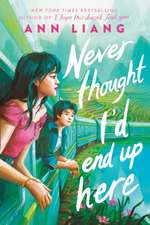 Never Thought I'd End Up HereAnn LiangPreț: 65.20 lei
 Funnier: A New Theory for the Practice of ComedyAnne LiberaPreț: 181.39 lei
 -25%Preț: 70.34 lei93.87 lei
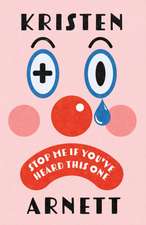 -25%Preț: 108.72 lei144.76 lei
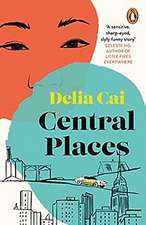 Central PlacesDelia Cai-19%Preț: 57.24 lei70.74 lei
 Laughter is the Best MedicineJimmy TarbuckPreț: 183.86 lei
 Big Dumb Eyes: Stories from a Simpler MindNate Bargatze-46%Preț: 132.51 lei244.42 lei
 -46%Preț: 118.74 lei220.53 lei
 Preț: 50.21 lei
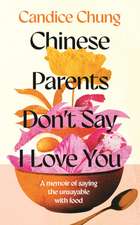 Chinese Parents Don't Say I Love YouCandice ChungPreț: 121.63 lei
 White Male Stand-UpAlan Davies-30%Preț: 135.35 lei192.67 lei
 The Material: 'Brilliance is on display' Percival EverettCamille Bordas-16%Preț: 61.11 lei73.09 lei
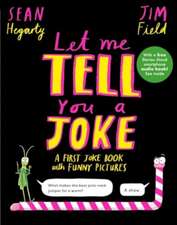 Let Me Tell You a JokeSean HegartyPreț: 96.83 lei
 Akane-banashi, Vol. 13Yuki Suenaga-19%Preț: 52.70 lei64.76 leiRecomandat
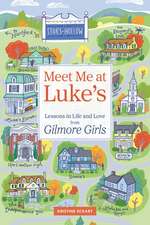 Meet Me at Luke's: Lessons in Life and Love from Gilmore GirlsKristine Eckart-30%Preț: 121.03 lei173.26 leiRecomandat
 -18%Preț: 94.63 lei115.68 leiRecomandat