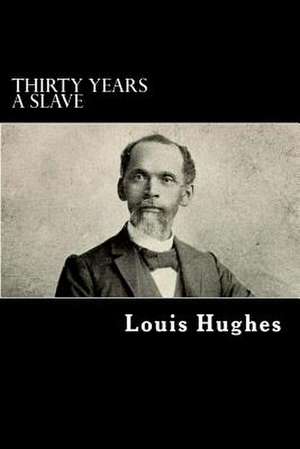
Thirty Years a Slave
Autor Louis Hughes Ilustrat de Alex Struiken Limba Engleză Paperback
Preț: 71.34 lei
Puncte Express: 107
Carte disponibilă
Livrare economică 09-23 noiembrie
Livrare prin curier în România Termenul estimat este afișat lângă disponibilitate.
Transport gratuit de la 400.00 lei Plată online sau ramburs, în funcție de opțiunile comenzii.
Retur gratuit în 14 zile Comandă securizată și suport în română.
Specificații
ISBN-13: 9781479193684
ISBN-10: 1479193682
Pagini: 144
Dimensiuni: 152 x 229 x 8 mm
Greutate: 0.2 kg
Editura: CREATESPACE
ISBN-10: 1479193682
Pagini: 144
Dimensiuni: 152 x 229 x 8 mm
Greutate: 0.2 kg
Editura: CREATESPACE
V-ar putea interesa
-
 Twelve Years a SlaveSolomon NorthupPreț: 28.01 lei
 -
 To Be a SlaveJulius LesterPreț: 50.86 lei
 -
 Preț: 45.03 lei
 -
 Narrative of the Life of Frederick DouglassFrederick Douglass-19%Preț: 23.42 lei28.76 lei
 -
 The Life of Olaudah EquianoOlaudah Equiano-42%Preț: 34.77 lei59.77 lei
 -
 Incidents in the Life of a Slave GirlHarriet Jacobs-32%Preț: 24.59 lei36.40 lei
 -
 Frederick Douglass: Autobiographies (Loa #68)Frederick DouglassPreț: 257.40 lei
 -
 'I Was Transformed'Laurence FentonPreț: 84.85 lei
 -
 Narrative of the Life of Frederick Douglass (Special Edition)Frederick Douglass-32%Preț: 92.56 lei136.46 lei
 -
 Narrative of the Life of Frederick Douglass, an American SlaveFrederick DouglassPreț: 38.27 lei
 -
 My Bondage and My FreedomFrederick DouglassPreț: 51.53 lei
 -
 I Was Born a SlaveYuval TaylorPreț: 251.69 lei
 -
 Thirty Years a Slave - From Bondage to FreedomLouis HughesPreț: 92.85 lei
 -
 12 Years a SlaveSolomon NorthupPreț: 58.20 lei
 -
 -12%Preț: 56.59 lei64.29 lei
 -
 Preț: 61.94 lei
Notă biografică
Louis Hughes was a memoirist and lecturer known for a detailed personal narrative describing long years under slavery and the struggle toward freedom. Born to parents whose names are not consistently preserved in major references, early life was marked by forced labor, sale, and relocation under slaveholding authority. Later authorship transformed lived experience into structured testimony intended to inform and persuade readers about injustice and endurance. Writing emphasizes factual detail, moral appeal, and experiential authority rather than literary ornament. Public speaking and publication activity supported educational and reform oriented efforts, using narrative as evidence in social debate. Prose style is direct, descriptive, and grounded in observation, highlighting conditions of labor, control, and survival. Recurring concerns include dignity, perseverance, family separation, and the ethical demand for liberty. Contribution to literature rests on witness based narrative that connects personal history with collective memory. The work continues to serve as documentation, warning, and affirmation of human resilience under oppression.