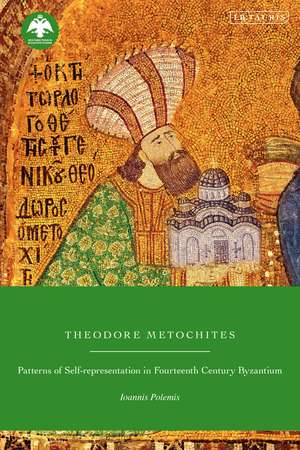
Theodore Metochites: Patterns of Self-Representation in Fourteenth-Century Byzantium: New Directions in Byzantine Studies
Autor Ioannis Polemisen Limba Engleză Paperback – 29 mai 2025
In this book, Ioannis Polemis provides the first in-depth study of Metochites' oeuvre, revealing the complex way he represented the authorial self to critique the politics and mores of his day, whilst at the same time shielding himself from potential criticism. Polemis details the way Metochites deftly manipulated figures and tropes from classical antiquity and early Christianity to justify his role in public life, which was traditionally shunned by scholars in the pursuit of 'logos'. The book provides unique insights into one of the late Empire's most important figures, as well as more widely deepening our understanding of classical reception in Byzantium and the social, political and intellectual climate of Constantinople in the fourteenth century.

Preț: 196.39 lei
Preț vechi: 269.50 lei
-27%
Puncte Express: 295
Carte tipărită la comandă
Livrare economică 02-16 decembrie
Livrare prin curier în România Termenul estimat este afișat lângă disponibilitate.
Transport gratuit de la 400.00 lei Plată online sau ramburs, în funcție de opțiunile comenzii.
Retur gratuit în 14 zile Comandă securizată și suport în română.
Specificații
ISBN-13: 9780755651399
ISBN-10: 0755651391
Pagini: 216
Dimensiuni: 154 x 232 x 14 mm
Greutate: 0.32 kg
Editura: Bloomsbury Publishing
Colecția I.B.Tauris
Seria New Directions in Byzantine Studies
Locul publicării:London, United Kingdom
ISBN-10: 0755651391
Pagini: 216
Dimensiuni: 154 x 232 x 14 mm
Greutate: 0.32 kg
Editura: Bloomsbury Publishing
Colecția I.B.Tauris
Seria New Directions in Byzantine Studies
Locul publicării:London, United Kingdom
Cuprins
TABLE OF CONTENTS
Acknowledgements
INTRODUCTION: LIFE AND WORK AT THE END OF EMPIRE
PART I: METOCHITES' REPRESENTATIONS OF HIMSELF AND OTHERS
1. Metochites on Himself: Inner Ambiguity
2. Metochites on Others: Mirror Images of Himself
3. Coda-Disposing of Oneself: A New Way of Being?
PART II. THE QUEST FOR NOVELTY: INNOVATION VERSUS TRADITION IN METOCHITES' REPRESENTATIONS
4. Not Everything Old Is to Be Revered
5. Oration 6, for Gregory of Nazianzus: A Response to Men Like Choumnos?
6. Coda-Metochites on Rhetoric: Veiled Criticism of Late Byzantium
Discursive Culture
PART III: VITA CONTEMPLATIVA VERSUS VITA ACTIVA: AN AMBIGUOUS RELATIONSHIP AND THE INNER AMBIGUITIES OF METOCHITES' SELF-IMAGE AS AN INTELLECTUAL
7. 'The Greeks Ask for Wisdom': Quest for a Humanistic Monastery
8. Oration 11, Byzantios: The Secular Body of the City
and a Secular World Contemplated
9. Coda-Nature and Being: Elusive Concepts
Conclusion: Metochites, a Philosopher of His Time
Appendix: Works by Theodore Metochites
Bibliography
Acknowledgements
INTRODUCTION: LIFE AND WORK AT THE END OF EMPIRE
PART I: METOCHITES' REPRESENTATIONS OF HIMSELF AND OTHERS
1. Metochites on Himself: Inner Ambiguity
2. Metochites on Others: Mirror Images of Himself
3. Coda-Disposing of Oneself: A New Way of Being?
PART II. THE QUEST FOR NOVELTY: INNOVATION VERSUS TRADITION IN METOCHITES' REPRESENTATIONS
4. Not Everything Old Is to Be Revered
5. Oration 6, for Gregory of Nazianzus: A Response to Men Like Choumnos?
6. Coda-Metochites on Rhetoric: Veiled Criticism of Late Byzantium
Discursive Culture
PART III: VITA CONTEMPLATIVA VERSUS VITA ACTIVA: AN AMBIGUOUS RELATIONSHIP AND THE INNER AMBIGUITIES OF METOCHITES' SELF-IMAGE AS AN INTELLECTUAL
7. 'The Greeks Ask for Wisdom': Quest for a Humanistic Monastery
8. Oration 11, Byzantios: The Secular Body of the City
and a Secular World Contemplated
9. Coda-Nature and Being: Elusive Concepts
Conclusion: Metochites, a Philosopher of His Time
Appendix: Works by Theodore Metochites
Bibliography
Recenzii
This is the first comprehensive study on Theodore Metochites' self-representation, authored by the world's most experienced scholar with Metochites' work and thought. It plugs an important gap in current scholarship by casting new light on Metochites' multifaceted image of himself and the way it is transformed or adjusted to meet the needs of his audience on different occasions. This study also offers a fresh understanding of the political, intellectual and social climate in Constantinople in the 13th and 14th c., and it is a significant contribution to the field of the reception of the classical tradition in late Byzantium.