
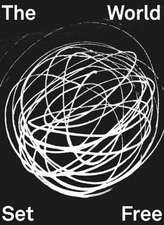
The World Set Free
Autor H. G. Wells Editat de Only Booksen Limba Engleză Paperback
Preț: 62.72 lei
Puncte Express: 94
Carte disponibilă
Livrare economică 06-20 noiembrie
Livrare prin curier în România Termenul estimat este afișat lângă disponibilitate.
Transport gratuit de la 400.00 lei Plată online sau ramburs, în funcție de opțiunile comenzii.
Retur gratuit în 14 zile Comandă securizată și suport în română.
Specificații
ISBN-13: 9781535264976
ISBN-10: 1535264977
Pagini: 102
Dimensiuni: 152 x 229 x 5 mm
Greutate: 0.15 kg
ISBN-10: 1535264977
Pagini: 102
Dimensiuni: 152 x 229 x 5 mm
Greutate: 0.15 kg
V-ar putea interesa
-
 Brave New World RevisitedAldous Huxley-20%Preț: 57.13 lei71.13 lei
 -
 Ape and EssenceAldous Huxley-20%Preț: 55.71 lei69.83 lei
 -
 Brave New WorldAldous HuxleyPreț: 58.67 lei
 -
 The Shape of Things to ComeH. G. Wells-16%Preț: 68.24 lei81.43 lei
 -
 The Great Science FictionH. G. Wells-27%Preț: 80.67 lei110.30 lei
 -
 Cat's CradleKurt Vonnegut-27%Preț: 51.56 lei71.03 lei
 -
 HG Wells Classic CollectionH. G. Wells-28%Preț: 142.19 lei198.26 lei
 -
 -27%Preț: 46.65 lei63.61 lei
 -
 Shadows of the Future – H G Wells, Science, Fiction and ProphecyPatrick ParrinderPreț: 193.79 lei
 -
 World Classics Library: H. G. WellsH. G. WellsPreț: 154.72 lei
 -
 A Short History of the WorldH. G. WellsPreț: 55.04 lei
 -
 In the Days of the CometH. G. WellsPreț: 50.58 lei
 -
 A Modern UtopiaH. G. WellsPreț: 51.18 lei
 -
 Destroyer of WorldsFrank ClosePreț: 196.64 lei
 -
 H. G. WellsH. G. Wells-13%Preț: 133.07 lei153.36 lei
 -
 Daikon: A NovelSamuel Hawley-18%Preț: 89.70 lei109.04 leiRecomandat
 -
 Preț: 50.57 lei
 -
 The Time MachineH. G. WellsPreț: 33.23 lei
 -
 Preț: 194.43 lei
Notă biografică
H.G. Wells (1866–1946) is best known today as author of pioneering scientific romances such as The Time Machine(1895), The Island of Doctor Moreau (1896), The Invisible Man (1897), and The War of the Worlds (1898). An influence on sf authors from Olaf Stapledon to Arthur C. Clarke, he was also a social critic and futurist who penned dozens of novels, stories, and works of history and social commentary in which he proposed more rational ways to organize society.
Cuprins
Series Foreword ix
Introduction: A Crash Louder Than Thunder xv
Sarah Cole
Preface xxv
Prelude: The Sun Snares 1
1 The New Source of Energy 25
2 The Last War 63
3 The Ending of War 113
4 The New Phase 163
5 The Last Days of Marcus Karenin 207
Afterword: Shall We Play a Game? 243
Joshua Glenn
Introduction: A Crash Louder Than Thunder xv
Sarah Cole
Preface xxv
Prelude: The Sun Snares 1
1 The New Source of Energy 25
2 The Last War 63
3 The Ending of War 113
4 The New Phase 163
5 The Last Days of Marcus Karenin 207
Afterword: Shall We Play a Game? 243
Joshua Glenn