
THE WOOD BEYOND THE WORLD
Autor William Morrisen Limba Engleză Paperback – 11 aug 2017
For collection development: this is a large-print edition intended for low-vision and aging patrons, and for any reader who finds standard trade print tiring over a long sitting. It suits large-print and accessibility collections, adult and young-adult general collections where the text is a standard, and reading-room copies where a durable case binding matters. Each volume is held under 1 kilogram (2.2 pounds) of paper and binding, so it can be read at a table or in a lap without a stand. The text is unabridged and reproduced from a public-domain source without modernisation.
Algorithmic Quality Assurance: this edition was checked by 123 deterministic tests covering typography, pagination, colour, cover geometry and metadata, then read by frontier language models for semantic review and holistic evaluation. What was checked, and what those results do and do not mean, is explained in the back of the book.
This Clearview Editions hardcover is built on a production standard that significantly exceeds the industry norm for large-print publishing. The body text is set at 18-point Atkinson Hyperlegible Next on 27-point leading, 1.5 line spacing --- the minimum WCAG 2.2 Level AAA Success Criterion 1.4.8 sets for a block of text, and the figure UKAAF's large-print guidance gives as well. The leading North American large-print hardcover imprints typically set their body text at 16 point, and most large-print trade paperbacks release at 14 to 16 point. At 18 point, Clearview Editions offers text that is measurably larger than every other major large-print publisher, specifically for readers with low vision, macular degeneration, glaucoma, diabetic retinopathy, or any visual condition that makes standard trade print frustrating or impossible to read for long stretches. The trim size is equally generous. Clearview Editions is printed on a 7x10-inch page, substantially larger than the 6x9 hardcover that is standard in the large-print industry and roughly 50 percent larger by area than the 5x8 trade paperback trim most legacy large-print paperback imprints use.
The extra page area is deliberate: it allows the 18-point body to set at the 50-to-55 character line length that reading-fatigue research identifies as optimal, without the narrow text columns and cramped margins that plague smaller-trim large-print books. The body font, Atkinson Hyperlegible Next, was developed by the Braille Institute of America specifically to maximize letter recognition for readers with low vision, macular degeneration, and visual processing differences. It distinguishes between commonly-confused letter pairs - lowercase l versus uppercase I, the digit 0 versus uppercase O, b versus d, p versus q - using distinctive shape features that preserve readability even under eye strain. Text is set ragged right with no word division: WCAG 2.2 1.4.8 and UKAAF both advise against justifying large-print text, since the uneven word spacing it creates is harder to track, and against breaking a word across a line ending, since the reader then has to reassemble it.
Preț: 101.21 lei
Puncte Express: 152
Carte tipărită la comandă
Livrare economică 09-23 decembrie
Livrare prin curier în România Termenul estimat este afișat lângă disponibilitate.
Transport gratuit de la 400.00 lei Plată online sau ramburs, în funcție de opțiunile comenzii.
Retur gratuit în 14 zile Comandă securizată și suport în română.
Specificații
ISBN-13: 9780244925765
ISBN-10: 0244925763
Pagini: 238
Dimensiuni: 148 x 210 x 13 mm
Greutate: 0.29 kg
Editura: Lulu.Com
ISBN-10: 0244925763
Pagini: 238
Dimensiuni: 148 x 210 x 13 mm
Greutate: 0.29 kg
Editura: Lulu.Com
V-ar putea interesa
-
 The Princess KnightCait JacobsPreț: 73.86 lei
-
 News from Nowhere and Other WritingsWilliam Morris-23%Preț: 61.72 lei80.55 lei
-
 -25%Preț: 59.11 lei79.19 lei
-
 The Once and Future KingT. H. WhitePreț: 68.21 lei
-
 The Picture of Dorian GrayOscar WildePreț: 35.93 lei
-
 The Worlds of George RR MartinTom Huddleston-20%Preț: 160.88 lei200.06 lei
-
 The Last Wish of Bristol KeatsMary E PearsonPreț: 205.53 lei
-
 Queen DemonMartha WellsPreț: 144.67 lei
-
 The Classic Fantasy CollectionAbraham MerrittPreț: 130.81 lei
-
 World Classics Library: H. G. WellsH. G. WellsPreț: 154.72 lei
-
 Preț: 121.70 lei
-
 -21%Preț: 65.49 lei82.93 lei
-
 PhantastesGeorge MacDonaldPreț: 41.07 lei
-
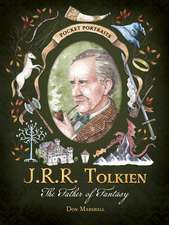 J.R.R. Tolkien: The Father of Modern FantasyDon Marshall-18%Preț: 66.03 lei80.10 leiRecomandat
-
 The ProphetKahlil GibranPreț: 27.21 lei
-
 The Wind in the WillowsKenneth GrahamePreț: 28.01 lei
-
 -18%Preț: 65.43 lei79.37 lei
-
 The Time MachineH. G. WellsPreț: 33.23 lei
-
 UtopiaThomas MorePreț: 33.19 lei
-
 Into the Midnight WoodAlexandra McCollumPreț: 109.02 lei
Notă biografică
William Morris (1834 - 1896) was an English textile designer, poet, novelist, translator, and socialist activist. Associated with the British Arts and Crafts Movement, he was a major contributor to the revival of traditional British textile arts and methods of production. His literary contributions helped to establish the modern fantasy genre, while he played a significant role in propagating the early socialist movement in Britain.
Recenzii
A groundbreaking fantasy novel, The Wood Beyond the World tells the story of a young man, Golden Walter, who finds himself in a strange and frightening world after being abandoned by his wife and lost at sea. The novel takes the form of Walter’s quest for the visionary Maid that he sees at the beginning of his journey, and takes him from his failed marriage through temptation to emotional fulfillment. Set in Morris’s imaginative recreation of a medieval world, the novel is full of vivid imagery and surprising emotional realism.
This edition collates for the first time the three early texts of the work. The introduction discusses the place of the book among Morris’s other prose romances, the events of his life, and his activities as a visual artist and a socialist. The appendices provide excerpts from Morris’s translation of Beowulf, other medieval texts read by Morris, and writings by his contemporaries on politics and aesthetics.
“Robert Boenig's meticulously edited, beautifully annotated edition of William Morris’s late prose romance, The Wood Beyond the World, will satisfy any teacher or reader wanting to learn more about Morris’s preoccupations at the end of his life. Boenig’s introduction alone makes the edition necessary reading. The supplementary materials, ranging from Morris’s work on a translation of Beowulf to his essay on ‘The Socialist Ideal: Art,’ and works by contemporaries such as Marx, Ruskin, and Mallock, expand richly the ways in which this edition may be used.” — Barry Qualls, Rutgers University
“The first new scholarly edition in thirty years, and an admirable achievement.” — Robert Clark, University of East Anglia
Descriere
Descriere de la o altă ediție sau format:
A groundbreaking fantasy novel, The Wood Beyond the World tells the story of a young man, Golden Walter, who finds himself in a strange and frightening world after being abandoned by his wife and lost at sea. The novel takes the form of Walter’s quest for the visionary Maid that he sees at the beginning of his journey, and takes him from his failed marriage through temptation to emotional fulfillment. Set in Morris’s imaginative recreation of a medieval world, the novel is full of vivid imagery and surprising emotional realism.
This edition collates for the first time the three early texts of the work. The introduction discusses the place of the book among Morris’s other prose romances, the events of his life, and his activities as a visual artist and a socialist. The appendices provide excerpts from Morris’s translation of Beowulf, other medieval texts read by Morris, and writings by his contemporaries on politics and aesthetics.
Cuprins
Acknowledgements
Introduction
William Morris: A Brief Chronology
A Note on the Text
The Wood Beyond the World
Appendix A: Morris and Medieval Narrative
Introduction
William Morris: A Brief Chronology
A Note on the Text
The Wood Beyond the World
Appendix A: Morris and Medieval Narrative
- From Morris’s and A.J.Wyatt’s Translation of Beowulf (1895)
- From Morris’s and Eírikr Magnússon’s Translation of The Story of the Volsungs and Niblungs (1870)
- From Malory’s Morte D’Arthur (1471)
- “The Socialist Ideal: Art” (1891)
- “How I Became a Socialist” (1894)
- From Karl Marx, Das Kapital (1867)
- From John Ruskin, Pre-Raphaelitism (1851)
- From Robert Buchanan, “The Fleshly School of Poetry: Mr. D.G. Rossetti” (1871)
- William Hurrell Mallock, “How to Make a Modern Pre-Raphaelite Poem” (1872)
- From May Morris, The Collected Works of William Morris (1913)