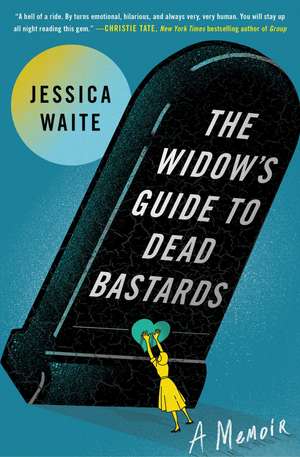
The Widow's Guide to Dead Bastards
Autor Jessica Waiteen Limba Engleză Paperback – 19 iun 2025
While mourning her husband’s sudden death, Jessica Waite discovered shocking secrets that undermined everything she thought she knew about the man she’d loved and trusted. From secret affairs to drug use and a pornography addiction, Waite was overwhelmed reconciling this devastating information with her new reality as a widowed single mom. Then, to further complicate matters, strange, inexplicable coincidences forced her to consider whether her husband was reaching back from beyond the grave.
With unflinching honesty, Waite details her tumultuous love story and the pain of adjusting to the new normal she built for herself and her son. “A candid, raw chronicle of bereavement” (Kirkus Reviews), The Widow’s Guide to Dead Bastards is also a lyrical exploration of mental health, single parenthood, and betrayal that demonstrates that the most moving love stories aren’t perfect—they’re flawed and poignantly real.
Preț: 64.98 lei
Preț vechi: 79.50 lei
-18%
Puncte Express: 97
Carte disponibilă
Livrare economică 20 noiembrie-02 decembrie
Livrare express 03-07 noiembrie pentru 36.16 lei
Livrare prin curier în România Termenul estimat este afișat lângă disponibilitate.
Transport gratuit de la 400.00 lei Plată online sau ramburs, în funcție de opțiunile comenzii.
Retur gratuit în 14 zile Comandă securizată și suport în română.
Specificații
ISBN-13: 9781668044865
ISBN-10: 1668044862
Pagini: 320
Dimensiuni: 140 x 213 x 20 mm
Greutate: 0.25 kg
Editura: ATRIA
Colecția Atria Books
ISBN-10: 1668044862
Pagini: 320
Dimensiuni: 140 x 213 x 20 mm
Greutate: 0.25 kg
Editura: ATRIA
Colecția Atria Books
V-ar putea interesa
-
 Blame Not the WindShirley CooklinPreț: 155.64 lei
 -
 Einstein's MonstersMartin Amis-20%Preț: 51.13 lei63.84 lei
 -
 The Pilot's WifeAnita Shreve-26%Preț: 58.25 lei79.03 lei
 -
 Memorial Days: a New York Times bestsellerGeraldine Brooks-27%Preț: 78.14 lei107.00 lei
 -
 A Beautiful, Terrible ThingJen WaitePreț: 136.66 lei
 -
 Trying: A MemoirChloe Caldwell-22%Preț: 70.83 lei90.54 lei
 -
 How to Lose Your MotherMolly Jong-Fast-34%Preț: 78.80 lei119.96 lei
 -
 AwakeJen HatmakerPreț: 137.10 lei
 -
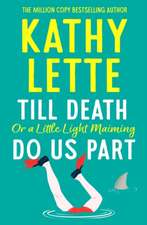 -25%Preț: 54.52 lei72.78 lei
 -
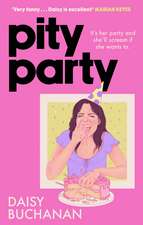 -25%Preț: 53.97 lei71.95 lei
 -
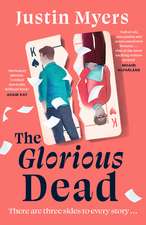 -24%Preț: 105.16 lei139.21 lei
 -
 All the Way to the RiverElizabeth GilbertPreț: 110.12 lei
 -
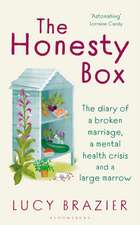 -27%Preț: 88.29 lei121.18 lei
 -
 The Archaeology of LossSarah Tarlow-32%Preț: 54.01 lei79.42 lei
 -
 -26%Preț: 52.27 lei71.06 lei
 -
 MollyBlake ButlerPreț: 102.99 lei
 -
 Told You SoMayci Neeley-17%Preț: 119.44 lei144.67 leiRecomandat
 -
 The Life IntendedKristin Harmel-25%Preț: 59.45 lei79.73 lei
 -
 Widow in the City: A Memoir of Heartbreaks and HookupsAmy GabriellePreț: 102.41 lei
Notă biografică
When life handed Jessica Waite a riveting, horrifying and surprisingly beautiful story, she transformed herself into a writer. Her debut memoir, The Widow’s Guide to Dead Bastards, became an instant bestseller, featured by The Washington Post, Maria Shriver’s Sunday Paper, The Toronto Star, and many other outlets. Jessica lives on Treaty 7 territory in the city of Calgary, Alberta. You can find her at JessicaWaite.work.
Extras
1. Four Missed CallsFOUR MISSED CALLS
The soup is everything I’d hoped from a homestyle place like Guy’s Café & Bakery in the mountain town of Cochrane, Alberta: translucent onion, garden peas, resolute carrot rounds, hearty golden stock. Earnest, nourishing goodness in a stoneware bowl. My hands have been cold since this morning, waiting with Dash, our nine-year-old son, for the school bus lights to pierce the purplish November morning. I cradle the stoneware, breathing in steamy chicken broth, warming my icy fingers, but the heat intensifies faster than I can—ouch. The bowl clatters onto the table. Soup sloshes over the edge.
I blow on my reddened fingertips. Across the table, my mom, Bonnie, and her friend are planning their golf trip for next summer. Their conversation doesn’t involve me, but I don’t want to be rude, so I peek at my phone under cover of the oak tabletop. The number 4, in a scarlet circle, glares up from the home screen. Shit. My stomach lurches. Something must have happened to Dash. We’re more than an hour’s drive from his elementary school.
But the four missed calls share a Houston area code. Shouldn’t Sean’s flight be wheels up by now?
I tap Mom’s shoulder, in the black-and-white knitted sweater she borrowed from my closet this morning. She only ever packs summer clothes on her way through to warmer climes for the winter. “Sorry to interrupt. Someone from Texas is trying to reach me.”
“Oh, good. They must have found Sean’s jacket,” Mom offers, having overheard me on the phone with Sean, just before we left Calgary for Cochrane.
A sigh of relief. Yes. The security manager of Sean’s hotel, calling to arrange the return of his lost jacket. I button my coat as I slip outside to make the call.
Sean had phoned from the airport shuttle, tetchy that his leather jacket had gone missing from his hotel room. He’d wanted the security manager to question housekeeping about it, but the guy had refused. “Their loss policy guarantees the customer is gone before they investigate the claim,” Sean fumed. “It’s bullshit.”
Odd that he gave the Marriott security guy my number. Sean must have anticipated being in airplane mode. I can already imagine the grin and the pat on the butt I’ll get when I meet him at the airport. He spent a fortune on that black leather bomber. Wearing it with a scarf is one of his favorite things about autumn in Calgary, when the weather turns chilly, like today, November 4, 2015.
I step out in front of the café to listen to the voicemail. A woman, who identifies herself as the ER charge nurse at Memorial Hermann hospital, drawls, “Cawl me back right away. Ms. Wa-ite.”
Oh, no. Sean’s hurt. The Wi-Fi’s not strong enough to scan headlines. Mass shooting. Airport bomb. I sit down on a pine bench near the entrance to the café and, with an unsteady hand, tap the number into my phone. The nurse says, “Ma’am, are you alone right now?” I say I’m with my mom.
The nurse asks if I have a pen. I’m going to need to write some things down. But I’m not really with my mom, am I? Because I’m out here, and Mom’s all the way inside the café, so actually I am alone and this nurse is very, very wrong. She’s emphasizing the Vincent, saying “Sean Vincent Wa-ite.” I mean, she doesn’t even know his name, so what she’s saying can’t be true, and how dare she call and say these lies and demand that I write down the case number, but the numbers are coming so I draw them onto my notepad and repeat them back to her. Then, the call is over.
I tuck my phone, notepad, and pen into the zippered pocket of my black leather purse. The slats of the wooden bench are hard and cold beneath me. I stare at the hood ornament on a red Dodge pickup in this strip-mall parking lot. The noon sun gleams off the ram’s horns and makes my eyes twinge, but I don’t reach for my sunglasses. I don’t look away. I just stare.
When the roar in my head quiets, I stand and walk through the doors, back into the smell of soup and cinnamon and coffee, past the lunching ladies, to the table where my mom and her friend are just finishing up. My chicken soup must have cooled enough to eat, but I don’t sit down.
“They said he died.” A concerned frown behind my mom’s glasses. She doesn’t understand. I say the name to the pinched lines between my mom’s brown eyes. “Sean.” I put my hand on the back of a chair to steady myself. “They said Sean died. A heart attack, they think.”
Someone must have paid the bill because we’re back in my van. I’m in the passenger seat. Mom pulls over to drop off her friend, and then we’re on the highway back to Calgary. I watch the line between the shoulder and the road. I’m not crying.
“Sean was an organ donor. I have to talk to those people. They gave me a case number. I’m supposed to call them right away….”
If Mom answers, I don’t hear her. Thoughts are rushing; I blurt them out as the pavement rolls by.
“Why wouldn’t they let me talk to the doctor? They said he never regained consciousness. Do you think the paramedics will talk to me?….
“Sean’s work people in Denver. I don’t even know them there. I’ll have to look up the number on the website….
“How? How? He just had a full physical, ECG and everything. He was fine. Perfect health….
“So, what, I’m a widow now? No. That’s not right. I’m just a wife.”
Bless my mom for keeping her eyes on the road and her hands on the wheel even when the sharp geyser of pain cuts its way up from my belly to my throat. Tears burst through, and I press my fingertips into my forehead as I choke out my dread, “Oh, God, Mom. How am I going to tell Dash?”
The soup is everything I’d hoped from a homestyle place like Guy’s Café & Bakery in the mountain town of Cochrane, Alberta: translucent onion, garden peas, resolute carrot rounds, hearty golden stock. Earnest, nourishing goodness in a stoneware bowl. My hands have been cold since this morning, waiting with Dash, our nine-year-old son, for the school bus lights to pierce the purplish November morning. I cradle the stoneware, breathing in steamy chicken broth, warming my icy fingers, but the heat intensifies faster than I can—ouch. The bowl clatters onto the table. Soup sloshes over the edge.
I blow on my reddened fingertips. Across the table, my mom, Bonnie, and her friend are planning their golf trip for next summer. Their conversation doesn’t involve me, but I don’t want to be rude, so I peek at my phone under cover of the oak tabletop. The number 4, in a scarlet circle, glares up from the home screen. Shit. My stomach lurches. Something must have happened to Dash. We’re more than an hour’s drive from his elementary school.
But the four missed calls share a Houston area code. Shouldn’t Sean’s flight be wheels up by now?
I tap Mom’s shoulder, in the black-and-white knitted sweater she borrowed from my closet this morning. She only ever packs summer clothes on her way through to warmer climes for the winter. “Sorry to interrupt. Someone from Texas is trying to reach me.”
“Oh, good. They must have found Sean’s jacket,” Mom offers, having overheard me on the phone with Sean, just before we left Calgary for Cochrane.
A sigh of relief. Yes. The security manager of Sean’s hotel, calling to arrange the return of his lost jacket. I button my coat as I slip outside to make the call.
Sean had phoned from the airport shuttle, tetchy that his leather jacket had gone missing from his hotel room. He’d wanted the security manager to question housekeeping about it, but the guy had refused. “Their loss policy guarantees the customer is gone before they investigate the claim,” Sean fumed. “It’s bullshit.”
Odd that he gave the Marriott security guy my number. Sean must have anticipated being in airplane mode. I can already imagine the grin and the pat on the butt I’ll get when I meet him at the airport. He spent a fortune on that black leather bomber. Wearing it with a scarf is one of his favorite things about autumn in Calgary, when the weather turns chilly, like today, November 4, 2015.
I step out in front of the café to listen to the voicemail. A woman, who identifies herself as the ER charge nurse at Memorial Hermann hospital, drawls, “Cawl me back right away. Ms. Wa-ite.”
Oh, no. Sean’s hurt. The Wi-Fi’s not strong enough to scan headlines. Mass shooting. Airport bomb. I sit down on a pine bench near the entrance to the café and, with an unsteady hand, tap the number into my phone. The nurse says, “Ma’am, are you alone right now?” I say I’m with my mom.
The nurse asks if I have a pen. I’m going to need to write some things down. But I’m not really with my mom, am I? Because I’m out here, and Mom’s all the way inside the café, so actually I am alone and this nurse is very, very wrong. She’s emphasizing the Vincent, saying “Sean Vincent Wa-ite.” I mean, she doesn’t even know his name, so what she’s saying can’t be true, and how dare she call and say these lies and demand that I write down the case number, but the numbers are coming so I draw them onto my notepad and repeat them back to her. Then, the call is over.
I tuck my phone, notepad, and pen into the zippered pocket of my black leather purse. The slats of the wooden bench are hard and cold beneath me. I stare at the hood ornament on a red Dodge pickup in this strip-mall parking lot. The noon sun gleams off the ram’s horns and makes my eyes twinge, but I don’t reach for my sunglasses. I don’t look away. I just stare.
When the roar in my head quiets, I stand and walk through the doors, back into the smell of soup and cinnamon and coffee, past the lunching ladies, to the table where my mom and her friend are just finishing up. My chicken soup must have cooled enough to eat, but I don’t sit down.
“They said he died.” A concerned frown behind my mom’s glasses. She doesn’t understand. I say the name to the pinched lines between my mom’s brown eyes. “Sean.” I put my hand on the back of a chair to steady myself. “They said Sean died. A heart attack, they think.”
Someone must have paid the bill because we’re back in my van. I’m in the passenger seat. Mom pulls over to drop off her friend, and then we’re on the highway back to Calgary. I watch the line between the shoulder and the road. I’m not crying.
“Sean was an organ donor. I have to talk to those people. They gave me a case number. I’m supposed to call them right away….”
If Mom answers, I don’t hear her. Thoughts are rushing; I blurt them out as the pavement rolls by.
“Why wouldn’t they let me talk to the doctor? They said he never regained consciousness. Do you think the paramedics will talk to me?….
“Sean’s work people in Denver. I don’t even know them there. I’ll have to look up the number on the website….
“How? How? He just had a full physical, ECG and everything. He was fine. Perfect health….
“So, what, I’m a widow now? No. That’s not right. I’m just a wife.”
Bless my mom for keeping her eyes on the road and her hands on the wheel even when the sharp geyser of pain cuts its way up from my belly to my throat. Tears burst through, and I press my fingertips into my forehead as I choke out my dread, “Oh, God, Mom. How am I going to tell Dash?”
Recenzii
"Jessica Waite's The Widow's Guide to Dead Bastards is a hell of a ride. By turns emotional, hilarious, and always very, very human, Waite gives readers access to the secrets that spilled into her lap after her husband's untimely death. Waite masterfully sets an example of how we might honor and cherish departed loved ones who enriched, damaged, and marked our lives forever. You will stay up all night reading this gem."
—Christie Tate, New York Times bestselling author of GROUP
“Essayist Waite debuts with a bracing account of her husband’s sudden death and the secrets she unearthed after he was gone. With startling compassion and surprising wit, Waite shows how such an understanding might be achieved. This stirring study of loss and forgiveness isn’t easily forgotten.”
—Publisher's Weekly, Starred Review
"Jessica Waite is a lavishly gifted writer with a riveting tale to tell. The Widow’s Guide to Dead Bastards is a page-turning psychological mystery, an inspiring story of endurance, a guide to healing and redemption—and it’s all true. Treat yourself to this book when you’re in the mood for a fascinating, funny, thought-provoking, and inspiring read."
—Martha Beck, bestselling author of The Way of Integrity
—Christie Tate, New York Times bestselling author of GROUP
“Essayist Waite debuts with a bracing account of her husband’s sudden death and the secrets she unearthed after he was gone. With startling compassion and surprising wit, Waite shows how such an understanding might be achieved. This stirring study of loss and forgiveness isn’t easily forgotten.”
—Publisher's Weekly, Starred Review
"Jessica Waite is a lavishly gifted writer with a riveting tale to tell. The Widow’s Guide to Dead Bastards is a page-turning psychological mystery, an inspiring story of endurance, a guide to healing and redemption—and it’s all true. Treat yourself to this book when you’re in the mood for a fascinating, funny, thought-provoking, and inspiring read."
—Martha Beck, bestselling author of The Way of Integrity
Descriere
An intricately delicate account of personal tragedy and betrayal accented by a debut author's dry humor, unapologetic honesty, and steadfast commitment to her individuality and experiences.