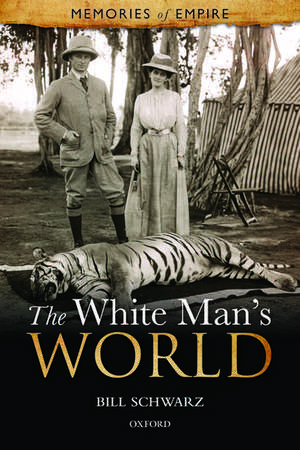
The White Man's World
Autor Bill Schwarzen Limba Engleză Paperback – 25 iul 2013
Notăm cu interes apariția volumului The White Man's World, o lucrare de referință pentru nivelul de licență și masterat în istorie contemporană și studii culturale. În acest prim tom al trilogiei Memories of Empire, Bill Schwarz investighează modul în care prăbușirea structurilor imperiale formale nu a dus la dispariția mentalităților coloniale, ci la o reconfigurare a lor în spațiul domestic britanic sub forma unei memorii traumatice și revanșarde. Considerăm că forța argumentației rezidă în capacitatea autorului de a trasa o linie directă între „utopia rasială” construită în colonii precum Rhodesia sau Australia și politizarea identității albe în Anglia postbelică.
Textul extinde cadrul propus de Race and Empire in British Politics de Paul B. Rich cu date noi din perioada decolonizării anilor '60, mutând accentul de la istoria ideilor antropologice către o istorie socială a memoriei colective. Bill Schwarz demonstrează că discursul lui Enoch Powell din 1968 nu a fost un accident, ci catalizatorul unor curente subterane alimentate de pierderea statutului imperial. Această abordare completează cercetările din Enoch Powell and the Making of Postcolonial Britain de Camilla Schofield, oferind însă o perspectivă mai largă, transoceanică, asupra modului în care „Marea Britanie” a fost definită prin excludere rasială.
În contextul operei sale, The White Man's World reprezintă fundamentul teoretic pentru preocupările ulterioare ale autorului legate de mitologie politică, vizibile în The Churchill Myths, și pentru interesul său față de studiile memoriei, cristalizat în volumul coordonat Memory. Stilul este dens, academic, dar marcat de o claritate analitică ce evită simplificările polemice, oferind o radiografie a modului în care rasismul modern s-a cristalizat ca un produs de export al experienței coloniale, reimportat ulterior în metropolă.
Preț: 337.47 lei
Preț vechi: 424.14 lei
-20%
Carte tipărită la comandă
Livrare economică 11-16 iunie
Specificații
ISBN-10: 0199686033
Pagini: 592
Dimensiuni: 187 x 234 x 34 mm
Greutate: 0.88 kg
Editura: Oxford University Press
Colecția OUP Oxford
Locul publicării:Oxford, United Kingdom
V-ar putea interesa
-
 The Norman Conquest: A Very Short IntroductionGeorge Garnett-21%Preț: 53.62 lei67.88 lei
 -
 Spain: A HistoryRaymond Carr-19%Preț: 97.60 lei121.05 lei
 -
 The Celts: A Very Short IntroductionBarry Cunliffe-21%Preț: 53.60 lei67.99 lei
 -
 Christopher Marlowe: Poet & SpyPark Honan-8%Preț: 243.23 lei264.78 lei
 -
 -31%Preț: 448.90 lei647.13 lei
 -
 Nazi GermanyJane Caplan-14%Preț: 255.64 lei296.25 lei
 -
 Churchill: The Unexpected HeroPaul Addison-12%Preț: 86.03 lei97.24 lei
 -
 The New TypographyJan TschicholdPreț: 313.12 lei
 -
 In Harm's WayDoug Stanton-20%Preț: 55.24 lei68.86 lei
 -
 Aristocracy and the Modern WorldEllis WassonPreț: 272.44 lei
 -
 History of the Russian RevolutionLeon TrotskyPreț: 253.91 lei
De ce să citești această carte
Recomandăm această carte cercetătorilor și studenților interesați de istoria imperiului și de rădăcinile populismului contemporan. Cititorul va obține o înțelegere profundă a modului în care identitatea britanică a fost modelată de experiența colonială din Africa și Australia. Este un instrument esențial pentru a descifra tensiunile rasiale actuale, explicând cum nostalgia după un trecut imperial idealizat continuă să influențeze politica britanică și globală.
Despre autor
Bill Schwarz este profesor în cadrul School of English and Drama la Queen Mary, University of London, fiind o figură centrală în studiile postcoloniale și de istorie a memoriei. Experiența sa ca editor al publicațiilor History Workshop Journal și New Formations se reflectă în rigoarea documentării sale. Pe lângă trilogia Memories of Empire, Schwarz a editat lucrări fundamentale despre intelectualii vest-indieni și a colaborat îndeaproape cu figuri marcante precum Stuart Hall, a cărui biografie, Familiar Stranger, a și îngrijit-o, consolidându-și reputația de analist fin al dinamicii dintre rasă, cultură și putere.
Descriere
Recenzii
Readers who have followed the struggle over the proper place of imperialism in British history these last three decades will know that Schwarz throws open many doors which have long been ajar but which, even now, await those willing to walk boldly yet thoughtfully through them ... The luxuriously long form of Schwarzs narrative is utterly inseparable from the force of his argument. Evidently, The White Mans World is the first of a trilogy; future volumes should be eagerly anticipated.