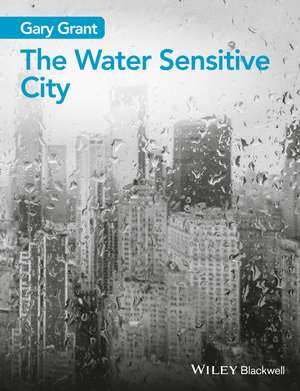
The Water Sensitive City
Autor Gary Granten Limba Engleză Paperback – 15 apr 2016
În analiza metodologiilor de dezvoltare urbană, The Water Sensitive City propune o schimbare fundamentală de paradigmă: trecerea de la infrastructura gri, bazată pe evacuarea rapidă a apei, la o arhitectură „sensibilă la apă”. Considerăm că punctul forte al acestei lucrări publicate de Wiley este modul în care Gary Grant integrează design patterns ecologice în fluxurile de lucru ale ingineriei civile. Metodologia prezentată nu se limitează la colectarea datelor, ci oferă soluții de implementare pentru sisteme de drenaj sustenabil (SuDS), unde apa de suprafață este interceptată strategic prin acoperișuri verzi, grădini de ploaie și bazine de retenție. Din punct de vedere tehnic, autorul demonstrează necesitatea transformării modelului liniar de consum într-unul circular, esențial pentru supraviețuirea metropolelor moderne. Reținem accentul pus pe tehnologii de reciclare a apei și pe optimizarea utilizării resurselor pluviale, elemente care transformă riscul de inundație într-o resursă gestionabilă. Cititorul care a aplicat deja conceptele din Approaches to Water Sensitive Urban Design de Ashok Sharma va găsi aici o sinteză practică ce face legătura între politicile publice și execuția tehnică pe teren. Spre deosebire de manualele strict teoretice, această lucrare funcționează ca un cadru de lucru pentru arhitecți și manageri de mediu, oferind o structură clară pentru proiecte de infrastructură verde-albastră. Stilul este pragmatic, axat pe soluții scalabile care pot atenua efectele urbanizării accelerate asupra ciclului hidrologic natural.
Preț: 495.91 lei
Preț vechi: 539.04 lei
-8%
Carte tipărită la comandă
Livrare economică 08-22 iunie
Specificații
ISBN-10: 1118897668
Pagini: 240
Dimensiuni: 191 x 244 x 15 mm
Greutate: 0.52 kg
Editura: Wiley
Locul publicării:Chichester, United Kingdom
V-ar putea interesa
-
 Wild CitiesChris FitchPreț: 118.81 lei
 -
 RHS Waterwise GardenTom MasseyPreț: 154.83 lei
 -
 The Image of the CityKevin LynchPreț: 236.86 lei
 -
 Preț: 110.78 lei
 -
 Advances in Urban Flood ManagementRichard Ashley-8%Preț: 540.66 lei587.67 lei
 -
 Sustainable WaterAllison Lassiter-14%Preț: 557.80 lei648.60 lei
 -
 The Water-Smart GardenNoelle Johnson-19%Preț: 124.85 lei153.51 lei
 -
 -29%Preț: 190.38 lei269.93 lei
 -
 Preț: 353.87 lei
 -
 Sustainable Surface Water ManagementSusanne M Charlesworth-23%Preț: 700.57 lei909.82 lei
 -
 -35%Preț: 105.05 lei161.35 lei
 -
 -24%Preț: 117.43 lei154.55 lei
 -
 Water Conservation: Practices, Challenges & Future ImplicationsMonzur A Imteaz-30%Preț: 1118.24 lei1603.68 lei
 -
 The Homegrown CityMatias EchanovePreț: 145.39 lei
 -
 Urban Stormwater and Flood Management: Enhancing the Liveability of CitiesVeeriah Jegatheesan-18%Preț: 858.26 lei1046.66 lei
 -
 100 Words for WaterEva Franch i GilabertPreț: 160.28 lei
 -
 Sponge Park: Gowanus CanalSusannah C. DrakePreț: 277.79 lei
 -
 Preț: 359.11 lei
 -
 -18%Preț: 1192.20 lei1453.90 lei
 -
 Flux CitiesGregor H. MewsPreț: 295.66 lei
Public țintă
1. Engineers; architects; environmental managers; and landscape architects 2. Policymakers; urban plannersDe ce să citești această carte
Această carte este esențială pentru inginerii civili și urbaniștii care doresc să implementeze sisteme de drenaj sustenabil (SuDS) în proiectele lor. Cititorul câștigă o înțelegere clară a modului în care infrastructura circulară poate înlocui metodele tradiționale de evacuare a apei, oferind un avantaj competitiv în designul urban modern prin soluții precum acoperișurile verzi și managementul inteligent al apelor pluviale.
Despre autor
Gary Grant este un specialist recunoscut în ecologie urbană și consultanță de mediu, cu o vastă experiență în proiectarea și implementarea infrastructurii verzi. Expertiza sa se concentrează pe adaptarea orașelor la schimbările climatice prin soluții bazate pe natură. În această lucrare, el sintetizează decenii de discuții tehnice pentru a oferi un ghid practic destinat profesioniștilor care modelează mediul construit, de la ingineri la factori de decizie politică.