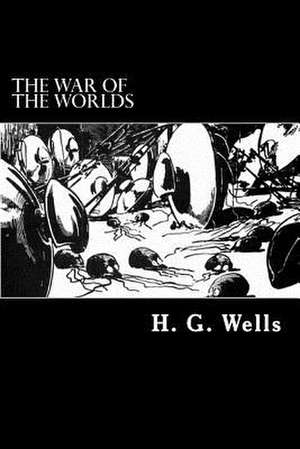
The War of the Worlds
Autor H. G. Wells Ilustrat de Alex Struiken Limba Engleză Paperback – vârsta de la 10 până la 13 ani
Imaginați-vă sentimentul de neliniște profundă în fața necunoscutului, o teroare care se instalează lent pe măsură ce cerul Angliei victoriene este străpuns de lumini inexplicabile. The War of the Worlds nu este doar un simplu roman polițist sau de aventură, ci piatra de temelie a genului invaziei extraterestre. Considerăm că forța acestei scrieri rezidă în contrastul brutal dintre viața cotidiană liniștită din Surrey și tehnologia marțiană de neînțeles — cilindri masivi care devorează peisajul și raze termice care anihilează orice rezistență umană. Ne-a atras atenția modul în care H. G. Wells construiește o atmosferă de neputință biologică și tehnologică, transformând mândrul Imperiu Britanic într-o pradă vulnerabilă.
Spre deosebire de explorarea temporală din The Time Machine, unde amenințarea era degradarea speciei umane în viitorul îndepărtat, aici pericolul este extern și imediat. Imaginați-vă tensiunea din The First Men in the Moon, mutată într-un decor de război total pe străzile Londrei. Structura cărții, împărțită în două volume — sosirea și apoi ocupația propriu-zisă — oferă o perspectivă panoramică asupra colapsului social. Această ediție specială îmbogățește experiența lecturii prin includerea unor anexe valoroase, de la eseuri precum „Intelligence on Mars” la recenzii din 1898, oferind cititorului contextul științific și cultural în care Wells și-a imaginat acest „scientific romance”. Apreciem cum autorul integrează detalii biologice riguroase, transformând marțienii în entități „vitale și monstruoase”, departe de orice reprezentare umanoidă clasică.
Preț: 75.66 lei
Carte disponibilă
Livrare economică 14-28 noiembrie
Specificații
ISBN-10: 1480098515
Pagini: 220
Dimensiuni: 152 x 229 x 12 mm
Greutate: 0.3 kg
Editura: CreateSpace Independent Publishing Platform
V-ar putea interesa
-
 The Strange Case of Dr Jekyll and Mr HydeRobert Louis StevensonPreț: 28.26 lei
-
 I, RobotIsaac AsimovPreț: 71.68 lei
-
 The Island of Doctor MoreauH. G. WellsPreț: 28.01 lei
-
 XINVISIBLE MAN_CLASSICS PBH. G. WellsPreț: 28.01 lei
-
 Brave New WorldAldous HuxleyPreț: 64.37 lei
-
 A Gentleman in MoscowAmor Towles-23%Preț: 62.38 lei80.95 lei
-
 Sapiens: A Brief History of Human KindYuval Noah Harari-17%Preț: 80.04 lei95.89 lei
-
 The MetaphysicsAristotle-17%Preț: 78.60 lei94.74 lei
-
 The Bhagavad GitaAnonymous-36%Preț: 59.64 lei93.10 lei
-
 Nineteen Eighty-Four (1984): 1984George Orwell-26%Preț: 53.38 lei71.82 lei
-
 The Coddling of the American MindJonathan Haidt-30%Preț: 65.27 lei93.54 lei
-
 Lady SusanJane Austen-37%Preț: 18.29 lei29.02 lei
-
 The CompetitionMaddie Ziegler-28%Preț: 40.66 lei56.68 lei
-
 The Kissing Booth 2: Going the DistanceBeth Reekles-18%Preț: 53.08 lei64.60 lei
-
 The Complete Poetry Of Edgar Allan PoeEdgar Allan PoePreț: 42.32 lei
-
 HamletWilliam Shakespeare-17%Preț: 23.84 lei28.88 lei
-
 The Mini Bonsai KitRunning Press-26%Preț: 50.63 lei68.78 lei
-
 Starcraft II: Heaven's DevilsWilliam C. DietzPreț: 89.94 lei
-
 Preț: 108.94 lei
-
 I'd Die for You: And Other Lost StoriesF. Scott Fitzgerald-18%Preț: 65.25 lei79.82 lei
-
 The Shadow of the Wind: The Cemetery of Forgotten Books 1Carlos Ruiz Zafón-24%Preț: 72.09 lei95.33 lei
-
 The Haunted Hotel & Other StoriesWilkie CollinsPreț: 31.47 lei
-
 The Island of Dr MoreauH. G. WellsPreț: 50.57 lei
-
 Atomic HabitsJames Clear-22%Preț: 107.16 lei136.87 leiRecomandat
De ce să citești această carte
Recomandăm această ediție oricărui pasionat de literatură clasică și science-fiction care dorește să exploreze originile genului. Cititorul câștigă nu doar o poveste captivantă despre supraviețuire, ci și o analiză critică a imperialismului victorian. Este o oportunitate rară de a vedea cum marile teme ale omenirii — frica de celălalt și fragilitatea civilizației — au fost articulate pentru prima dată cu o asemenea precizie vizionară.
Despre autor
H. G. Wells (1866–1946) a fost un scriitor britanic prolific, adesea numit „părintele science-fiction-ului”. Autor de o versatilitate remarcabilă, el a navigat între beletristică, istorie și comentariu social, fiind un profet al tehnologiilor moderne precum aviația, tancurile și chiar internetul. Prin „Legea lui Wells”, el a revoluționat literatura fantastică, inserând un singur element extraordinar într-un cadru realist, cotidian. Operele sale fundamentale, precum The Invisible Man și The Island of Doctor Moreau, rămân repere ale imaginației umane, explorând limitele eticii și ale evoluției biologice.
Descriere scurtă
Descriere
A powerful, delightful new edition. Cylinders land on earth and the invaders, from Mars, with their huge, round bodies and tentacles, start to vaporize the people of Earth. Houses, towns and cities are soon destroyed in a spiral of violence, creating civil panic and mass evacuations before a foul black smoke is released by the aggressive alien force. But the fightback must begin, and it comes from an unexpected quarter. H.G. Wells' classic tale of invasion has stirred our imagination for over a hundred years. Its intense mix of realism and fantasy continues to prick at anyone interested in a great adventure story by a master storyteller. This gorgeous collectable classic includes the short story 'A Dream of Armageddon' and another tale of Wells' seminal early science fiction, The First Men in the Moon.
Little treasures, the FLAME TREE COLLECTABLE CLASSICS are chosen to create a delightful and timeless home library. Each stunning, gift edition features deluxe cover treatments, ribbon markers, luxury endpapers and gilded edges. The unabridged text is accompanied by a Glossary of Victorian and Literary terms produced for the modern reader.
Notă biografică
Isaac Asimov authored over 400 books in a career that lasted nearly 50 years. As a leading scientific writer, historian, and futurist, he covered a variety of subjects ranging from mathematics to humor, and won numerous awards for his work.
Recenzii
This edition’s appendices include other related writings by Wells; selected correspondence; contemporary reviews; excerpts from works that influenced the novel and from contemporary invasion narratives; and photographs of examples of Victorian military technology.
“Martin Danahay’s edition shows the extent to which The War of the Worlds draws on the biological and astronomical theories, political ideologies, and military technology of its time. Readers who want to appreciate this greatest of all alien narratives in its original Victorian context cannot do better than to consult this edition.” — Patrick Parrinder, University of Reading
“One reads this edition with great pleasure. The novel is lightly and intelligently annotated, making concise sense of all the local allusions that make this remarkable fantasy so realistic. The appendices, which reprint portions of articles from the 1890s, suggest an intellectual context for the work and are often interesting in themselves, especially Percival Lowell’s meditation on how some form of life might develop on Mars. The pictures of the various guns, cannons, ships, and other machinery mentioned in the novel give a wonderful sense of the scale of the war.” — John Huntington, University of Illinois at Chicago
Cuprins
Introduction
H.G.Wells: A Brief Chronology
A Note on the Text
The War of the Worlds
Appendix A: H.G. Wells on The War of the Worlds
- H.G. Wells, from Strand Magazine (1920)
- H.G. Wells, from “Preface to Volume III” (1924)
- H.G. Wells, from “Zoological Retrogression” (1891)
- H.G. Wells, “On Extinction” (1893)
- H.G. Wells, from “The Advent of the Flying Man: An InevitableOccurrence” (1893)
- H.G. Wells, from “The Man of the Year Million” (1893)
- H.G. Wells, from “Another Basis for Life” (1894)
- H.G. Wells, “The Extinction of Man: Some SpeculativeSuggestions” (1894)
- H.G. Wells, from “The Stolen Bacillus” (1894)
- H.G. Wells, “Intelligence on Mars” (1896)
- H.G. Wells, “Through a Microscope” (1897)
Appendix D: Reviews of The War of the Worlds
- John St. Loe Strachey, from Spectator (29 January 1898)
- Academy (29 January 1898)
- R.A. Gregory, from Nature (10 February 1898)
- Basil Williams, from Athenaeum (5 February 1898)
- Winwood Reade, from The Martyrdom of Man (1872, 1875)
- T.H. Huxley, from Evolution and Ethics (1893)
- H.G.Wells, from “Huxley” (1901)
- William Le Queux, from The Great War in England in 1897 (1894)
- “Grip” (pseudonym), from How John Bull Lost London (1882)
- Nature (2 August 1894)
- Percival Lowell, from Mars (1895)
- A.R. Hope Moncrieff, from Black’s Guide to Surrey (1898)
- Eric Parker, from Highways and Byways in Surrey (1908)
- Field Artillery
- Gunners of Field Artillery
- High-Angle Firing
- Machine Gun Detachment
- Heliograph Operators
- 1st Dragoons
- H.M.S.Thunderer
- H.M.S. Ramilles