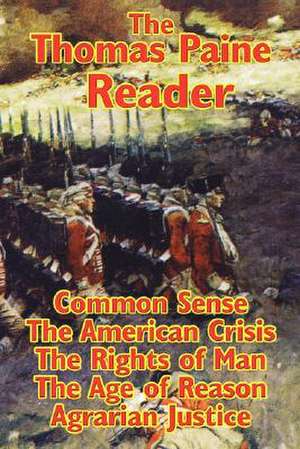
The Thomas Paine Reader
Autor Thomas Paineen Limba Engleză Paperback – 13 noi 2007
Prezentat sub forma unui manual de referință pentru studiul gândirii politice radicale, Thomas Paine Reader reunește cele mai influente texte ale autorului care a definit spiritul Revoluției Americane. Subliniem faptul că această ediție omnibus nu este doar o simplă antologie, ci un instrument critic esențial, restaurând integral Partea a Treia din The Age of Reason și oferind acces la eseuri mai puțin circulate, precum Agrarian Justice. Structura volumului urmărește progresia ideologică a lui Thomas Paine, de la primele sale intervenții în favoarea ofițerilor de accize în Anglia, până la pledoariile incendiare din Common Sense care au unit coloniile americane. Găsim în acest volum o perspectivă nuanțată asupra deismului și empirismului rațional al autorului, elemente care completează viziunea pur politică regăsită în Common Sense, Rights of Man, and Other Essential Writings of Thomas Paine prin adăugarea unor texte de profunzime teologică și socială. Față de alte ediții mai succinte, precum Selected Writings of Thomas Paine din seria Rethinking the Western Tradition, acest reader se distinge prin includerea scrisorilor către George Washington și a disertațiilor despre principiile guvernării, oferind o imagine completă a tranziției sale de la pamfletar revoluționar la teoretician al drepturilor omului. Suntem de părere că rigoarea cu care editorii Isaac Kramnick și Michael Foot au selectat materialele face din acest volum o resursă academică de prim rang, facilitând înțelegerea modului în care argumentele lui Paine pentru democrația reprezentativă au devenit piloni ai modernității.
Preț: 170.23 lei
Carte tipărită la comandă
Livrare economică 11-25 august
Specificații
ISBN-10: 1604591382
Pagini: 536
Dimensiuni: 155 x 227 x 29 mm
Greutate: 0.7 kg
Editura: A & D Publishing
Locul publicării:United States
V-ar putea interesa
-
 The 48 Laws of PowerRobert GreenePreț: 147.20 lei
 -
 CitizensSimon Schama-19%Preț: 116.55 lei143.92 lei
 -
 Good and Bad PowerGeoff MulganPreț: 111.23 lei
 -
 Preț: 138.98 lei
 -
 The ReformationDiarmaid MaccullochPreț: 149.42 lei
 -
 On RevolutionHannah ArendtPreț: 95.93 lei
 -
 AnglerBarton GellmanPreț: 144.82 lei
 -
 The WatchersShane HarrisPreț: 141.55 lei
 -
 -16%Preț: 49.54 lei59.32 lei
 -
 Giordano Bruno: Philosopher / HereticIngrid D. RowlandPreț: 130.82 lei
 -
 Godel, Escher, Bach: An Eternal Golden BraidDouglas Hofstadter-22%Preț: 115.11 lei148.25 lei
 -
 The Rights of ManThomas Paine-18%Preț: 23.89 lei29.12 lei
 -
 -49%Preț: 134.81 lei261.78 lei
 -
 On RevolutionHannah ArendtPreț: 79.28 lei
 -
 Against EmpireMichael ParentiPreț: 106.65 lei
 -
 Blackshirts and RedsMichael ParentiPreț: 90.96 lei
 -
 WatchmenAlan MoorePreț: 132.60 lei
 -
 BatmanAlan MoorePreț: 102.05 lei
 -
 Frederick Douglass: Prophet of FreedomDavid W. Blight-15%Preț: 97.27 lei113.90 lei
 -
 The Age of Reason - Thomas PaineThomas PainePreț: 68.24 lei
 -
 The Age of Reason - Thomas PaineThomas PainePreț: 124.60 lei
 -
 -27%Preț: 1011.19 lei1393.65 lei
 -
 -28%Preț: 1009.29 lei1392.38 lei
 -
 -36%Preț: 234.00 lei366.34 lei
 -
 -12%Preț: 100.92 lei114.24 lei
De ce să citești această carte
Această antologie este recomandată studenților la științe politice și istorie care doresc să exploreze fundamentele democrației moderne. Cititorul câștigă o înțelegere profundă a legăturii dintre rațiune, drepturi naturale și justiție socială. Motivul concret pentru achiziție este accesul la versiunea restaurată a lucrării The Age of Reason și la eseul Agrarian Justice, oferind o perspectivă rară asupra viziunii economice și religioase a lui Paine.
Despre autor
Născut în Anglia, Thomas Paine a fost un intelectual și revoluționar a cărui viață a fost marcată de spiritul de aventură și rebeliune. După o carieră scurtă ca ofițer fiscal, experiență ce a stat la baza primei sale scrieri, a emigrat în Philadelphia în 1774. Acolo a devenit vocea definitorie a independenței americane prin Common Sense. Ulterior, implicarea sa în Revoluția Franceză și publicarea The Rights of Man i-au adus eticheta de proscris în țara natală. Paine rămâne unul dintre cei mai influenți autori ai secolului al XVIII-lea, ideile sale despre drepturile inalienabile și guvernarea reprezentativă modelând cursul istoriei politice occidentale.
Descriere scurtă
Notă biografică
Cuprins
Paine's Writings:
1. The Case of the Officers of Excise (1772)
2. African Slavery in American (1775)
3. Reflections on the Life and Death of Lord Clive (1775)
4. Liberty Tree (1775)5. Common Sense (1776)
6. The American Crisis (1776-83)
7. Public Good (1780)
8. Six Letters to Rhode Island (1782-3)
9. Letter to the Abbé Raynal (1782)
10. Dissertations on Government, the Affairs of the Bank, and Paper Money (1786)
11. The Rights of Man (1791-2)
12. Letter Addressed to the Addressers on the Late Proclamation (1792)
13. An Essay for the Use of New Republicans in Their Opposition to Monarchy (1792)
14. Reasons for Preserving the Life of Louis Capet (1793)
15. The Age of Reason, Part One (1794)
16. Dissertation on First Principles of Government (1795)
17. Agrarian Justice (1795)
18. Letter to George Washington (1795)
19. To the Citizens of the United States (1802-3)
20. The Construction of Iron Bridges (1803)
21. Constitutional Reform (1805)
Descriere
Demonstrates the extent to which Thomas Paine was an inspiration to Americans in their struggle for independence. This book contains Paine's major works including "The Rights of Man", "Common Sense", and the first part of "The Age of Reason".