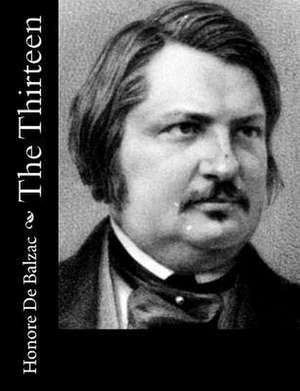
The Thirteen
Autor Honore De Balzac Traducere de Ellen Marriage, Katharine Prescott Wormeleyen Limba Engleză Paperback
Preț: 99.38 lei
Puncte Express: 149
Carte disponibilă
Livrare economică 13-27 noiembrie
Livrare prin curier în România Termenul estimat este afișat lângă disponibilitate.
Transport gratuit de la 400.00 lei Plată online sau ramburs, în funcție de opțiunile comenzii.
Retur gratuit în 14 zile Comandă securizată și suport în română.
Specificații
ISBN-13: 9781514808252
ISBN-10: 1514808250
Pagini: 324
Dimensiuni: 189 x 246 x 17 mm
Greutate: 0.58 kg
Editura: CREATESPACE
ISBN-10: 1514808250
Pagini: 324
Dimensiuni: 189 x 246 x 17 mm
Greutate: 0.58 kg
Editura: CREATESPACE
Notă biografică
Honoré de Balzac was a French novelist, playwright, and one of the commanding figures of nineteenth-century European realism. Born in 1799, he devoted his career to an enormous interlinked fictional project, La Comédie humaine, a panoramic study of French society after the fall of Napoleon. Across novels, novellas, and stories, Balzac examined money, ambition, class mobility, law, journalism, marriage, inheritance, provincial life, and the moral pressures of modern society with a force that helped shape the development of the realist novel.Balzac's work influenced generations of novelists because of its density of social observation, psychological force, and extraordinary attention to the machinery of everyday life. In novels such as Eugenie Grandet, Père Goriot, Lost Illusions, and Cousin Bette, he showed how private emotion is entangled with property, status, debt, family strategy, and social performance. His fiction remains essential to readers of French literature, classic European fiction, nineteenth-century realism, social criticism, and the history of the modern novel.