Cantitate/Preț
Produs

The QI Challenge P

Autor Richard J Banchs, Michael R Pop
en Limba Engleză Paperback – 19 apr 2021

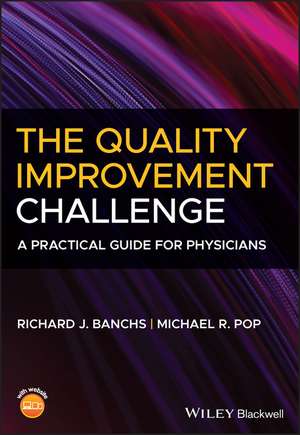
Pregătirea pentru examenul de rezidențiat sau pentru certificările de specialitate vizează adesea doar competențele clinice, însă practica medicală modernă impune o stăpânire riguroasă a managementului calității. Remarcăm faptul că The QI Challenge P vine să acopere exact această carență educațională, oferind un ghid metodologic pentru profesioniștii din sănătate care doresc să treacă de la simpli executanți la lideri de proiecte operaționale. Autorii Richard J Banchs și Michael R Pop propun o abordare clinică a proceselor administrative, utilizând un cadru de lucru care fuzionează Lean Six Sigma cu neuroștiințele pentru a facilita managementul schimbării într-un sistem adesea fragmentat. Considerăm structura volumului ca fiind un punct forte, progresia fiind organizată logic în jurul conceptului celor patru „R”. Cartea debutează cu selecția proiectului corect, trece prin organizarea echipei și definirea domeniului de aplicare (prin instrumente precum diagrama SIPOC), culminând cu identificarea cauzelor fundamentale ale ineficienței. Acolo unde Resident’s Handbook of Medical Quality and Safety se concentrează pe cerințele curriculare ale rezidenților pentru siguranța pacientului, acest volum aprofundează metodologia de implementare și sustenabilitate a îmbunătățirilor pe termen lung, oferind șabloane de flux de lucru și studii de caz care ilustrează atât succesele, cât și eșecurile inerente procesului de transformare organizațională. Recomandăm acest manual pentru rigoarea cu care tratează dinamica de echipă și pentru instrumentele practice de evaluare (tollgate reviews) care transformă teoria calității într-o disciplină aplicată, esențială pentru orice medic cu rol de coordonare.

Citește tot Restrânge

Preț: 47593 lei

Preț vechi: 50099 lei
-5%

Puncte Express: 714

Carte tipărită la comandă

Livrare economică 01-15 iunie


Specificații

ISBN-13: 9781119698982
ISBN-10: 1119698987
Pagini: 496
Dimensiuni: 178 x 254 x 25 mm
Greutate: 0.84 kg
Editura: Wiley
Locul publicării:Chichester, United Kingdom

De ce să citești această carte

Recomandăm această carte liderilor de echipe medicale și rezidenților care doresc să implementeze schimbări reale în unitățile lor. Cititorul câștigă acces la o metodologie testată, bazată pe Lean Six Sigma, adaptată specific pentru mediul spitalicesc. Este un instrument esențial pentru a transforma îngrijirea pacienților din una fragmentată în una sigură și eficientă, oferind competențe de leadership ce lipsesc din programa universitară clasică.


Despre autor

Richard J Banchs și Michael R Pop sunt specialiști cu experiență în managementul sănătății și optimizarea proceselor clinice. Expertiza lor combină practica medicală directă cu metodologii avansate de îmbunătățire a calității, precum Lean Six Sigma. Prin contribuția lor în acest volum publicat de Wiley, aceștia oferă o perspectivă interdisciplinară, integrând designul centrat pe om și neuroștiințele în strategiile de leadership medical, fiind recunoscuți pentru capacitatea de a traduce concepte administrative complexe în pași acționabili pentru personalul din prima linie a sistemului de sănătate.


Notă biografică

Richard J. Banchs, MD is a board-certified Pediatric Anesthesiologist and the Associate Head for Quality and Safety for the Department of Anesthesiology at the University of Illinois Hospital, Chicago. Dr. Banchs is a Lean Six Sigma Black Belt and Change Management Experienced Practitioner and has served as the Senior Director of the Organizational Process Improvement office at UIC. He is the creator and director of the QI Project Bootcamp: an intensive three-day course that serves the learning needs of the UIC Hospital community of providers and staff. Michael R. Pop, SSMBB, MBA is the Director of Business Process Improvement for the Omron Automation Americas group and a Senior Member of the American Society for Quality (ASQ). He has assisted multiple Hospitals and Clinics implement Lean Six Sigma Operations and coached and mentored numerous healthcare leaders in the use of Statistical Process Control techniques.

Descriere scurtă

Efforts to improve the quality of healthcare have failed to achieve a meaningful and sustainable improvement. Patients continue to experience fragmented, inconvenient, and unsafe care while providers are increasingly becoming overburdened with administrative tasks. The need for change is clear. Healthcare professionals need to take on new leadership roles in quality improvement (QI) projects to effect real change. The Quality Improvement Challenge in Healthcare equips readers with the skills and knowledge required to develop and implement successful operational improvement initiatives. Designed for healthcare providers seeking to apply QI in practice, this valuable resource delivers step-by-step guidance on improvement methodology, team dynamics, and organizational change management in the context of real-world healthcare environments. The text integrates the principles and practices of Lean Six Sigma, human-centered design, and neurosciences to present a field-tested framework. Detailed yet accessible chapters cover topics including identifying and prioritizing the problem, developing improvement ideas, defining the scope of the project, organizing the QI team, implementing and sustaining the improvement, and much more. Clearly explaining each step of the improvement process, this practical guide: * Presents the material in a logical sequence, gradually introducing each step of the process with clearly defined workflow templates * Features a wealth of examples demonstrating QI application, and case studies emphasizing key concepts to highlight successful and unsuccessful improvement initiatives * Includes end-of-chapter exercises and review questions for assessing and reinforcing comprehension * Offers practical tips and advice on communicating effectively, leading a team meeting, conducting a tollgate review, and motivating people to change Leading QI projects requires a specific set of skills not taught in medical school. The Quality Improvement Challenge in Healthcare bridges this gap for experienced and trainee healthcare providers, and serves as an important reference for residency program directors, physician educators, healthcare leaders, and health-related professional organizations.

Cuprins

Why This Book? x About the Authors xi List of Stories, Examples, Exercises, and Case Studies xiii About the Companion Website xv Part I The Basics 1 Chapter 1 The Problem with Healthcare 3 Chapter 2 We Need to Improve the Way We Improve 11 Part II The First "R": The Right Project 21 Chapter 3 The Project Selection Process 23 Chapter 4 Frame Your Challenge: The Problem Statement and Charter 36 Part III The Second "R": The Right People 45 Chapter 5 Don't Go at It Alone: Find a Primary Sponsor 47 Chapter 6 Organize Your QI Team and Select the Team Leader 51 Part IV The Third "R": The Right Problem 61 Chapter 7 What is the Scope of the Project? The SIPOC Diagram 63 Chapter 8 Who Are the "Customers," and What Do They Need? 68 Chapter 9 Who Are the "Stakeholders," and What Challenges Do They Have? 81 Part V The Fourth "R": The Right Cause 87 Chapter 10 To Understand a Process, You Need to "Go See" and Create a Map 89 Chapter 11 Get a Quick Win: Identify and Eliminate "Waste" 109 Chapter 12 Measure What Matters: Choose the Right Project Metrics 124 Chapter 13 Practicalities for Planning and Collecting Baseline Data 137 Chapter 14 Define Baseline Performance: Is the Process "Stable"? 147 Chapter 15 Tools to Characterize the Type of Variation: The Run Chart 176 Chapter 16 Tools to Characterize the Type of Variation: The Control Chart 186 Chapter 17 Define Baseline Performance: Is the Process Capable? 207 Chapter 18 How to Identify and Prioritize the Most Likely Cause of the Problem 222 Chapter 19 Before Proceeding, Confirm the Cause-and-Effect Relationship 242 Part VI The Fifth "R": The Right Solution 253 Chapter 20 Develop and Prioritize Your Improvement Ideas 255 Chapter 21 Test the Effectiveness of Your Ideas with a Pilot 280 Chapter 22 Improve "Flow" and Work Conditions 288 Chapter 23 Now Roll-Out Your Improvement Ideas and Make Them "Stick" 310 Part VII Additional Things You May Need to Know 331 Chapter 24 How to Prepare and Conduct a Tollgate Review 333 Chapter 25 How to Communicate Effectively to Engage the Frontline 339 Chapter 26 How to Lead an Effective Team Meeting 354 Chapter 27 How to Help Your QI Team Become a High-Performing Team 369 Chapter 28 Steps and Strategies to Effective Decision-Making 393 Chapter 29 What Neurosciences Can Teach Us to Motivate People to Change 403 Chapter 30 How Does it All Fit Together? The MRI Suite at St. Mary's Hospital 421 Appendix 449 Appendix I Common Improvement Tools and Techniques 451 Appendix II Glossary of Improvement Terms 457 Appendix III Additional Resources 460 Index 463