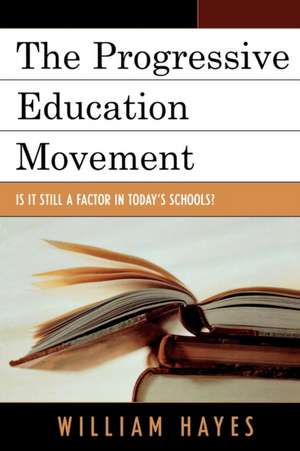
The Progressive Education Movement: Is It Still a Factor in Today's Schools?
Autor William Hayesen Limba Engleză Paperback – 24 oct 2006
More recently, we have seen the emergence in American education of four initiatives that have threatened the continued influence of progressive education. They include the "back to basics movement," mandated state curriculum standards, high-stakes testing, and school accountability. Despite these trends, there appears to be several factors that might lead one to conclude that progressive education is remaining a viable approach in the United States. This book considers these factors as well as past, present, and possible future of the progressive education movement.
Preț: 263.46 lei
Preț vechi: 350.06 lei
-25%
Puncte Express: 395
Carte tipărită la comandă
Livrare economică 08-22 iunie
Specificații
ISBN-13: 9781578865222
ISBN-10: 1578865220
Pagini: 165
Dimensiuni: 154 x 226 x 15 mm
Greutate: 0.29 kg
Editura: Bloomsbury Publishing
Colecția R&L Education
Locul publicării:New York, United States
ISBN-10: 1578865220
Pagini: 165
Dimensiuni: 154 x 226 x 15 mm
Greutate: 0.29 kg
Editura: Bloomsbury Publishing
Colecția R&L Education
Locul publicării:New York, United States
Cuprins
Part 1 Introduction
Chapter 2 The Rise of Progressive Education
Chapter 3 John Dewey
Chapter 4 Other Pioneers in the Progressive Education Movement
Chapter 5 The Progressive Education Movement During the First Half of the Twentieth Century
Chapter 6 The Fifties
Chapter 7 The Sixties and Seventies
Chapter 8 A Nation at Risk (1983)
Chapter 9 The Eighties and Nineties
Chapter 10 No Child Left Behind
Chapter 11 Maria Montessori
Chapter 12 Teacher Education Programs
Chapter 13 Middle Schools
Chapter 14 Choice
Chapter 15 Education of the Gifted and Talented
Chapter 16 Progressive Education Today
Chapter 17 The Future of Progressive Education
Chapter 2 The Rise of Progressive Education
Chapter 3 John Dewey
Chapter 4 Other Pioneers in the Progressive Education Movement
Chapter 5 The Progressive Education Movement During the First Half of the Twentieth Century
Chapter 6 The Fifties
Chapter 7 The Sixties and Seventies
Chapter 8 A Nation at Risk (1983)
Chapter 9 The Eighties and Nineties
Chapter 10 No Child Left Behind
Chapter 11 Maria Montessori
Chapter 12 Teacher Education Programs
Chapter 13 Middle Schools
Chapter 14 Choice
Chapter 15 Education of the Gifted and Talented
Chapter 16 Progressive Education Today
Chapter 17 The Future of Progressive Education
Recenzii
The author of nine other books, Hayes (Roberts Wesleyan College) provides an admirably clear account of the history of progressive education and its prospects in today's schools. The early chapters trace progressive education from its roots in Rousseau and Pestalozzi, through Dewey and into the first half of the twentieth century, and into more recent times by focusing on such legislation as A Nation at Risk and No Child Left Behind. Then the aim is to detail progressive tendencies in modern teacher education programs, choice movements, and gifted and talented education. Two final chapters describe progressive education today and assay the future of progressive education. The book clearly is intended for teacher education students, but it would also interest a general audience. Recommended.
William Hayes... takes us on a journey through the history of progressive education from its inception up to the present-day dilemmas facing our society. In The Progressive Education Movement he explores the role of progressive education in many of the key movements and events in public schooling in the twentieth century. Hayes also challenges us to consider the future of progressive education in today's political and cultural climate. These are important and useful questions for educators, parents, and citizens of a democracy to seriously consider.
William Hayes... takes us on a journey through the history of progressive education from its inception up to the present-day dilemmas facing our society. In The Progressive Education Movement he explores the role of progressive education in many of the key movements and events in public schooling in the twentieth century. Hayes also challenges us to consider the future of progressive education in today's political and cultural climate. These are important and useful questions for educators, parents, and citizens of a democracy to seriously consider.