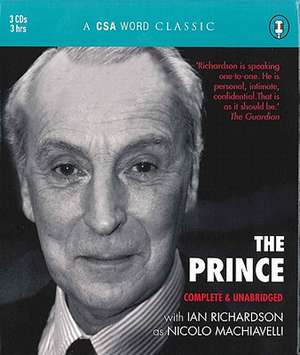
The Prince
Autor Nicolo Machiavelli Ian Richardsonen Limba Engleză CD-Audio – 31 iul 2008
Preț: 151.19 lei
Puncte Express: 227
Indisponibil temporar
Doresc să fiu notificat când acest titlu va fi disponibil:
Se trimite...
Specificații
ISBN-13: 9781934997031
ISBN-10: 193499703X
Dimensiuni: 127 x 150 x 30 mm
Greutate: 0.18 kg
Ediția:Completă
Editura: CSA Word
ISBN-10: 193499703X
Dimensiuni: 127 x 150 x 30 mm
Greutate: 0.18 kg
Ediția:Completă
Editura: CSA Word
V-ar putea interesa
-
 The PrinceNiccolo MachiavelliPreț: 28.01 lei
 -
 FreakonomicsSteven D. LevittPreț: 67.49 lei
 -
 The New MachiavelliJonathan Powell-19%Preț: 75.47 lei93.37 lei
 -
 The Portable MachiavelliNiccolo Machiavelli-18%Preț: 76.96 lei93.58 lei
 -
 The DiscoursesNicolas Machiavel-18%Preț: 76.56 lei93.35 lei
 -
 The PrinceNicolas MachiavelPreț: 44.46 lei
 -
 Machiavelli: A Very Short IntroductionQuentin Skinner-20%Preț: 56.15 lei70.53 lei
 -
 OriginsNeil De Grasse TysonPreț: 113.48 lei
 -
 Astrophysics for People in a HurryNeil de Grasse TysonPreț: 105.17 lei
 -
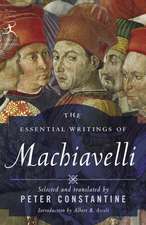 The Essential Writings of MachiavelliNicolas Machiavel-11%Preț: 100.59 lei112.44 lei
 -
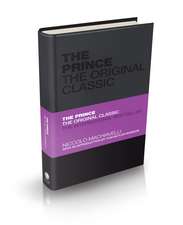 The Prince: The Original ClassicNiccolo MachiavelliPreț: 73.44 lei
 -
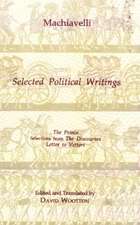 Machiavelli: Selected Political WritingsNiccolo Machiavelli-18%Preț: 125.23 lei153.17 lei
 -
 The Prince (Signature Editions): and The Art of WarNiccolo Machiavelli-31%Preț: 90.30 lei130.57 lei
 -
 SapiensYuval Noah Harari-37%Preț: 119.84 lei189.48 lei
 -
 The ThroneFranco BerniniPreț: 71.93 lei
 -
 Introducing MachiavelliPatrick CurryPreț: 63.41 lei
 -
 The 48 Laws Of PowerRobert Greene-17%Preț: 120.67 lei145.74 lei
 -
 The Prince (Hero Classics)Niccolo Machiavelli-12%Preț: 55.79 lei63.44 lei
 -
 The PrinceNiccolò MachiavelliPreț: 33.48 lei
 -
 UtopiaThomas MorePreț: 33.19 lei
Descriere
An obscure civil servant, dead for nearly 500 years, author of but one major work, yet whose name is still in common use. Remarkable? Not when the civil servant is Nicolo Machiavelli, and when the book is The Prince. Written in 1513 as a gift for the ruling prince, Lorenzo de Medici, The Prince has retained its reputation as one of the most perceptive analyses on politics and power ever written. Valued for its brilliant writing, shrewd psychological insight, canny advice, and prophetic qualities, it has never lost its power to shock and influence, or to illuminate the heart of darkness. It is essential reading for anyone who wants to know the real meaning of “political hardball.” Ian Richardson’s formidable reading of this unabridged translation is an accessible and entertaining introduction to Machiavelli’s truly compelling, eerily prescient worldview.
Recenzii
"The introduction is excellent—it places Machiavelli's career and his writings in a persuasive historical context, underlines the inherent limitations of any interpretation that hails him as a 'modern man,' and is written with verve and brio."
—John D. O'Connor
University of New Orleans
—John D. O'Connor
University of New Orleans
Textul de pe ultima copertă
That Machiavelli's name has become synonymous with cold-eyed political calculation only heightens the intrinsic fascination of The Prince - the world's pre-eminent how-to manual on the art of getting and keeping power, and one of the literary landmarks of the Italian Renaissance. Written in a vigorous, straightforward style which reflects its author's realism, this treatise on states, statecraft, and the ideal ruler is essential reading for anyone seeking to understand how human society actually works.
Notă biografică
Niccolò di Bernardo dei Machiavelli (1469 - 1527) was an Italian diplomat, politician, historian, philosopher, humanist and writer of the Renaissance period. He has often been called the father of modern political science. He was for many years a senior official in the Florentine Republic, with responsibilities in diplomatic and military affairs. He also wrote comedies, carnival songs and poetry. His personal correspondence is renowned in the Italian language. He was secretary to the Second Chancery of the Republic of Florence from 1498 to 1512, when the Medici were out of power. He wrote his most renowned work The Prince (Il Principe) in 1513. "Machiavellianism" is a widely used negative term to characterize unscrupulous politicians of the sort Machiavelli described most famously in The Prince. Machiavelli described immoral behavior, such as dishonesty and killing innocents, as being normal and effective in politics. He even seemed to endorse it in some situations. The book itself gained notoriety when some readers claimed that the author was teaching evil and providing "evil recommendations to tyrants to help them maintain their power."